


Caucasian Tribal Prayer Rug
A caucasian tribal prayer rug brings geometric panels and vibrant wool knotting into a room, offering centuries of regional weaving heritage.
Caucasian Tribal Prayer Rug
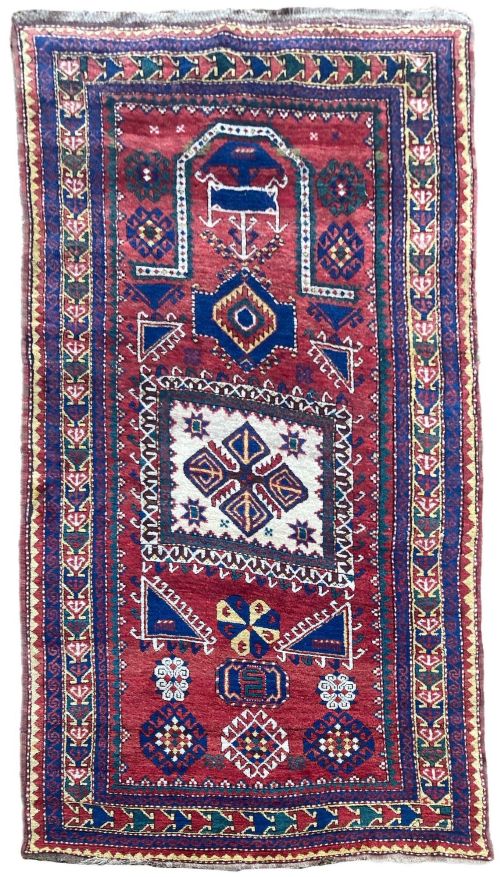
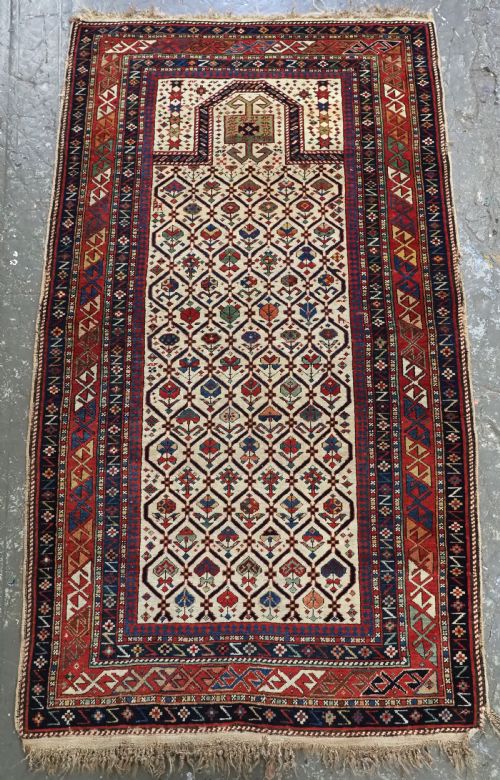
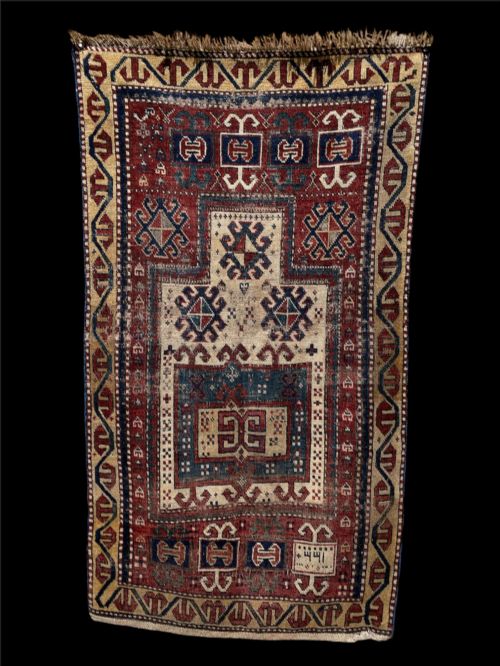
A caucasian tribal prayer rug is a woven textile featuring distinct architectural niches used for daily devotion. These pieces originate from nineteenth-century weaving traditions across the Caucasus mountains.
The most common examples on this page date from the Victorian era up to the early twentieth century. Buyers encounter specific regional types such as Kazak, Gendje, Dagestan, and Shirvan.
Makers utilised traditional layouts that range from geometric medallions to floral lattices. Each format reflects the specific village or tribal group responsible for the loom work.
Materials and construction
These textiles rely principally on wool for both the pile and the foundation yarns. Cotton appears in the structure of several pieces from this selection.
Weavers handknotted the wool onto warps and wefts before finishing the ends. Natural dyestuffs produced the saturated colour palettes recorded in the surviving examples.
Regional attributions include Gendje, Karabagh, and Marasali, alongside uncommon square formats and scarce blue or yellow ground colours.
Assessing the weaving standard
The precision of the geometric drawing and the crispness of the niche outline determine the success of the piece. Strong colour saturation and balanced proportions elevate the better examples.
Material integrity depends on the original wool quality and the tightness of the knotting. Surviving pile depth and structural stability dictate the longevity of the rug.
The Caucasian Tribal Prayer Rug Glossary
- Niche
- The pointed arch or mihrab shape at one end of the prayer rug. This architectural motif directs the placement of the textile during use.
- Boteh
- A stylised almond or pear-shaped motif representing a floral shoot or cypress tree. This pattern appears frequently across Marasali and Dagestan pieces.
- Kazak
- A designated style of rug originating from the southwestern Caucasus. These pieces are recognised for bold geometric designs and heavy wool pile.
- Shirvan
- A classification for textiles woven in the eastern Caucasus. They tend to display finer knotting and lighter ground colours such as ivory.
- Gendje
- A regional designation for rugs produced in the central Caucasian town of Ganja. They often incorporate diagonal stripes or structured lattice patterns.
Caucasian Tribal Prayer Rug: Frequently Asked Questions
How do I identify a prayer rug?
A prayer rug is distinguished by a clearly defined architectural niche or arch at one end. This focal point directs the visual weight of the design toward a single direction.
Historically, this format served a devotional function for the weaver or user. Today, collectors recognise the shape by its distinctive mihrab outline set amidst geometric borders.
What is a Kazak prayer rug?
Kazak prayer rugs are heavier, wool-rich textiles originating from the mountainous regions of the Caucasus. They are known for bold, geometric layouts and strong primary colours.
These pieces often display large medallions or square proportions. The wool used in their construction tends to have a longer, plush pile.
Are these rugs made from wool?
The primary material used across these listings is wool, utilised for both the soft pile and the structural foundation yarns. Cotton also appears in the foundational weave of specific regional pieces.
Natural wool fibres allowed weavers to achieve durable structures and deep colour saturation. The combination of these materials determines the weight and drape of the textile.
How do I care for an antique rug?
Antique wool rugs require gentle maintenance such as regular light vacuuming without a rotating brush head. Professional specialist cleaning helps preserve the natural fibres.
Placing the textile away from direct sunlight protects the natural dyes from fading. Using a suitable underlay prevents slipping and reduces wear on the foundation.