
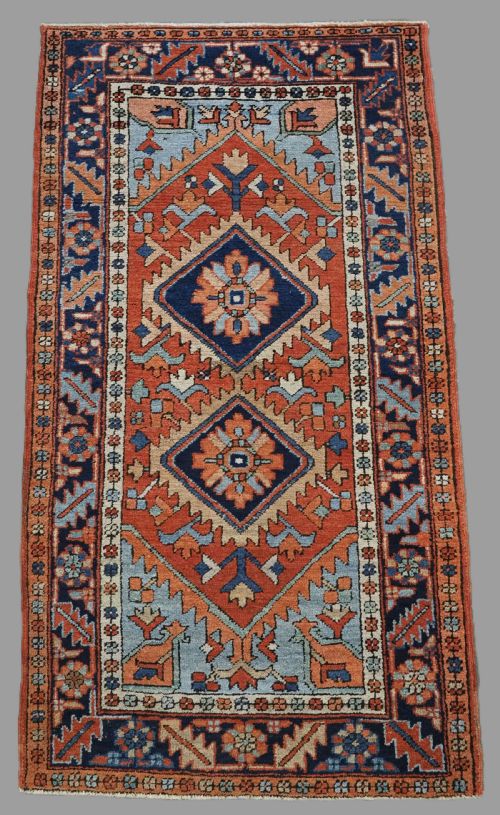


Caucasian Medallion Area Rug
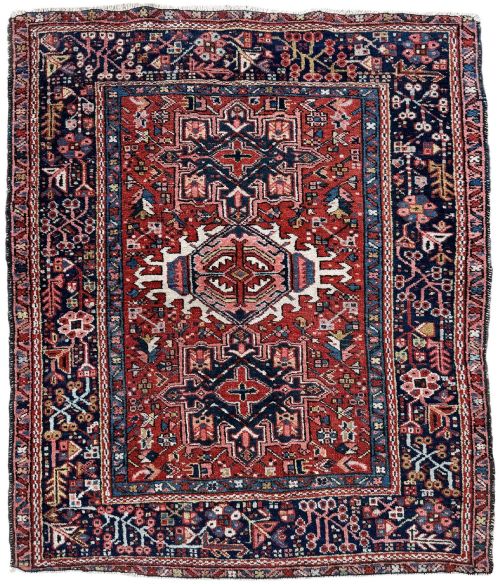
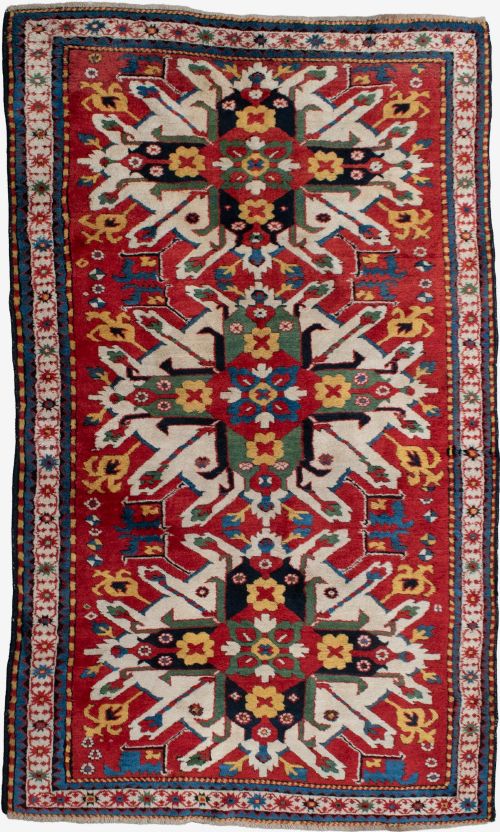
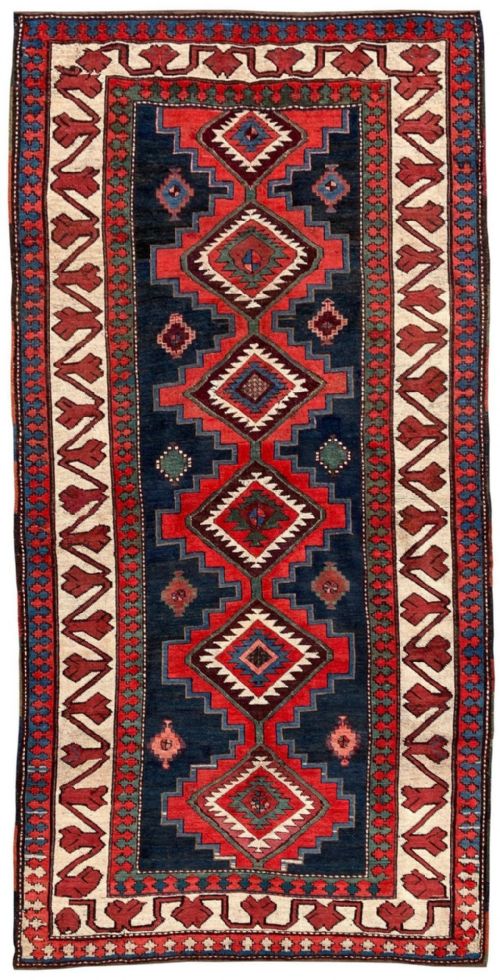
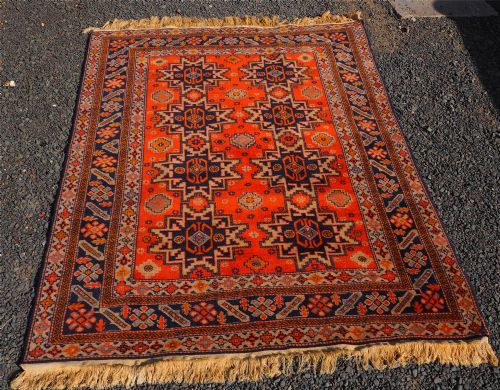
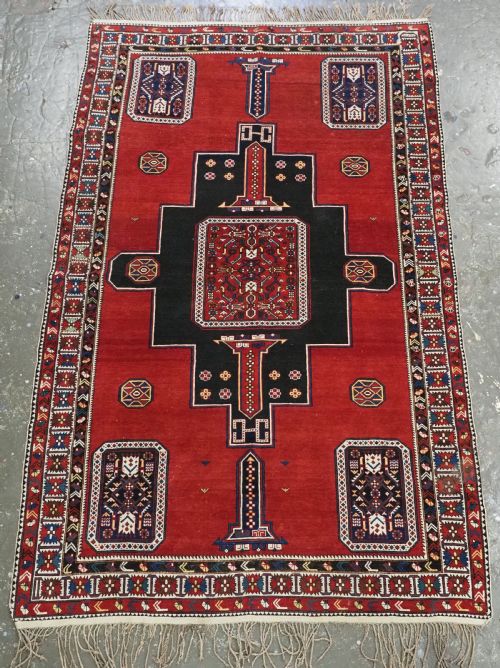
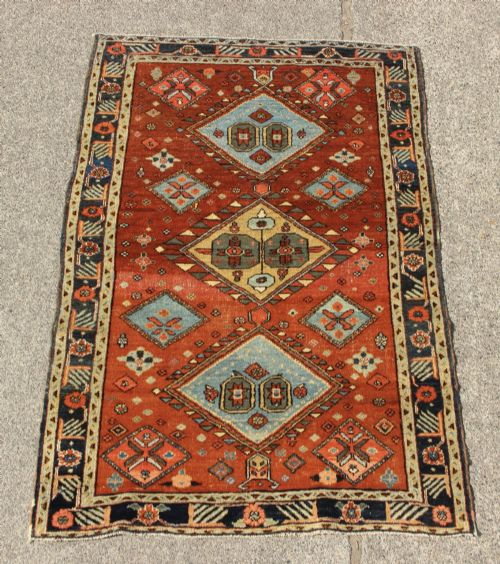
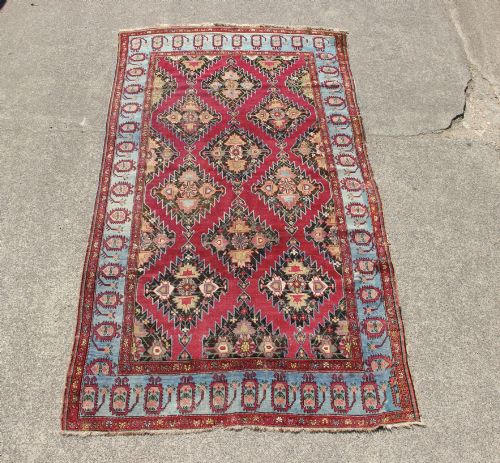
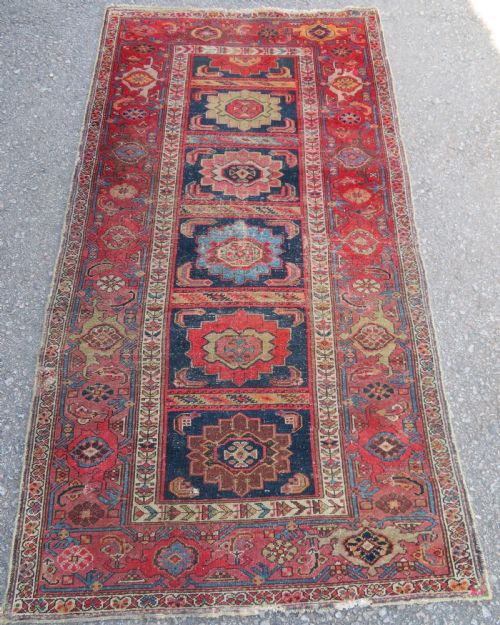
When you search for a caucasian medallion area rug, you are looking at hand-knotted tribal carpets defined by strong geometric motifs.
Caucasian Medallion Area Rug
A caucasian medallion area rug brings together centuries of village weaving traditions from the Caucasus and neighbouring regions. These pieces range from small mats to room-sized carpets, produced by nomadic and village weavers who worked from memory rather than drawn patterns. The most common examples on this page date from the late nineteenth century to the early twentieth century.
How they were made
Traditional construction relies on hand-knotted wool pile secured to wool or cotton foundation warps and wefts. The wool itself was frequently hand-spun, giving the yarn an irregular texture that absorbs dye with subtle variation. This method creates a dense, durable surface designed to withstand heavy floor use.
Colour comes primarily from natural dyes derived from plants and minerals, yielding deep reds, indigos, yellows and greens that mellow gracefully over decades. Weavers tied symmetrical or asymmetrical knots by hand, building up the dense geometric pile row by row.
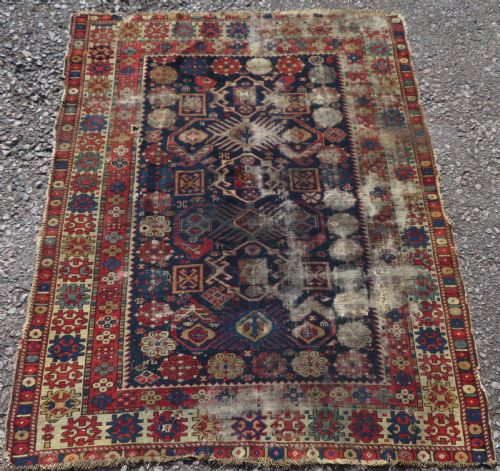
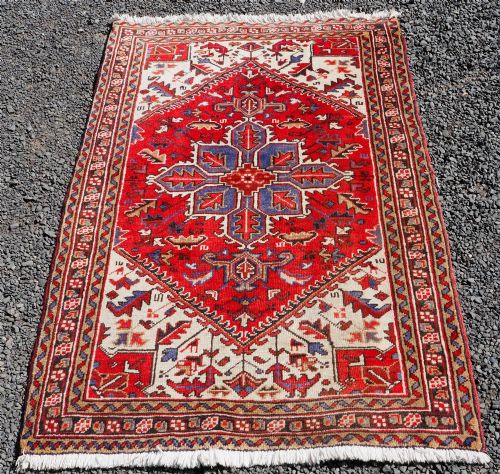
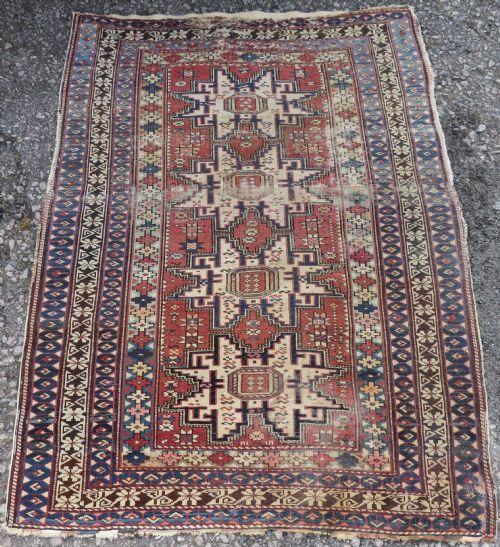
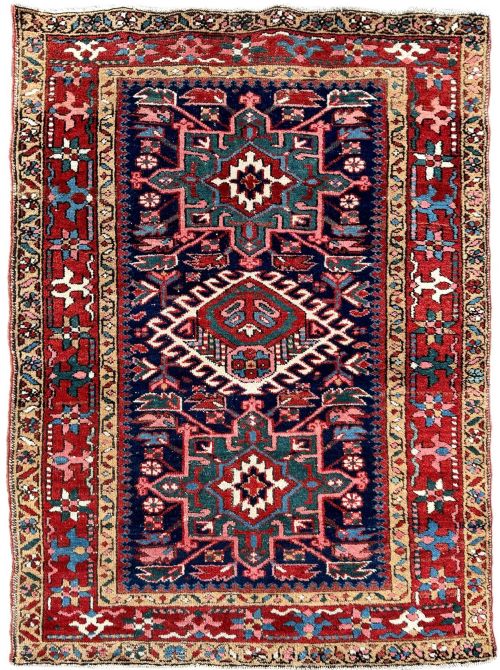
Listings span the nineteenth and early twentieth centuries, featuring regional styles from Daghestan, Shirvan, and Kuba alongside Karabagh carpets.
What varies in quality
Quality in these carpets rests on the precision of the knotting, the handling of the wool, and the depth of the palette. Finer pieces show tighter knot counts on the reverse, allowing intricate geometric curves and sharp edges to remain distinct within the field.
The source and preparation of the dyes also set examples apart. Superior carpets display harmonious tonal ageing where natural dye batches interact over time, whereas lesser village work might show abrupt shifts in hue or heavy wear to the structural foundation.
The Caucasian Medallion Area Rug Glossary
- Medallion
- A central ornamental motif dominating the field of the rug. It typically takes a geometric, diamond, or cruciform shape around which the surrounding pattern is arranged.
- Kazak
- A style of heavy, bold-patterned rug originating from the southern Caucasus. They are known for primary colours and large geometric medallions.
- Soumak
- A flat-weave technique where the weft threads are wrapped horizontally over and under the warp threads. This produces a textured surface without a cut pile.
- Pile
- The raised surface of a rug formed by the cut ends of knotted yarn. The height and density of this layer determine the weight and hand of the piece.
- Gul
- A medallion-like motif frequently repeated across the field of tribal rugs. The shape often identifies the specific weaving tribe or region.
Caucasian Medallion Area Rug: Frequently Asked Questions
Where were caucasian medallion area rugs made?
These rugs were produced by village and nomadic weavers across the Caucasus region, spanning modern-day Armenia, Azerbaijan, and Georgia. Related styles also emerged in nearby Persian and Turkish districts influenced by the same tribal traditions.
Weavers worked in small communities, passing down specific border patterns and medallion designs through generations. Local materials and regional preferences dictated whether a piece emerged with a heavy wool pile or a flat-woven structure.
How do I identify a kazak rug?
Kazak rugs are distinguished by their bold geometric designs, heavy wool construction, and striking primary colours like red, blue, and ivory. They frequently feature large central medallions accompanied by animal or tribal symbols.
The wool tends to be long and lustrous, tied in lower knot counts than fine Persian urban carpets. This gives them a robust, rustic character that stands out in traditional and modern interiors alike.
Are these rugs suitable for high traffic areas?
Hand-knotted wool rugs are naturally durable and built to withstand regular walking. The dense pile and resilient lanolin-rich wool fibres help protect the structural foundation from daily wear.
Placing a quality rug pad underneath provides extra cushioning and prevents slipping. Routine gentle vacuuming without the beater bar keeps the pile free from trapped grit.
How can I tell the age of an antique rug?
Age is judged by examining the materials, dye types, and structural wear patterns across the piece. Hand-spun wool and a palette derived entirely from natural dyes generally point to production before synthetic aniline dyes became widespread in the late nineteenth century.
Natural variations in the wool and minor irregularities in the symmetry confirm human hand-knotting. Comparing the specific regional motifs against documented tribal examples helps narrow down the decade of creation.