


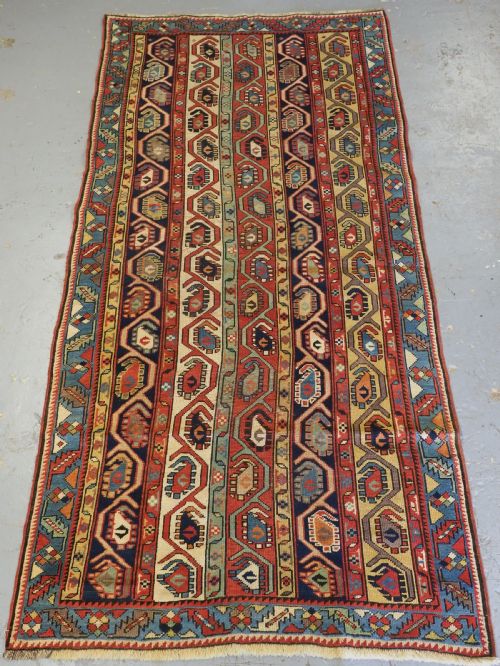

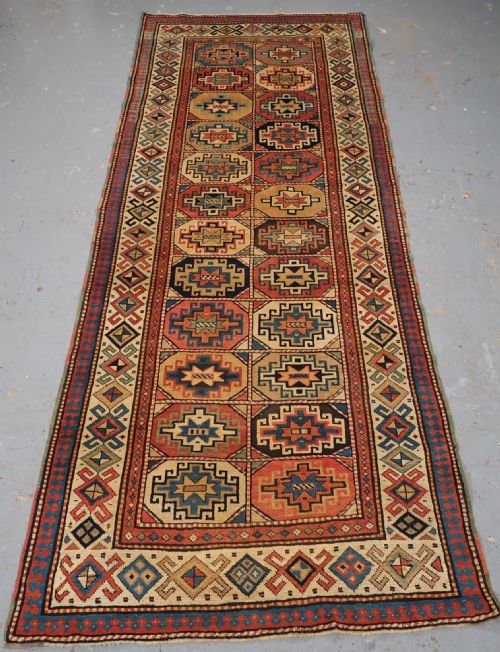

Terracotta Kazak Rug
These terracotta kazak rug examples are distinctive Caucasian tribal wool floor coverings defined by bold medallions and rich regional designs.
Terracotta Kazak Rug
A terracotta kazak rug represents a traditional Caucasian tribal floor covering, typically originating from the late nineteenth or early twentieth century. When exploring this group, buyers encounter various formats including area rugs, long runners, and flatweave kilims constructed from mafrash panels.
The regional sub-types appearing here span Bordjalou, Tetex, Karabagh, Moghan, Chelaberd, and Gendje attribution. These pieces frequently display characteristic tribal motifs such as hooked medallions, triple medallions, boteh patterns, and figurative depictions of people and animals.
The dominant presentation relies on robust wool construction reflecting Caucasian tribal weaving traditions. Most items date from the period between 1880 and 1930, capturing distinct village aesthetics from the South Caucasus.
How they were made
Every piece in this category is constructed from wool, utilising traditional hand-weaving techniques native to Caucasian tribal workshops and village communities. The materials reflect local pastoral resources, resulting in durable pile carpets and flatwoven kilim structures.
The construction methods include standard knotted pile area rugs alongside flatweave textiles assembled from separate mafrash panels. Artisans employed local dyeing traditions to achieve the soft colours and terracotta palettes seen across these regional rugs.
Materials seen across these listings consist entirely of wool, spanning production dates from 1880 to 1930 within Caucasian tribal styles.
What varies in quality
The standard of a terracotta kazak rug depends on the crispness of the tribal geometry and the complexity of the medallion layout. Pieces featuring intricate figurative elements or well-defined regional designs, such as Chelaberd or Bordjalou patterns, hold particular distinction.
Visual appeal is also influenced by the subtlety and preservation of the natural dyes, where soft secondary tones complement the main terracotta ground. Structural integrity and the survival of original borders further differentiate examples within the group.
The Terracotta Kazak Rug Glossary
- Kazak
- A designated style of Caucasian rug originating from the Caucasus region, known for geometric designs and bold primary colours. These rugs were traditionally woven by village and nomadic weavers.
- Kilim
- A flatwoven carpet or rug produced by tightly interweaving warp and weft strands without creating a pile. This technique results in a lightweight textile often used for wall hangings or practical floor coverings.
- Mafrash
- A storage bag or panel from the Caucasus region, sometimes repurposed into flatweave kilims. These panels display traditional tribal motifs unique to nomadic weaving.
- Boteh
- A stylised almond or teardrop-shaped vegetable motif representing a-bush or cypress tree. This ancient symbol appears frequently in traditional textile designs from the Caucasus and Persia.
- Medallion
- A central ornamental design motif placed in the field of a rug. In Caucasian weaving, these are often rendered in bold, geometric forms.
Terracotta Kazak Rug: Frequently Asked Questions
Where were these rugs made?
These textiles originate from the Caucasus region, encompassing various tribal and village weaving centres. Specific regional attributions include Bordjalou, Karabagh, Moghan, and Gendje.
The weavers were local pastoralists and villagers who utilised traditional techniques passed down through generations. Their geographic position created a distinct aesthetic distinct from Persian or Anatolian production.
How do I clean my rug?
Wool carpets require gentle maintenance, primarily through careful vacuuming without a rotating brush head to protect the pile. Professional cleaning suited for antique textiles is recommended for deeper maintenance.
Immediate attention to spills using dry methods helps preserve the natural wool fibres and traditional dyes. Avoiding excessive moisture ensures the structural integrity remains intact over time.
Can I use a runner in a hallway?
Long rugs and runners are well-suited for high-traffic corridors and narrow spaces. Their elongated formats accommodate footpaths while displaying linear repeating motifs.
Placing a suitable underlay beneath the textile prevents slipping and reduces friction against the floorboards. This protects the historic wool foundation from premature wear in active areas.
What does a hooked medallion mean?
Hooked medallions are geometric central motifs bordered by small projecting hooks or stepped outlines. They form a core visual element in traditional Caucasian tribal design.
These symbols reflect centuries of weaving vocabulary handed down among village artisans. They serve to anchor the composition of the rug field.