




Latch Hook Rug
These latch hook rug examples are tribal and nomadic wool floor coverings defined by geometric medallions, offering genuine texture and heritage character for period interiors.
Latch Hook Rug
A latch hook rug brings tribal and nomadic artistry into domestic spaces through geometric medallions and repeating motifs. When searching for a latch hook rug, collectors encounter regional village weaving traditions primarily originating from the Caucasus and Kurdish territories during the late nineteenth and early twentieth centuries.
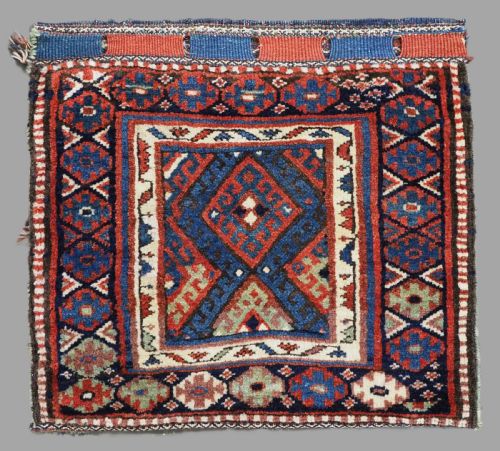
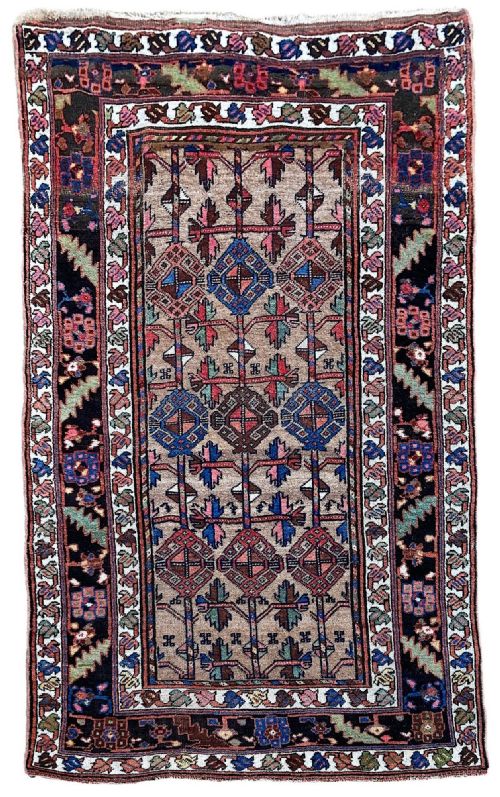
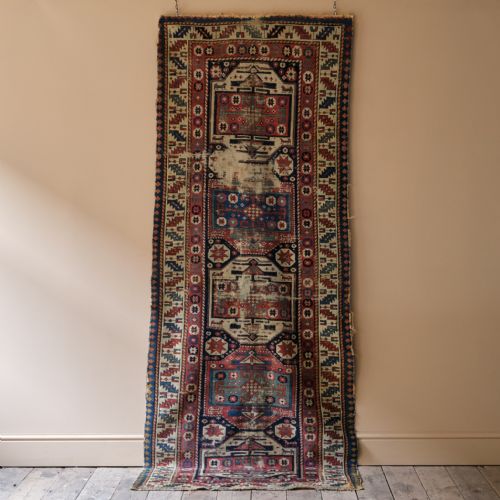
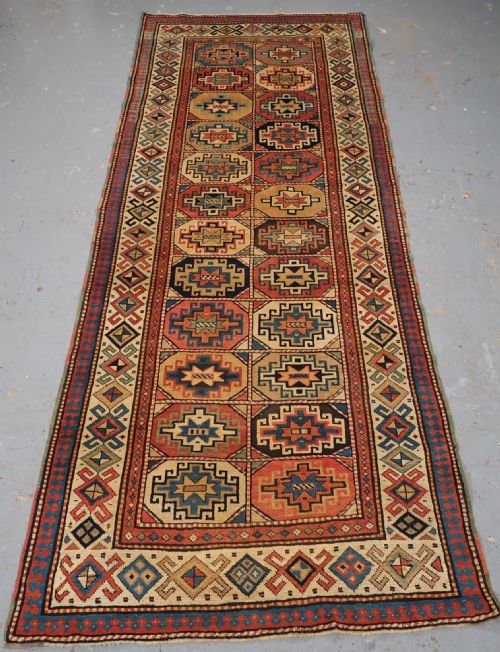
The selection ranges from smaller saddlebag faces and runners to room-sized area carpets. These textile forms demonstrate how utilitarian items like storage bags and floor runners were constructed with bold graphic impact to suit nomadic lifestyles.
Assessing quality and character
Quality rests in the precision of the geometric design, the subtlety or vibrancy of the wool dyework, and the overall integrity of the weave. Pieces with balanced proportions and clear medallion structures command greater appreciation among collectors.
Condition and completeness also govern the standing of an individual textile. Examples retaining original plain weave backs or complete side cordings demonstrate superior survival through time.
Some rugs are actually surviving saddlebag faces that once carried a nomad's worldly belongings across the mountains.
The Latch Hook Rug Glossary
- Medallion
- A central geometric or floral motif set within the field of a rug. These shapes form the focal point of tribal compositions.
- Pile
- The raised surface of a rug formed by cut or uncut loops of yarn. This tactile layer provides both warmth and protection to the foundation.
- Runner
- A long, narrow carpet format designed for hallways or corridors. These pieces accommodate specific architectural spaces.
- Saddlebag
- A utilitarian storage container woven in pairs for transport on animals. The surviving faces are often mounted or collected as independent textiles.
- Plain weave
- A simple unpiled textile structure formed by alternating warp and weft threads. This method appears on the backs and closures of tribal bags.
Latch Hook Rug: Frequently Asked Questions
How do I care for a vintage rug?
Vacuum gently using suction without a rotating brush to protect the delicate wool fibres and old foundations.
Keep the textile out of direct sunlight to prevent natural dyes from fading over time.
Where were these tribal rugs made?
These pieces originate primarily from the Caucasus region and Kurdish tribal areas during the nineteenth and early twentieth centuries.
Nomadic and village weavers produced them using local materials and traditional regional designs.
What is a latch hook medallion?
It is a stepped geometric motif featuring hook-like protrusions extending from the corners or edges of the central design.
This distinct symbol appears frequently across Caucasian and Kurdish weaving traditions.
Can I use a runner in a hallway?
Runners are well-suited for narrow hallways, corridors, or alongside beds where elongated formats function effectively.
Ensure a suitable underlay is used beneath the textile to prevent sliding on hard floors.