

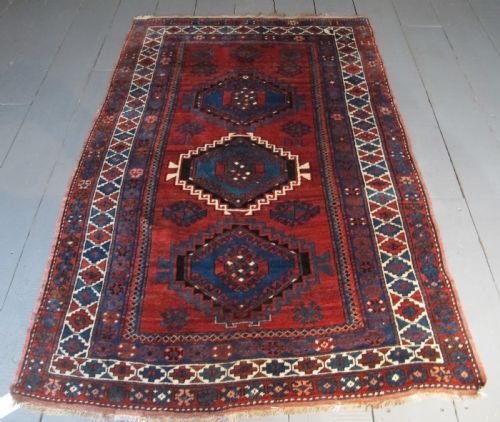


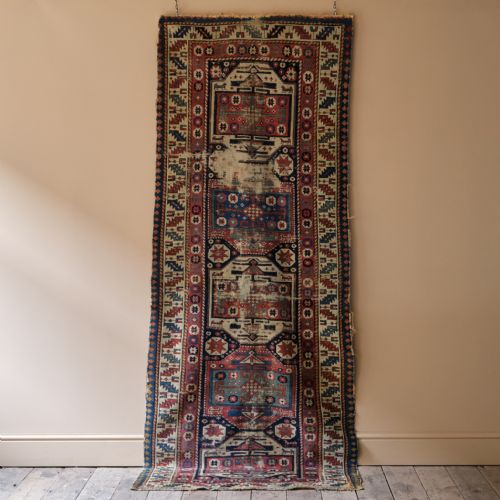


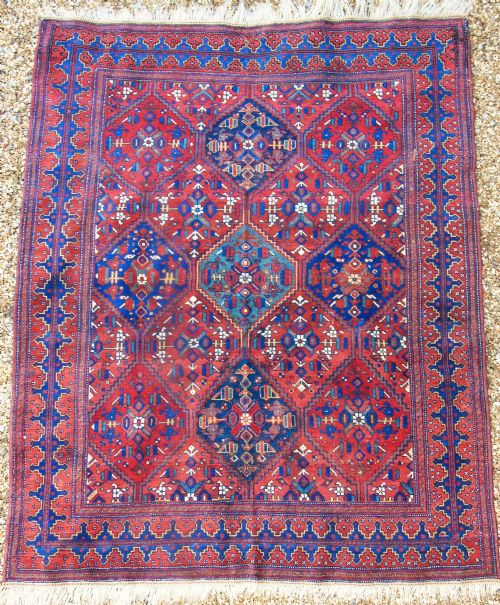
Vintage Kazak Rug
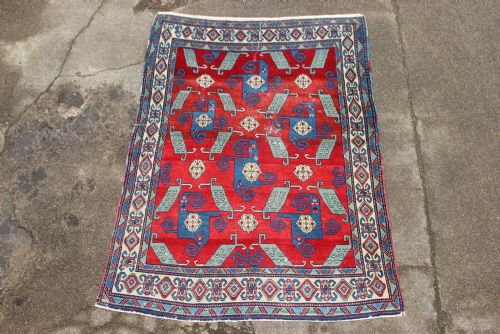
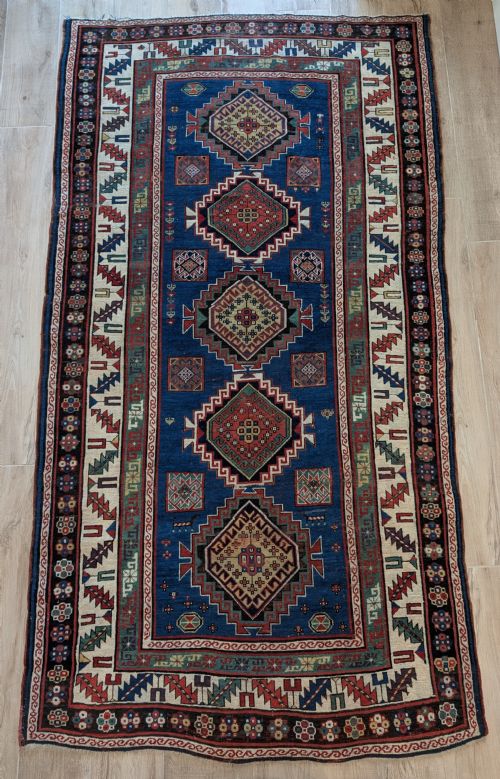
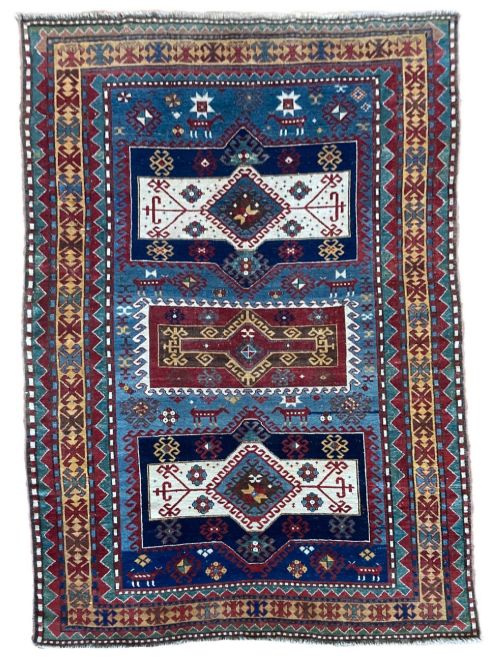
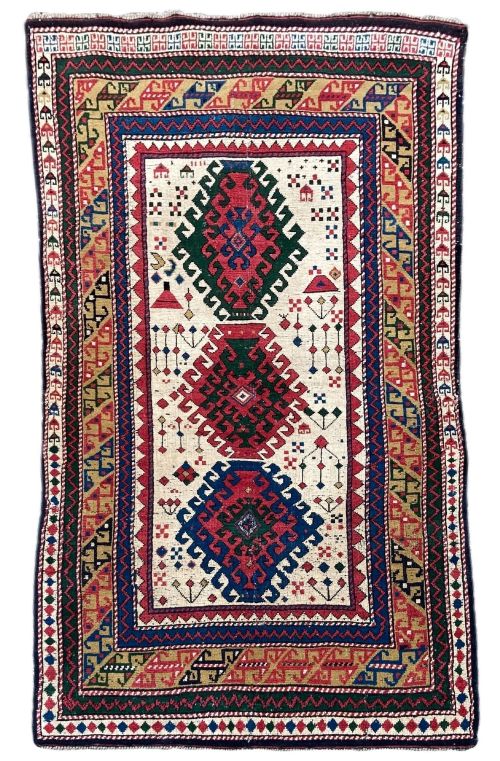
A vintage kazak rug brings the bold geometry and saturated natural dyes of nineteenth-century Caucasian weaving straight to a wooden floor.
Vintage Kazak Rug
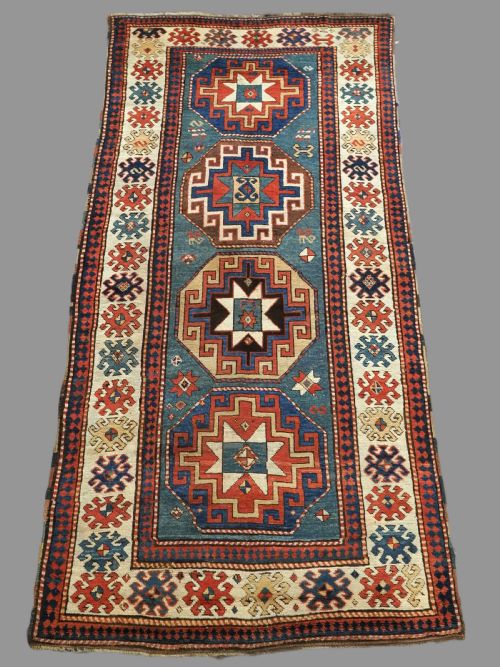
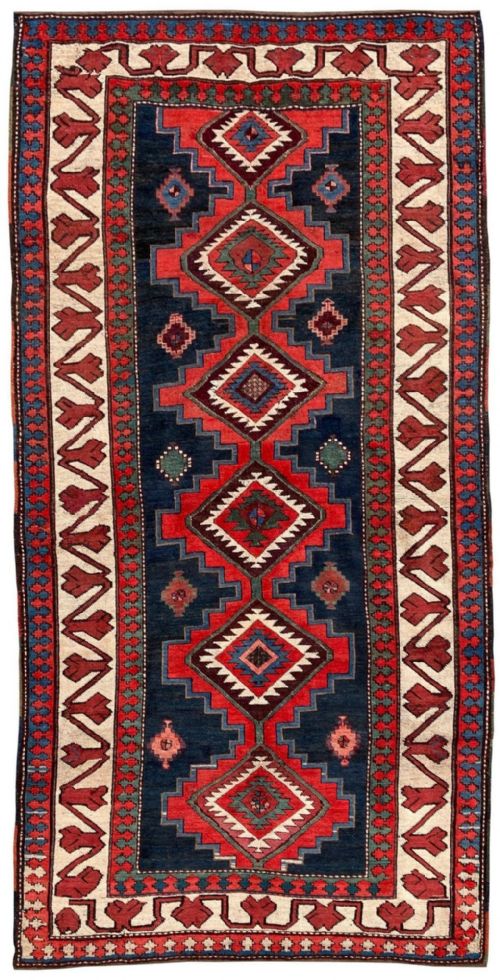
A vintage kazak rug is a hand-knotted tribal textile originating from the Caucasus region, produced across the nineteenth and early twentieth centuries. These floor coverings display bold geometric medallions, animal motifs, and stark rectilinear patterns rooted in regional weaving traditions.
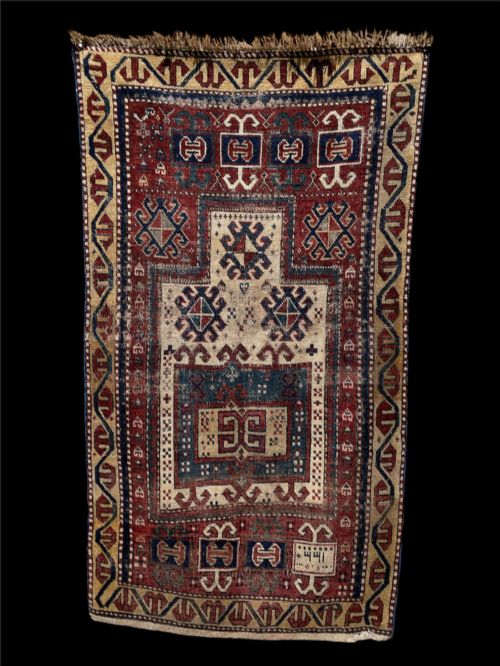
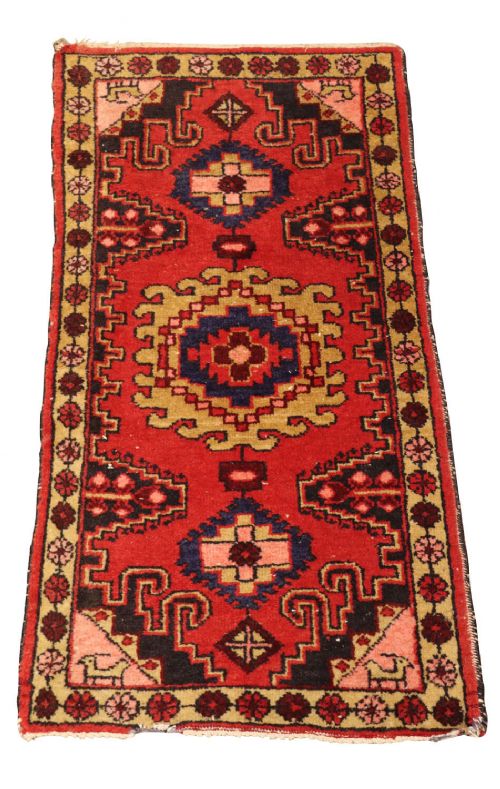
Buyers browsing this selection frequently encounter formats such as area rugs, prayer rugs, square formats, and long runners. The common thread among them is a strong tribal folk art character expressed through purposeful asymmetry and striking colour contrasts.
How they were made
Weavers constructed these pieces using hand-spun wool for the pile, yielding a dense and resilient surface that withstands decades of foot traffic. Foundation threads typically consist of wool or cotton, knotted firmly to hold the geometric motifs in place.
Colour comes from natural dyestuffs applied to wool, creating rich grounds that age gracefully over time. The manual carding and spinning process leaves subtle variations in texture across each carpet.
Vintage Kazak Rug Retail Price Guide 2026
Typical asking prices for vintage kazak rug among the pieces listed under this phrase on Sellingantiques today, from the lower quarter to the upper quarter. They describe what is for sale here now, not the wider market.
The listings span from the mid-nineteenth century through the 1930s, utilising hand-spun wool and cotton foundations.
What varies in quality
Quality rests in the crispness of the geometric drawing and the saturation of the wool pile. Tightly packed knots produce a sharper definition in medallions and hooked motifs, whereas looser structures soften the graphic impact.
The choice of secondary colours and the balance of negative space around central medallions dictate visual harmony. Original side cords and surviving end finishes elevate a textile by preserving its authentic proportions.
The Vintage Kazak Rug Glossary
- Kazak
- A designation for rugs woven by various tribal groups in the southern Caucasus, known for bold geometry and primary colours. These pieces rely on memory and local tradition rather than formal paper cartons.
- Pile
- The upright woolen surface of a rug formed by individual knots tied onto the warp threads. Its depth and density determine how the carpet feels underfoot.
- Medallion
- A central ornamental motif set within the field of a rug, often shaped as an octagon, star, or hooked polygon. In Caucasian weaving, these anchor the entire composition.
- Warp
- The vertical foundation threads stretched tightly on the loom before knotting begins. Visible fringe at the ends of a rug originates from these structural cords.
- Prayer rug
- A format defined by a distinct niche or mihrab shape at one end, traditionally orienting the weaver toward Mecca. Collectors prize them for their focused architectural designs.
Vintage Kazak Rug: Frequently Asked Questions
Where were these rugs made?
These textiles originate from the Caucasus region, situated between the Black Sea and the Caspian Sea. Different valleys and tribal groups produced distinct regional subtypes with recognisable drawing styles.
Local weavers worked in homes or small community workshops, passing down specific medallion designs and border patterns through generations.
How do I care for a wool rug?
Regular gentle vacuuming without a beater bar keeps dust from settling into the wool pile. Professional cleaning suited for antique textiles preserves the natural lanolin in the fibres.
Keeping the piece out of direct, harsh sunlight prevents the natural dyes from fading unevenly across the field.
Are these rugs symmetrical?
Hand-knotted tribal weaving naturally incorporates minor irregularities and intentional asymmetries in motifs and borders. These variations reflect the weaver working from memory without rigid mechanical aids.
Slight curves or wobbles in the straight lines are hallmarks of genuine rural production rather than factory standardisation.
What is a prayer niche?
A prayer niche, or mihrab, is a pointed arch design element woven into one end of specific carpets. It serves a directional purpose in Islamic worship and frames the composition.
On the floor, this pointed arch creates a striking focal point that draws the eye through the rug's geometry.