

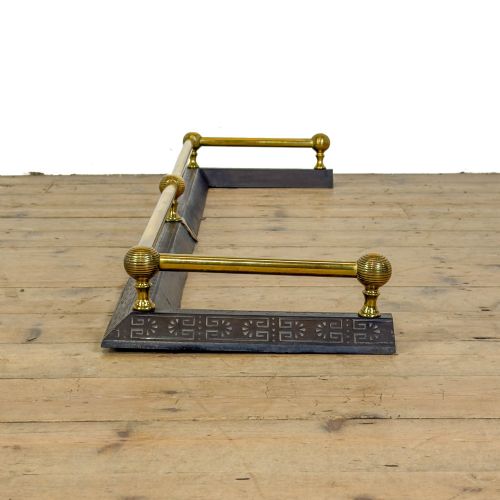


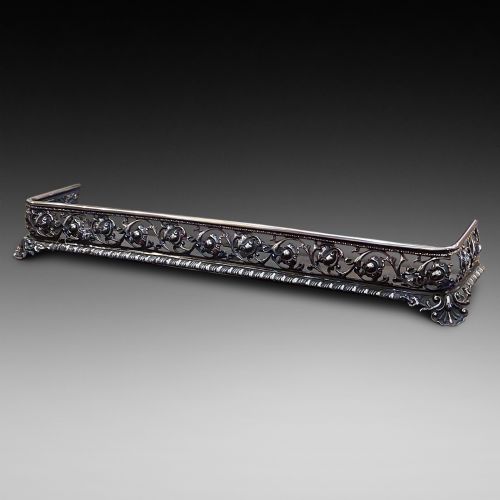


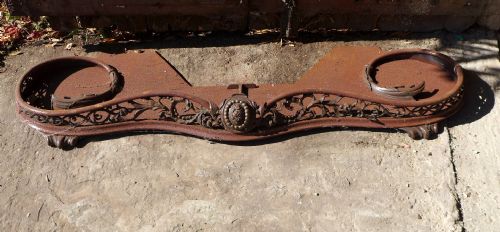


Cast Iron Hearth Fender
These cast iron hearth fender pieces keep the room tidy and protect the floor from stray embers, bringing solid period weight to any fireplace.
Cast Iron Hearth Fender
A cast iron hearth fender sits directly on the floor around the base of a fireplace to contain ash and burning coals. The pieces encountered here span Victorian, 19th Century, 1880, and Georgian periods, showing both simple domestic utility and decorative metalwork.
Most examples appear alongside other fireplace accessories such as grates and firebacks, or integrate mixed metals like brass, steel, and bronze. Forms range from straight lines to curved shapes and adjustable widths.
The Victorian and nineteenth-century examples dominate the selection, though earlier Georgian and seventeenth-century style influences also appear. These objects serve as both a practical barrier and a grounding architectural feature for the hearth.
How they were made
Makers utilised molten metal poured into moulds to create the heavy cast iron body of the fender. Wrought iron, steel, and bronze were also worked into the designs to add strength and contrast.
Gilt-brass and polished brass components were frequently added to the main iron structure for decorative effect. The metal parts were joined and finished by hand to withstand intense hearth heat.
Cast Iron Hearth Fender Retail Price Guide 2026
Typical asking prices for cast iron hearth fender among the pieces listed under this phrase on Sellingantiques today, from the lower quarter to the upper quarter. They describe what is for sale here now, not the wider market.
These sturdy iron barriers have spent generations stopping stray coals from burning holes in the family rug.
What varies in quality
The refinement of the casting work sets finer examples apart from simpler utilitarian pieces. Crisp detailing in the metal and clean joints between different materials indicate superior craftsmanship.
The weight of the metal and the integrity of mixed brass or bronze elements dictate the structural longevity of the fender. Pieces that retain harmonious proportions between the iron base and decorative mounts command greater attention.
The Cast Iron Hearth Fender Glossary
- Cast iron
- Iron poured in a molten state into a mould to cool and shape. It provides the heavy, rigid foundation for these hearth barriers.
- Hearth fender
- A low metal guard placed around the fireplace opening. It prevents hot coals and ash from rolling onto the floorboards.
- Fire back
- A heavy metal plate placed at the back of a fireplace. It reflects heat into the room and protects the masonry wall.
- Gilt-brass
- Brass treated with a thin layer of gold or gold-coloured finish. It brings a bright metallic contrast to dark iron.
- Kerb fender
- An alternative term for a hearth surround that creates a distinct boundary. It sits directly on the floor framing the fire.
Cast Iron Hearth Fender: Frequently Asked Questions
What is a cast iron hearth fender used for?
A cast iron hearth fender provides a physical barrier around the fireplace opening to stop burning logs and hot embers from spilling onto the floor.
Beyond safety, it frames the hearth area and keeps stray ash contained within the fireplace footprint.
How do I date a cast iron hearth fender?
Dating relies on examining the casting techniques, the style of the metalwork, and the combination of materials like brass and steel. Victorian and nineteenth-century pieces often feature heavier ornamentation.
Georgian examples typically show simpler, more restrained proportions while seventeenth-century style pieces emulate older hand-forged traditions.
Are these fenders adjustable in size?
Certain examples include adjustable mechanisms built into the metal frame to fit different fireplace widths. These sliding sections allowed the surround to adapt to varying hearth dimensions.
Fixed models rely on solid cast construction and must match the exact opening size of the fireplace.
Can I use these with a modern fireplace?
These fenders fit traditional hearths and work well with both open fires and gas or electric grate inserts. Their standard placement is directly on the floor against the fireplace surround.
Care should be taken to measure the hearth space accurately before placing a rigid or curved fender into position.