


19th Century Fireplace Curb
These 19th century fireplace curb examples anchor a hearth with solid metalwork, protecting the floor while framing the fire.
19th Century Fireplace Curb
A 19th century fireplace curb serves to keep embers contained within the hearth while defining the boundary between fire and room. Buyers encounter these boundaries fashioned as solid guards, extending frames and curved curbs designed for period hearths.
The selection on this page draws heavily from Victorian and Regency periods, utilising heavy gauge metals to form substantial hearth barriers. Forms vary from simple straight rails to complex curved configurations and adjustable designs.
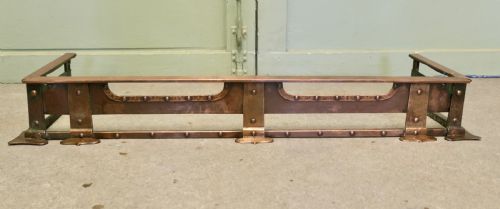
Makers of the era utilised styles ranging from Arts and Crafts to Neoclassical and French Rococo, applying these aesthetic frameworks directly to functional iron and brass work.
How they were made
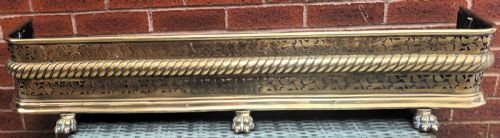
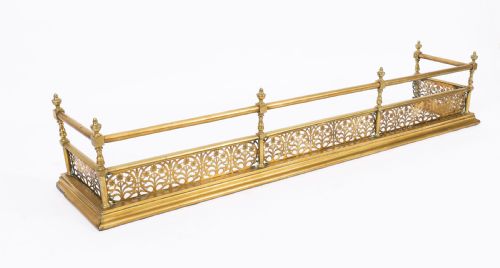
Metalworkers of the period employed brass, cast iron, steel, and bronze, often combining polished brass with iron frames or steel bases. Construction methods involved riveting copper plates, casting heavy brass garlands, and piercing sheet metal to create intricate patterns.
Surface treatments included high polishing on brass and steel alongside patinated bronze and blackened iron finishes. Skilled hands shaped curved bronze and forged iron to fit specific hearth dimensions, frequently incorporating adjustable mechanisms into the metal frame.
Listings demonstrate a strong preference for brass across the nineteenth century, alongside iron, steel, and occasional copper.
What varies in quality
Weight and gauge of the metal separate utilitarian guards from high-status hearth furniture, with heavier brass and thicker steel indicating superior substance. The crispness of cast details, such as floral motifs or dragon patterns, distinguishes standard production from finer craftsmanship.
The sophistication of the design execution, from simple pierced brass to complex riveted copper and neoclassical detailing, dictates the visual presence of the curb in a room.
The 19th Century Fireplace Curb Glossary
- Fender
- A low metal guard placed in front of an open fireplace to contain falling coals and sparks. It sits directly on the floor around the hearth perimeter.
- Kerb
- An alternative spelling for curb, referring to the metal boundary piece of the fireplace surround. It often matches the fire irons and coal bucket.
- Pierced brass
- Sheet brass punched or cut through with decorative openwork patterns. This technique allows firelight to reflect through the metal design.
- Polished steel
- Iron treated and finished to a bright, reflective surface finish. It requires careful maintenance to prevent tarnishing in damp environments.
- Arts and Crafts
- A design movement prioritising visible construction, hand craftsmanship and honest materials. Pieces often feature exposed rivets and hand-worked copper.
19th Century Fireplace Curb: Frequently Asked Questions
How do I measure for a fireplace curb?
Measure the width and depth of your hearth opening to ensure the curb sits correctly outside the fireplace surround without blocking foot traffic.
Take note of whether you need an adjustable model to bridge slight variations in hearth width.
Can these curbs be used with modern fires?
These metal guards fit gas, electric or solid fuel hearths provided the dimensions align with your floor space.
Ensure the metal chosen complements the heat output and surrounding interior materials.
How do I clean polished brass?
Use a soft cloth and a proprietary metal cleaner designed specifically for brass to maintain the reflective surface without removing fine detail.
Avoid abrasive pads that scratch the metal surface and diminish the antique finish over time.
What is the difference between iron and steel?
Cast iron offers heavy, brittle strength often utilised for structural fire basket frames and dark fenders.
Steel provides greater tensile strength and flexibility, frequently polished to a bright finish for Regency and Victorian hearths.