


Copper Hearth Surround
These copper hearth surround pieces anchor a room with metalwork forged in Victorian, Edwardian, and Arts and Crafts workshops.
Copper Hearth Surround
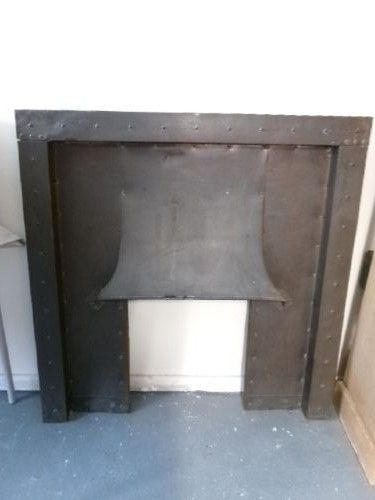
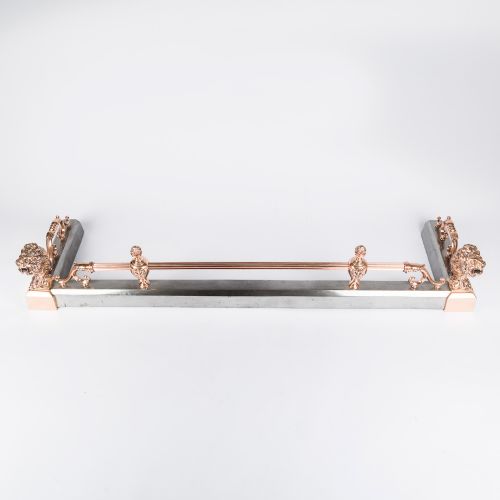
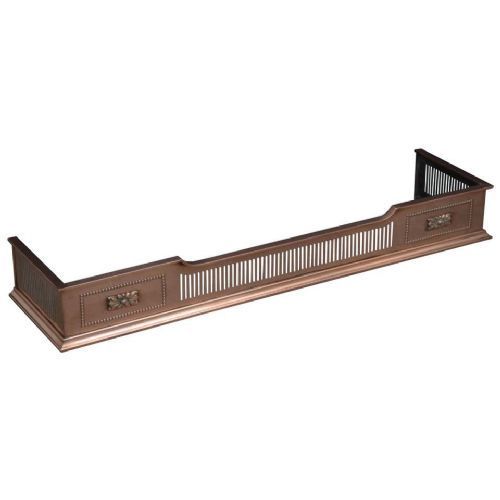
A copper hearth surround frames an open fire using metalwork fashioned into fireplace fenders, curbs, fire fronts with hoods, and club fenders. You are most likely to meet Victorian and Edwardian examples on this page, alongside Arts and Crafts and Art Nouveau designs.
The forms range from simple low kerbs to club fenders incorporating leather seating, plus fireplace inserts and canopied fire fronts. These pieces originated to protect floors from embers while containing the fire, evolving into decorative focal points for the room.
Makers utilised copper alongside brass, iron, steel, and leather to build these hearth furnishings. The pieces span the nineteenth and twentieth centuries, showing the distinct utilitarian and decorative tastes of those periods.
How they were made
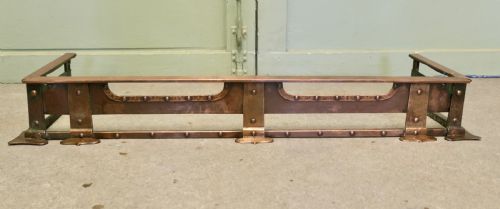
Craftsmen shaped sheet metal by hand, hammering and beating the surfaces to create textured finishes such as the characteristic Arts and Crafts panels. Rivets fastened structural joints together visibly, adding both strength and decoration to the metalwork.
Artisans applied repoussé and embossing techniques to press floral motifs, flower patera, and beaded decoration directly into the copper. Brass mounts, iron frames, and steel components provided internal stability and structural contrast to the softer copper body.
The listings on this site span the Victorian, Edwardian, and early twentieth-century periods, utilising copper, brass, iron, and leather.
What varies in quality
The distinction between standard items and finer examples lies in the depth and execution of the hand metalwork. Pieces featuring hand-beaten surfaces, intricate repoussé decoration, and robust internal iron or steel frames stand apart from simpler folded sheet metal.
The integration of secondary materials like brass mounts, padded leather seats on club fenders, and riveted construction dictates the overall substance of the piece. Better examples display careful alignment of decorative motifs such as flower patera and beaded borders.
The Copper Hearth Surround Glossary
- Fender
- A low metal guard placed around the hearth to keep burning coals and ash from spilling onto the floor. They often incorporate seats in club variants.
- Repoussé
- A metalworking technique where the artisan hammers the metal from the reverse side to form a raised design on the front. This method creates the embossed patterns seen on fire fronts.
- Club fender
- A fireplace fender featuring low upholstered leather seats on either side. These originated to provide comfortable seating close to the fire.
- Patera
- A circular ornamental disc carved or embossed to resemble a classical libation bowl. They frequently appear as decorative accents on Victorian metalwork.
- Arts and Crafts
- A design movement valuing handcraftsmanship, natural materials, and visible construction methods. Pieces from this style display hand-beaten copper and riveted joints.
Copper Hearth Surround: Frequently Asked Questions
What is a club fender?
A club fender is a hearth surround that incorporates low, leather-topped seats flanking the fireplace.
They allowed people to sit directly beside the fire while keeping logs and embers contained within the metal kerb.
How do I clean a copper fender?
Maintenance depends on the desired finish, as many owners prefer to keep the natural aged patina rather than polishing it to a bright shine.
Gentle dusting and occasional light cleaning with appropriate metal care products preserve the surface without removing historic character.
Are these surrounds safe for modern fires?
These pieces were built for nineteenth and early twentieth-century hearths, utilising durable metals like iron, steel, and copper.
Buyers should measure their fireplace opening and floor space carefully to ensure the rigid metal kerb fits the hearth dimensions.
How do I date a copper surround?
Dating relies on stylistic markers, such as the flowing organic lines typical of Art Nouveau or the hand-beaten riveted surfaces characteristic of Arts and Crafts pieces.
Victorian and Edwardian examples often combine brass and copper with specific decorative motifs like flower patera.