
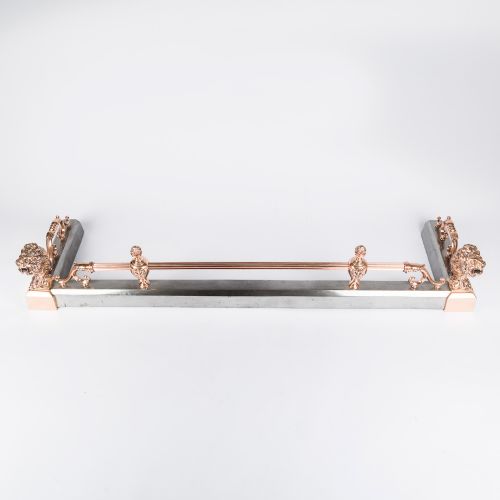
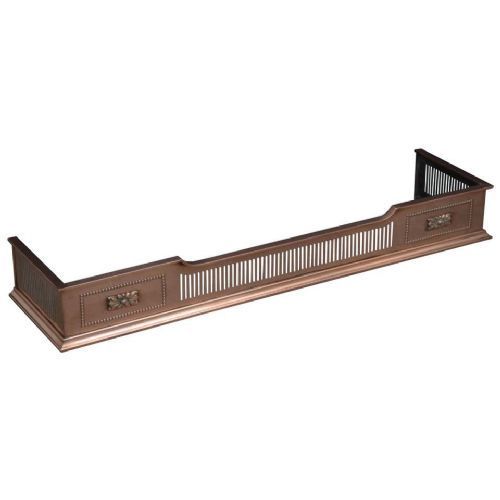


Edwardian Copper Fender
An Edwardian copper fender anchors the hearth with warmth and character, offering both period authenticity and practical hearthside seating or kerbing.
Edwardian Copper Fender
The edwardian copper fender is primarily seen here in standard kerb formats or as club fenders featuring padded seats. These pieces range from simple metal frames to elaborate designs that define the fireplace setting.
Listings encompass variations from the late nineteenth century and the early twentieth century, spanning Victorian, Edwardian, Arts and Crafts, and Art Nouveau styles. The majority combine copper with brass, steel, or iron elements.
Club fenders provide low-level seating flanking the hearth, upholstered in leather, while standard kerbs simply outline the hearth edge. Both forms utilise the rich metallic tones typical of the period.
Materials and construction methods
Construction relies heavily on sheet copper combined with structural iron, steel, or brass framework. Beaten finishes appear frequently, demonstrating hand-worked surfaces characteristic of the Arts and Crafts movement.
Decorative detailing incorporates pressed flower patera and beaded decoration. Leather upholstery is standard on club fender seats, secured over sturdy metal frames.
Edwardian Copper Fender Retail Price Guide 2026
Typical asking prices for edwardian copper fender among the pieces listed under this phrase on Sellingantiques today, from the lower quarter to the upper quarter. They describe what is for sale here now, not the wider market.
Listings combine copper with brass, steel, and iron, spanning Arts and Crafts, Art Nouveau, and Victorian styles.
Distinguishing quality and craftsmanship
Quality rests upon the depth of hand-beating in the copper and the integrity of the underlying metal frame. Pieces featuring crisp botanical patera or intricate Art Nouveau whiplash lines demonstrate superior artistry compared to plain commercial kerbs.
The integration of materials determines the overall finish, where seamless joins between copper and brass or steel elevate the piece. Upholstered club versions depend on the original leather quality and the stability of the seating structure.
The Edwardian Copper Fender Glossary
- Club fender
- A low, padded hearth seat flanked by metal framing that allows people to sit close to the fire. These originated in country houses and combine metalwork with leather upholstery.
- Patera
- A circular ornamental motif carved or pressed to resemble a classical libation dish. These frequently adorn the corners or central plaques of period metalwork.
- Kerb
- The low stone, tile, or metal boundary that contains ash and sparks before an open hearth. Metal versions in copper and brass define the hearth perimeter.
- Art Nouveau
- A decorative style prevalent around nineteen hundred characterised by flowing, organic lines and plant-inspired asymmetry. This aesthetic influences many copper fender designs of the era.
Edwardian Copper Fender: Frequently Asked Questions
What is an edwardian copper fender?
An edwardian copper fender is a decorative and functional metal barrier placed around the base of an open fireplace to contain ash and protect the room.
These pieces utilise copper sheeting over iron or steel frames, often incorporating brass details or leather seating in club variations.
How do I measure for a club fender?
Measure the exact width, depth, and height of your fireplace hearth to ensure the metal kerb sits squarely around the opening. Allow sufficient clearance for fire irons and ensure any seating height aligns with your surrounding room furniture.
Take note of protruding hearth stones or skirting boards that might interfere with the rigid metal corners during placement.
Can I clean polished copper safely?
Polished copper maintains its bright appearance through gentle wiping with a soft cloth to remove dust and soot. Avoid harsh abrasive cleaners that strip the historic surface or damage applied lacquers.
Allowing natural patina to develop over time is common, though light cleaning preserves the reflective quality of Arts and Crafts beaten metalwork.
How do I date a copper fender?
Dating relies on stylistic clues such as Art Nouveau whiplash curves or Arts and Crafts hand-beaten textures typical of the late nineteenth and early twentieth centuries. Construction methods, including the use of specific screw types and heavy iron cores, also indicate the period.
Archive records and comparative pieces from eighteen-ninety to nineteen-ten help narrow the manufacturing window.