
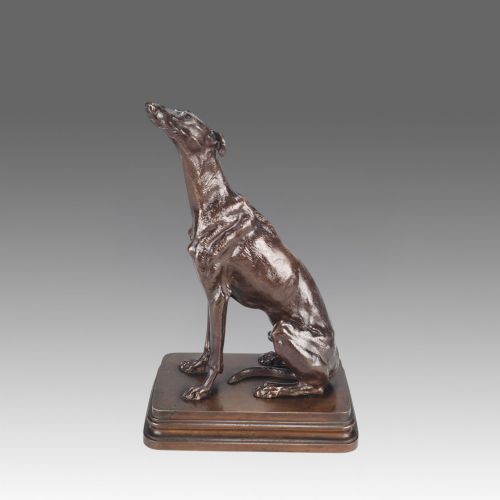
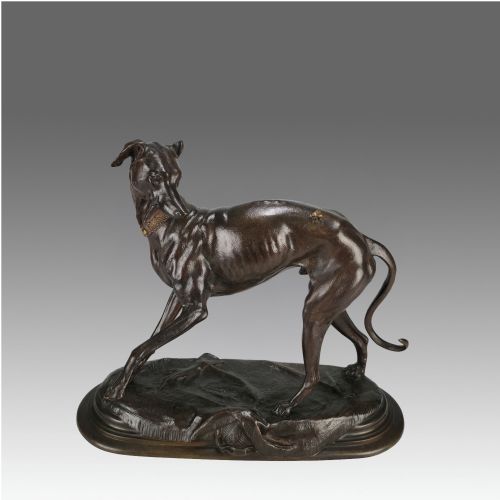
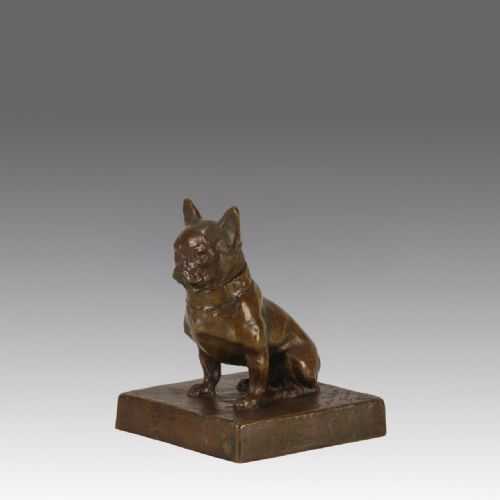
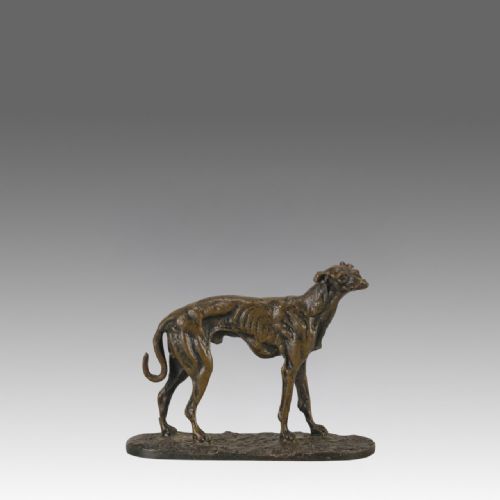
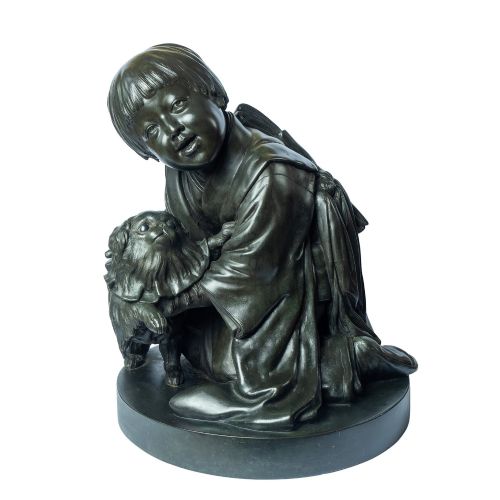


Cast Bronze Dog Figurine
A cast bronze dog figurine brings character and form to a desk or mantel, capturing breeds from terriers to greyhounds in enduring metal.
Cast Bronze Dog Figurine
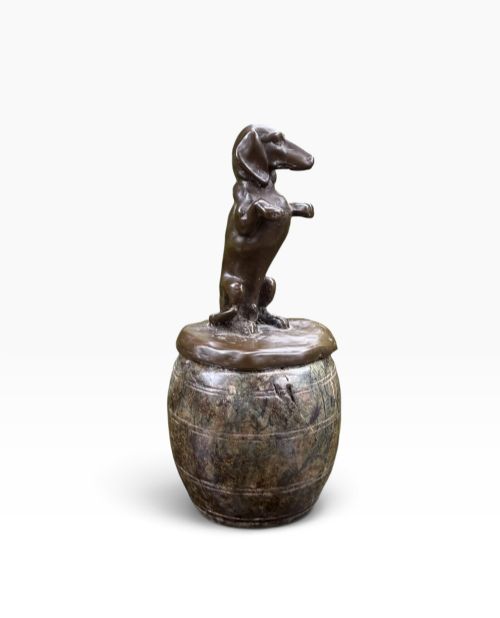
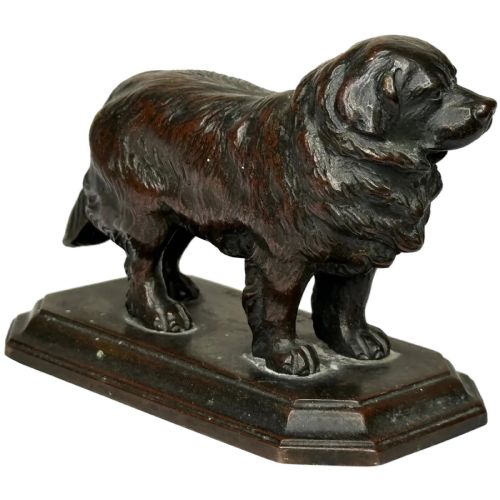
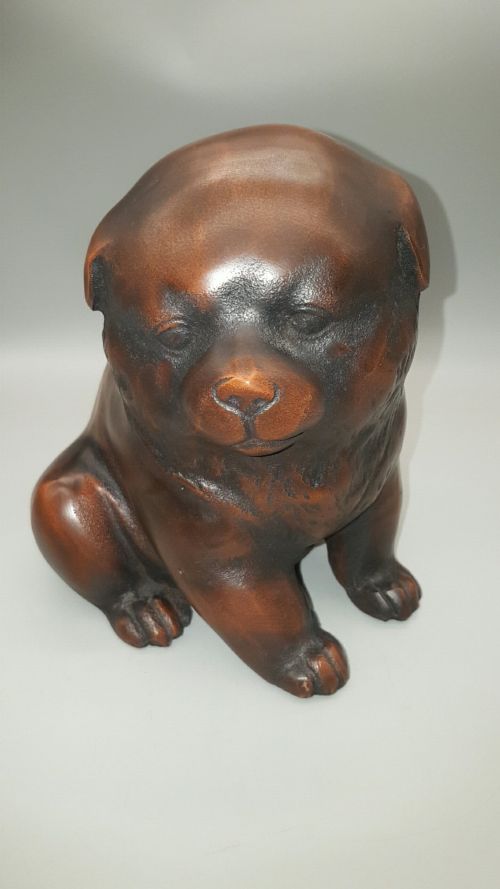
A cast bronze dog figurine represents canine subjects through sculptural studies originating primarily from the nineteenth and early twentieth centuries. These pieces encompass European animalier works alongside Japanese Meiji period okimono and Austrian cold-painted Vienna bronzes.
Buyers encounter subjects ranging from working gundogs and terriers to poodles, pugs, and sighthounds like greyhounds and whippets. Many examples are mounted on marble plinths, timber bases, or integrated as functional items such as paperweights and door stops.
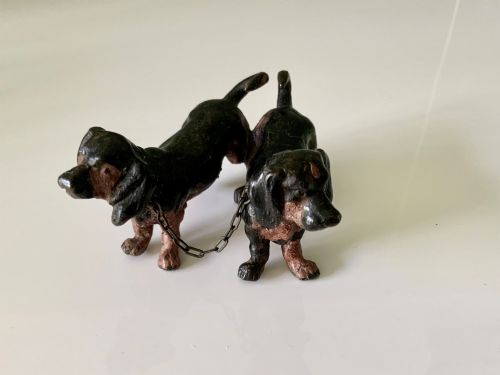
The aesthetic bridges realistic anatomical studies associated with French animalier sculptors and whimsical, brightly tinted miniature models. Selecting a cast bronze dog figurine depends upon recognising the specific breed portrayal and the period of its creation.
Materials and construction
The creation of these sculptures relies upon traditional lost-wax casting or sand casting methods using copper alloys, resulting in durable metal forms. Surfaces often receive applied chemical treatments to produce distinct dark patinas, or hand-painted polychrome finishes known as cold painting.
Many European works incorporate natural stone elements, pairing heavy bronze casts with contrasting marble bases or integrating timber supports. Subsidiary materials such as cast iron appear in heavier utility pieces like door stops, while select sculptures feature integrated metal bases cast as part of the primary design.
Materials documented across the pieces include patinated bronze, cast iron, timber bases, and marble plinths.
Evaluating sculptural quality
The depth and longevity of the original patina or the preservation of delicate cold-painted polychrome surfaces heavily influence desirability. Finer casts also benefit from strong compositional balance and clear association with accomplished founders or named artists.
Alfred Dubucand·Alfred Barye·Dora Heber·P J Mêne·Masaaki·Jules Moigniez·Delabrierre·Edith Parsons·Arthur Waagen·Joseph Francois Victor Chemin·Christophe Fratin·Louis Riche·Antoine Louis Barye·Barbedienne·L Bureau·Tsunemitsu
The Cast Bronze Dog Figurine Glossary
- Animalier
- A nineteenth-century artistic movement dedicated to the realistic depiction of animals. Sculptors in this tradition focused closely on anatomical accuracy and natural behaviour.
- Cold-painted bronze
- A technique where bronze figures are painted with cold enamel paints rather than fired in a kiln. This method was widely used in Austrian workshops for small novelty pieces.
- Okimono
- A Japanese term for a decorative object or figurine meant for display on a shelf or in a tokonoma alcove. Meiji period examples show exceptional attention to metal texture.
- Patina
- The surface sheen or colour layer developed on bronze through oxidation or chemical treatment. A stable patina protects the underlying metal and adds visual depth.
- Lost-wax casting
- A historic method where a wax model is melted out of a mould to create a cavity for molten bronze. This technique allows for intricate detail and undercut forms.
Cast Bronze Dog Figurine: Frequently Asked Questions
What is an animalier bronze dog?
An animalier bronze dog is a realistic nineteenth-century sculpture focusing on the natural anatomy and movement of specific canine breeds. These works were created by specialised sculptors who studied animals closely.
Such pieces range from alert terriers to racing greyhounds, capturing the energy and distinct silhouette of each breed in solid metal.
How do I clean a bronze dog sculpture?
Cleaning requires only gentle dusting with a soft, dry cloth to remove surface particles. Avoid water, abrasive cleaners, or polishes that can strip the historic patina.
Preserving the original surface finish protects the character and historical integrity of the piece over time.
What is cold-painted bronze?
Cold-painted bronze refers to metal figures decorated with oil or enamel paints applied without high-temperature firing. This technique allowed makers to achieve vibrant, lifelike colours on miniature animal models.
Care should be taken to keep these delicate painted surfaces away from direct sunlight and moisture.
Are these figures solid bronze?
Most antique figurines are cast using hollow or solid methods in bronze, though some utility items utilise heavier base metals like cast iron. Hollow casting was standard practice to reduce weight and metal usage while maintaining structural strength.
Inspecting the underside or base often reveals the casting method and the thickness of the metal used.