

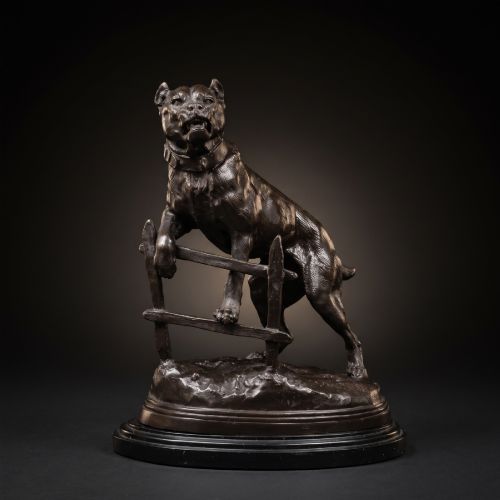
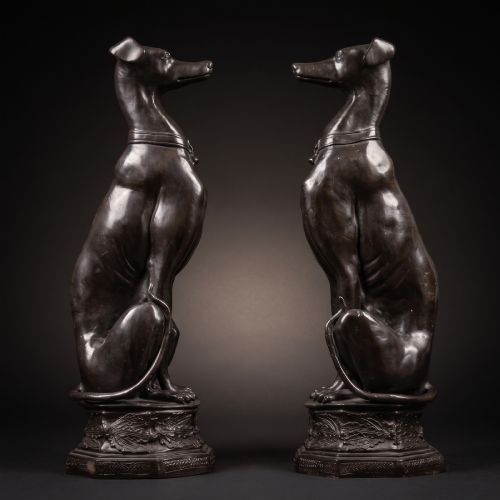
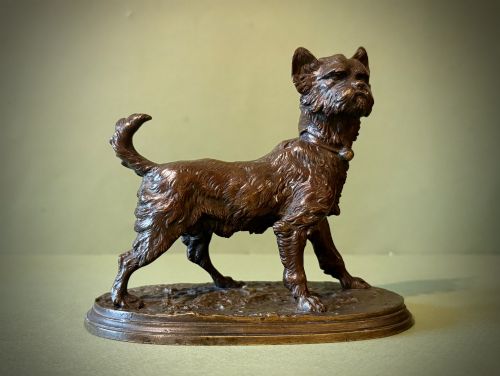
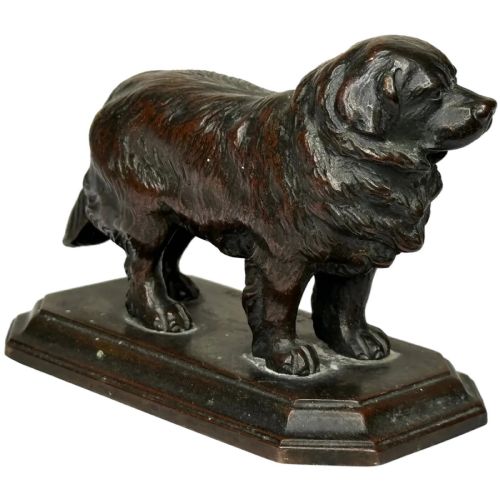
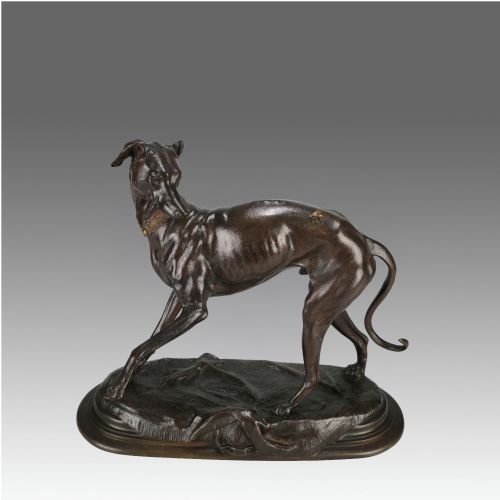
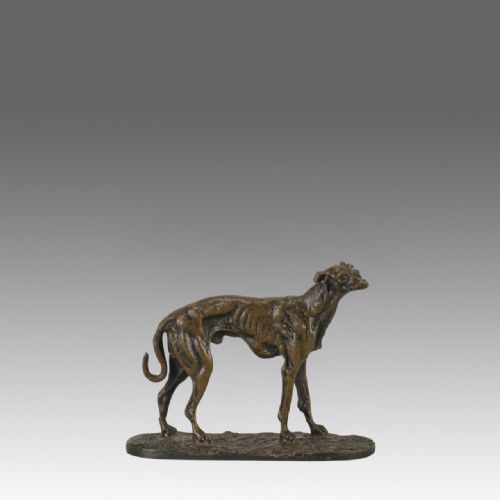


Cast Bronze Canine Statue
A cast bronze canine statue captures the intense character of hounds and terriers through enduring metal.
Cast Bronze Canine Statue
A cast bronze canine statue represents the sculptural focus on dogs found across the nineteenth and twentieth centuries. These figures range from realistic sporting hounds to decorative table pieces, often mounted on timber bases or marble plinths.
The version most likely to meet you on this page is the nineteenth-century animalier bronze, particularly French depictions of greyhounds, terriers, and spaniels. These works capture specific breeds with close anatomical attention.
Makers and foundries of the period produced works spanning the Victorian era, the Art Deco decades, and the Meiji period in Japan. Each piece reflects the sculptural tastes of its origin, whether European animalier realism or cold-painted Vienna novelty.
How they were made
The pieces on this page rely primarily on bronze casting, utilising both traditional foundry methods and cold-painted techniques. Molten metal was poured into moulds to capture fine details of fur, muscle, and expression.
Many sculptures incorporate additional materials such as marble or wood for their bases, providing stability and visual contrast. Surface finishes include rich patinas and applied paint, particularly in Vienna bronzes.
Cast Bronze Canine Statue Retail Price Guide 2026
Typical asking prices for cast bronze canine statue among the pieces listed under this phrase on Sellingantiques today, from the lower quarter to the upper quarter. They describe what is for sale here now, not the wider market.
Listings feature works spanning the nineteenth century, Victorian period, Art Deco era, and the Meiji period.
What varies in quality
The distinction between tiers of cast bronze canine statue examples lies in the sharpness of the casting and the skill of the chasing work. Finer sculptures retain crisp anatomical lines and subtle texture in the fur, while lesser examples lose detail in the finishing stages.
The quality of the patina or cold-painted surface also dictates the character of the piece. A carefully applied patina deepens the visual depth of the bronze, whereas flat or heavily worn surfaces obscure the sculptor's original intent.
Charles Valton·P. J. Mêne·Alfred Barye·Antoine Louis Barye·Edith Parsons·Arthur Waagen·Joseph Francois Victor Chemin·Barbedienne·L. Bureau
The Cast Bronze Canine Statue Glossary
- Animalier
- A nineteenth-century artistic movement focused on the realistic depiction of animals. Sculptors in this tradition studied live specimens closely to render accurate musculature and movement.
- Cold Painted Bronze
- A technique where bronze figures are painted with cold enamel paints rather than fired in a kiln. This method allows for vivid coloration, common in smaller decorative figures.
- Patina
- The surface coloration and sheen developed naturally over time or applied chemically by the foundry. It protects the metal and enhances sculptural contours.
- Foundry Mark
- A stamp or signature left by the casting workshop, indicating where and sometimes when the bronze was poured. These marks help identify the commercial origin of the piece.
Cast Bronze Canine Statue: Frequently Asked Questions
How do I clean a bronze dog statue?
Dust the surface gently with a soft, dry brush to prevent the accumulation of grit within the crevices of the bronze.
Avoid using harsh chemical polishes or water, as these can strip the historic patina and damage the metal permanently.
What is an animalier bronze?
An animalier bronze is a nineteenth-century sculpture focused specifically on animal subjects, rendered with close attention to natural anatomy.
These works were popularised in France and range from dramatic hunting scenes to quiet studies of domestic dogs.
How can I tell the age of a bronze sculpture?
Examine the quality of the chasing, the type of patina, and any foundry marks or signatures stamped into the bronze base.
Stylistic indicators, such as the streamlined geometry of Art Deco pieces or the ornate realism of Victorian animalier work, also point to specific periods.
Are these statues solid bronze?
Most antique bronze sculptures are cast using the lost-wax method, which often results in hollow rather than solid figures to conserve metal.
Despite being hollow, quality castings have a substantial weight and are frequently anchored to heavy marble or timber bases.