



Bronze Whippet Statues
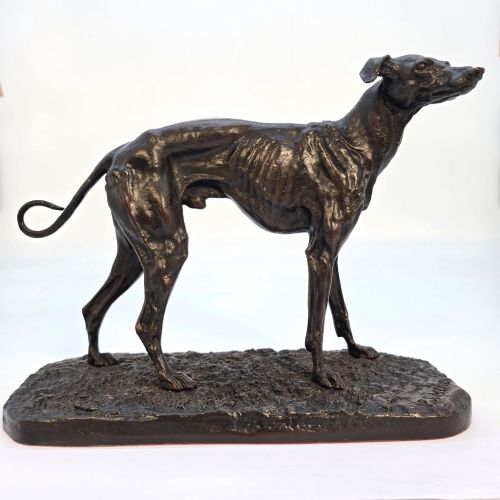
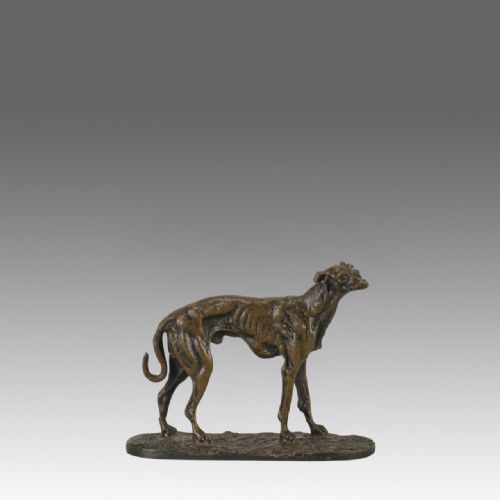
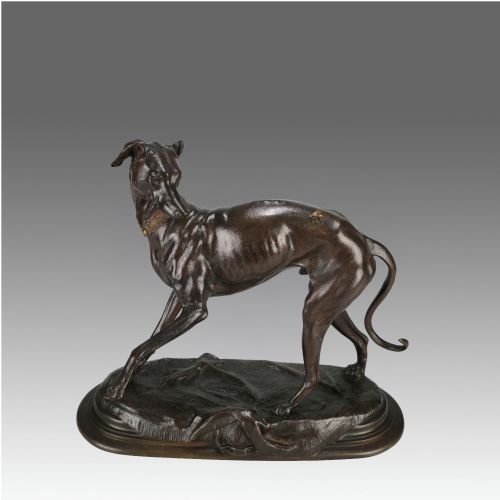
Bronze whippet statues are characteristically lifelike animalier desk ornaments and mantel figures that capture the lean musculature of the breed.
Bronze Whippet Statues
Bronze whippet statues are sculptural representations of greyhounds, sighthounds, and Italian greyhounds produced primarily during the nineteenth and early twentieth centuries. These pieces frequently appear in French animalier styles, depicting the dogs seated, standing, or recumbent.
The objects on this page range from small desk paperweights and ornaments to larger cabinet sculptures. Makers utilised heavy bases in marble, stone, or wood to anchor the slender forms of the running or resting hounds.
How they were made
Foundries cast these sculptures in bronze using traditional methods, often applying dark patination or silvered finishes to accent the musculature and coats of the animals. Artists sculpted the models with acute attention to anatomical detail, reflecting the observation of live dogs in motion or repose.
Many works incorporate naturalistic bases made from stone, marble, or polished wood, providing a solid foundation for the metal figures. Artisans signed numerous pieces directly into the bronze base alongside foundry marks or titles.
Bronze Whippet Statues Retail Price Guide 2026
Typical asking prices for bronze whippet statues among the pieces listed under this phrase on Sellingantiques today, from the lower quarter to the upper quarter. They describe what is for sale here now, not the wider market.
Materials recorded across the current selection include patinated bronze, silvered bronze, and natural stone.
What varies in quality
The standard of a casting rests upon the crispness of the chased detail in the fur and muscle structure, distinguishing superior artistic merit from simpler commercial production. Sculptures bearing the distinct signatures of recognised animalier artists command greater attention.
The choice and execution of the base material, whether veined marble, carved stone, or turned wood, contributes significantly to the visual balance of the overall composition.
Alfred Dubucand·Alfred Barye·P J Mêne·Pierre Jules Mene·Karl Hagenaur·Joseph Francois Victor Chemin·Christophe Fratin·Pierre-Jules Mêne
The Bronze Whippet Statues Glossary
- Animalier
- A nineteenth-century artistic movement dedicated to the realistic depiction of animals, particularly in bronze. Sculptors in this tradition studied live specimens closely to capture authentic movement and anatomy.
- Patina
- The surface coloration and sheen developed on bronze over time or applied chemically by the foundry. This finish protects the metal and accentuates the sculptural contours.
- Silvered bronze
- Bronze that has been coated with a layer of silver to produce a bright, reflective finish. This technique appears notably on modernist and Art Deco pieces.
- Recumbent
- Lying down or resting, a common posture for whippet and greyhound sculptures designed for mantelpieces or desk surfaces.
Bronze Whippet Statues: Frequently Asked Questions
How do I clean bronze whippet statues?
Dust the surface gently with a soft, dry brush to prevent dirt accumulation in the crevices of the casting. Avoid abrasive cleaners or liquids that might strip the original patina.
Apply a microcrystalline wax sparingly if the metal requires protection, buffing it lightly with a clean cloth afterwards.
Where were most of these statues made?
The majority of nineteenth-century animalier bronzes originate from French foundries where specialised sculptors modeled domestic and wild animals. Later works extend into twentieth-century European studios embracing Art Deco aesthetics.
These pieces travelled internationally as decorative ornaments for studies, libraries, and drawing rooms.
Are these sculptures solid bronze?
Many animalier figures are cast using the lost-wax method, which can produce hollow bronze forms to manage weight and metal usage efficiently. The heavy feel of these statues often comes from the solid marble, stone, or wooden bases attached underneath.
Signatures and foundry marks are frequently stamped directly into the metal during the casting process.
How do I distinguish nineteenth-century pieces from later ones?
Nineteenth-century examples typically display the naturalistic detailing and patination characteristic of the animalier school, often featuring signatures of known French sculptors. Twentieth-century iterations tend toward streamlined Art Deco stylisation with silvered finishes or geometric marble mounts.
Examining the casting quality and the wear on the base helps indicate the period of manufacture.