
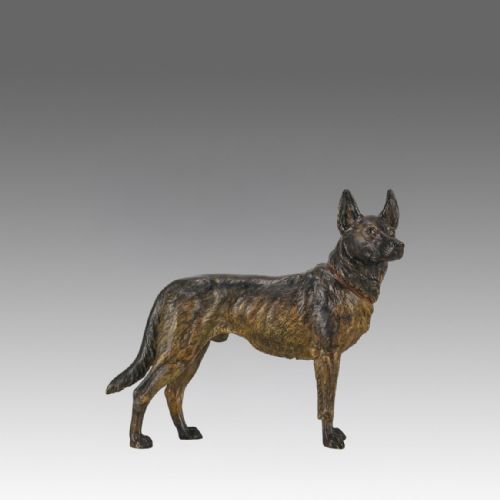
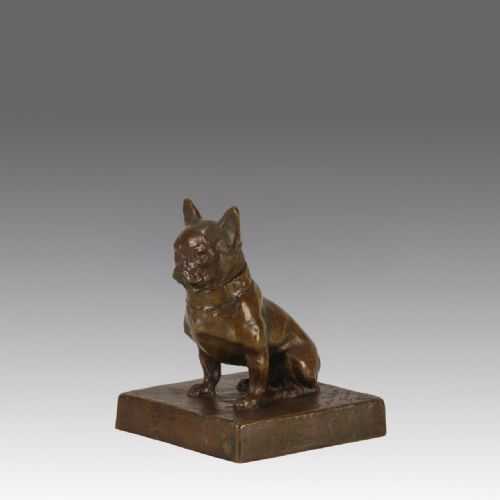
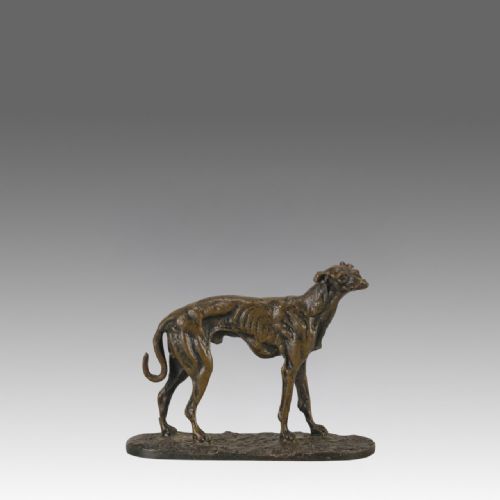

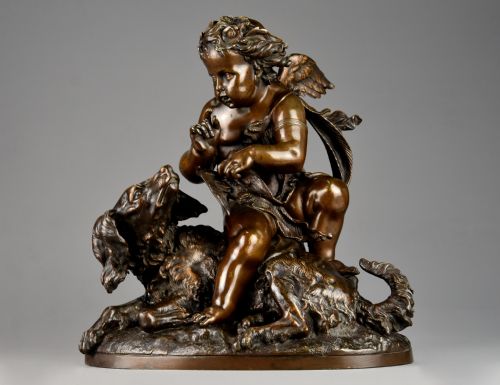


Bronze Dog Figures
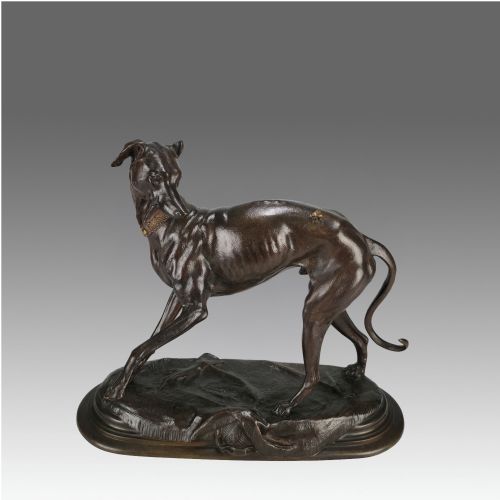
These bronze dog figures capture canine form with spirited realism, ranging from playful terriers to sleek greyhounds cast across the nineteenth and early twentieth centuries.
Bronze Dog Figures
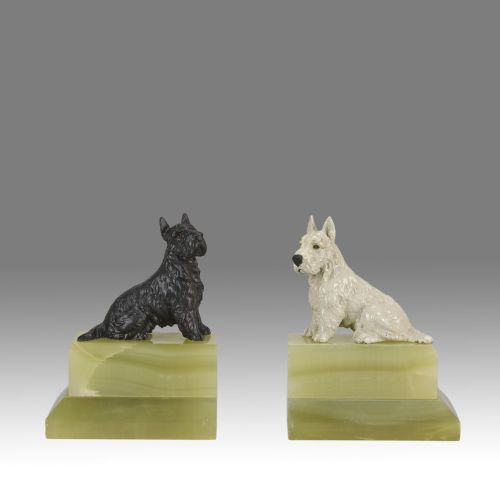
When searching for bronze dog figures, collectors encounter a diverse array of sculptures, bookends, and paperweights representing various breeds. The selections span the Victorian era, the nineteenth-century French Animalier movement, and later Art Deco designs.
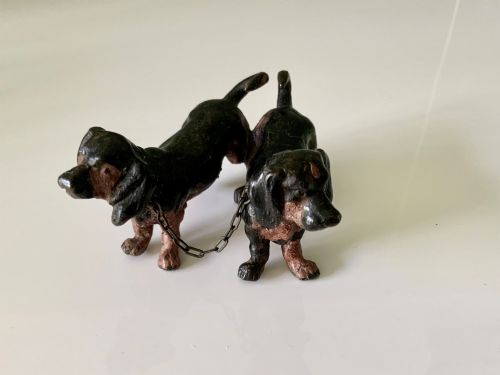
Many of these works depict specific breeds such as greyhounds, terriers, dachshunds, and pugs in naturalistic poses. Others incorporate canine subjects into functional items like door stops, inkwells, or companion pieces to human figures.
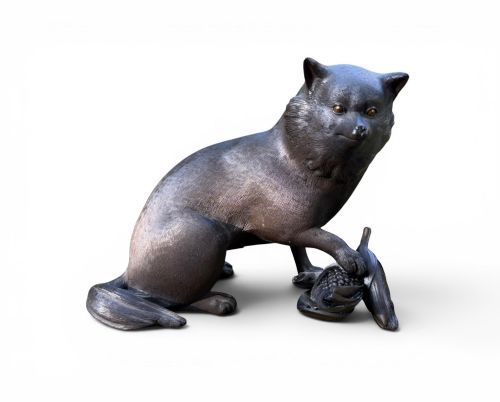
Japanese okimono pieces also appear, bringing distinct traditional craftsmanship to canine representation alongside European foundry output. Buyers will find both small cabinet studies and more substantial floor or desk ornaments.
How they were made
Foundries typically utilised the lost-wax casting method to render musculature, fur texture, and posture with high fidelity. Artisans then applied patination, ranging from deep brown tones to cold-painted polychrome finishes on Vienna bronze pieces.
Listings feature works spanning the Victorian period through the 1930s Art Deco era, cast in bronze, patinated bronze, spelter, and iron.
What varies in quality
The distinction between ordinary production and superior work lies in the sharpness of the chiselling and the depth of the foundry finish after casting. Master modellers achieved a lifelike tension in the animal's limbs and expression that lesser copies miss.
Surface patination and the preservation of cold-painted details heavily influence the visual impact of a piece. Bases fitted from matching decorative stones like marble or onyx also indicate higher original manufacturing ambitions.
Alfred Barye·Franz Bergman·Dora Heber·P J Mêne·MASAAKI·Prosper Lecourtier·Delabrierre·Edith Parsons·Eurotrope Bouret·Jules Moigniez·Karl Hagenaur·Alexandre Kelety·Arthur Waagen·P.de Soete·Dumond·Geo Maxim·Joseph Francois Victor Chemin
The Bronze Dog Figures Glossary
- Animalier
- A nineteenth-century artistic movement dedicated to the realistic portrayal of animals, particularly in bronze. Sculptors in this tradition focused on anatomical accuracy and dynamic movement.
- Cold-painted bronze
- A technique where bronze figures were painted with cold enamel paints rather than fired in a kiln. This method was especially popular in Austrian Vienna bronzes.
- Okimono
- A Japanese term for a decorative object or carving meant for display on a shelf or in a tokonoma alcove. These figures often depict animals with acute observation.
- Spelter
- A zinc alloy commonly utilised as a less expensive alternative to bronze during the Art Deco period. It was often given a bronze-like metallic coating.
- Patina
- The surface coloration or sheen developed on bronze through oxidation or chemical treatment over time. It protects the metal and enhances sculptural definition.
Bronze Dog Figures: Frequently Asked Questions
How do I identify a cast iron piece?
Cast iron is generally heavier and more magnetic than bronze, often featuring a simpler surface texture without the fine chiselling found on finer metal castings.
These pieces were frequently utilised for utilitarian items like door stops rather than decorative interior sculptures.
What is the difference between spelter and bronze?
Spelter is a softer zinc alloy that feels lighter and shows a more brittle fracture if damaged, whereas bronze is a durable copper alloy with a resonant weight.
Foundries used spelter as an economical substitute during periods of high metal demand.
How should I clean a cold-painted bronze?
Cold-painted surfaces require very gentle dusting with a soft, dry brush to preserve the delicate enamel paint layers.
Moisture and chemical cleaners should be strictly avoided to prevent the paint from flaking off the metal substrate.
Why do some figures have marble bases?
Marble and onyx bases provided stability for heavier metal sculptures and added a decorative architectural element to the display.
They were particularly common on French Animalier works and Art Deco desk ornaments.