


Cased Silver Dining Accessories
Cased silver dining accessories are fitted presentation sets containing items like napkin rings and grape shears, offering traditional elegance for formal meals.
Cased Silver Dining Accessories
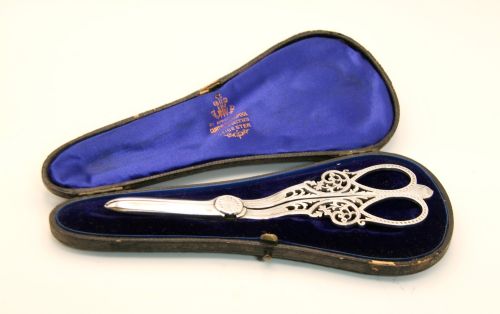
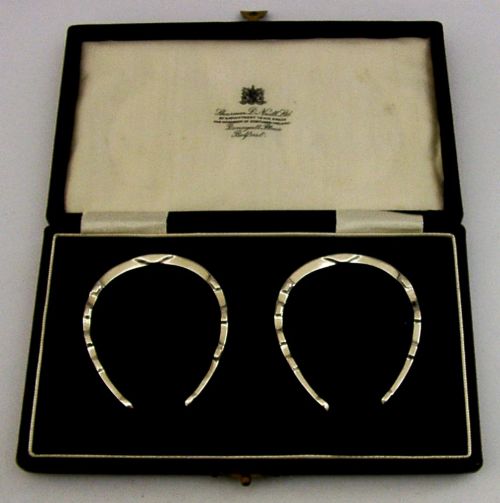
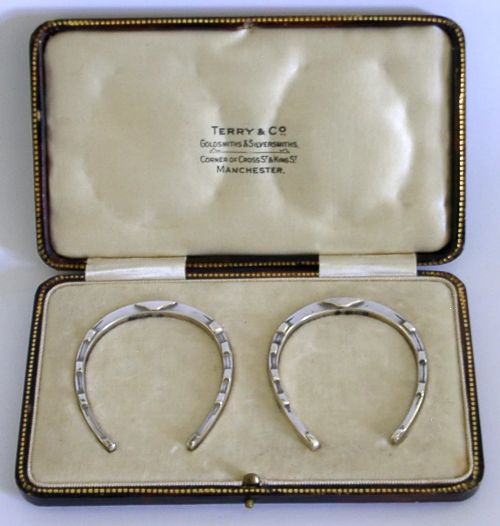
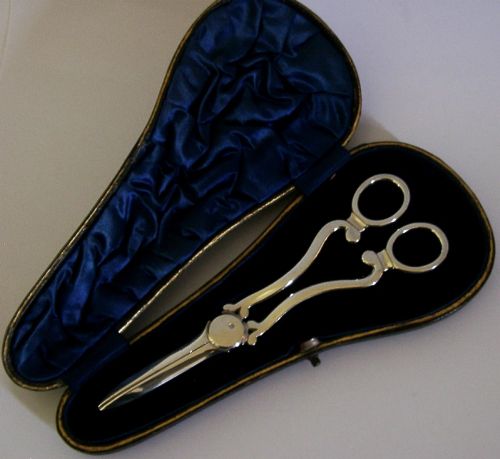
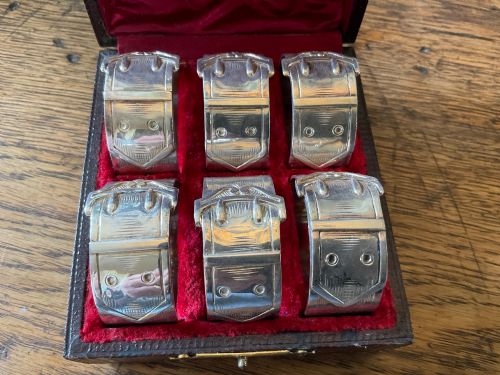
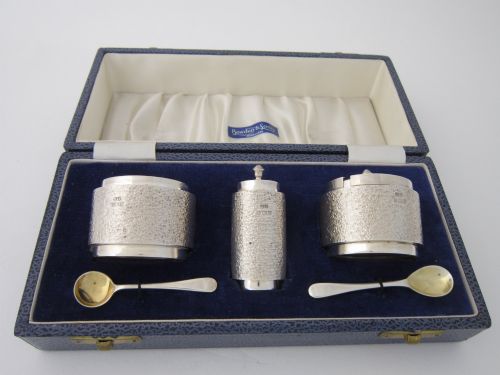
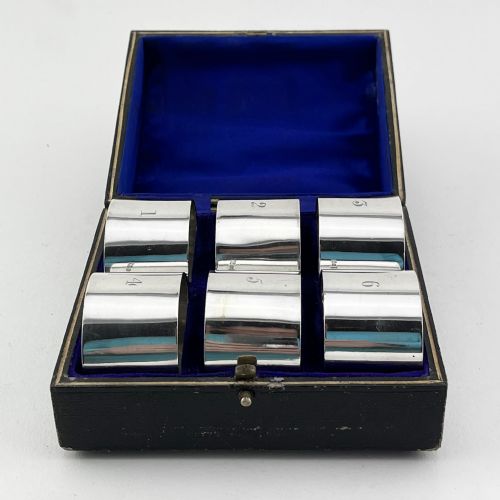
Cased silver dining accessories bring together matched utensils and table adornments housed in fitted protective boxes, often lined with materials like silk or velvet. Collectors frequently encounter sets dating from the Victorian and Edwardian eras through to the mid-twentieth century.
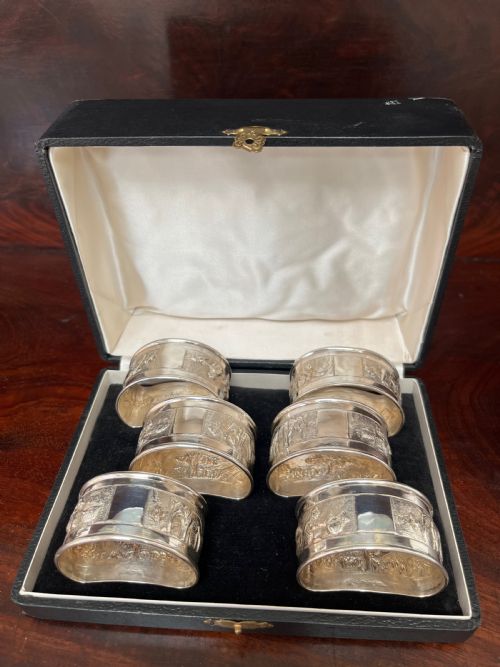
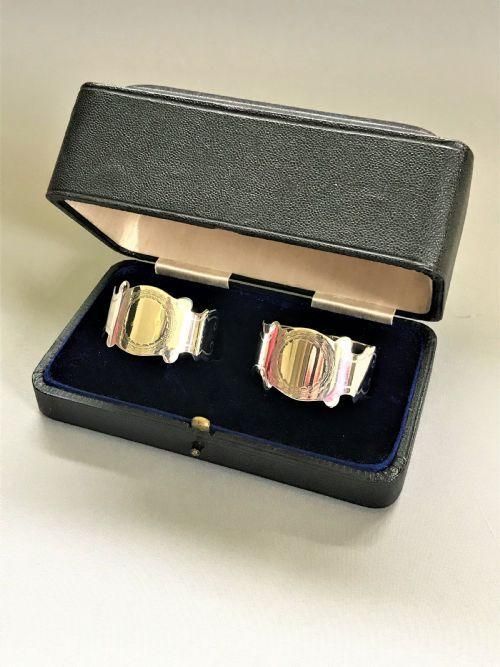
Napkin rings form a large portion of these offerings, appearing as single pairs, sets of four, or sets of six in structured cases. Other functional items include fish servers, knife rests, and grape scissors designed for formal dining contexts.
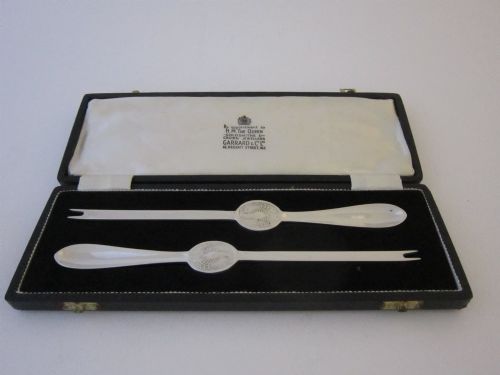
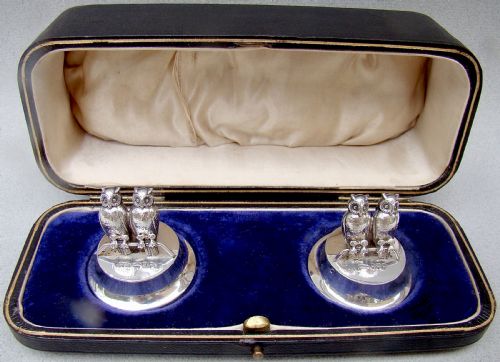
Specialist items also emerge within this category, such as menu holders shaped like owls or sentry boxes, alongside condiment sets and lobster picks. These pieces reflect the elaborate table settings characteristic of late nineteenth and early twentieth-century households.
Materials and Construction
Makers utilised solid sterling silver and silver plate for the primary utensils, pairing them with supporting elements of steel, cut glass, or mother-of-pearl depending on the specific function of the item. Craftsmanship involved techniques like casting, piercing, and engraving to shape intricate napkin rings, menu holders, and fruit shears.
The protective presentation boxes were constructed using timber frames covered in leatherette or leather, then fitted internally with moulded bases lined in silk, satin, or velvet to secure each piece safely in place.
Factors of Quality
Quality in these dining sets rests upon the crispness of the metalwork, the weight of the sterling silver, and the intact condition of the original fitted case. Pieces featuring figural modelling or detailed engraving demonstrate superior craftsmanship compared to plain functional items.
The preservation of the interior silk or velvet lining and the snugness of the box closure significantly influence the overall integrity of the set. Complete matched sets with clear hallmarks retain a distinct structural and historical advantage over mixed or altered groupings.
Levi & Salaman·C.T. Burrows & Sons·Mappin & Webb·Sampson Mordan·Garrard
The Cased Silver Dining Accessories Glossary
- Sterling silver
- A silver alloy containing 92.5 percent pure silver by mass, with the remainder composed of other metals for durability. This standard metal appears across the majority of traditional British dining pieces.
- Hallmark
- An official stamp applied by an assay office to indicate the purity of the metal, the maker, and the year of production. These marks provide definitive evidence of age and origin.
- Grape shears
- Specialised scissors designed for cutting clusters of grapes at the dining table without bruising the fruit. They often feature vine-leaf or grape-cluster ornamentation on the handles.
- Menu holder
- A small desk or table accessory intended to display a meal card or menu upright. Victorian and Edwardian examples frequently take whimsical figural shapes.
- Knife rest
- A small architectural support used to keep the blade of a carving or dining knife elevated above the tablecloth between courses. They are commonly fashioned from cut glass paired with silver mounts.
Cased Silver Dining Accessories: Frequently Asked Questions
What items are included in cased dining sets?
These sets contain matched tableware pieces such as napkin rings, fish servers, fruit scissors, and condiment sets. They also encompass decorative accessories like menu holders and knife rests.
Each item is secured inside a fitted box lined with silk or velvet to protect the polished surfaces when not in use.
How do I date silver dining accessories?
Dating relies primarily on the stamped hallmarks showing the assay office, metal standard, and date letter. Stylistic markers such as Edwardian restraint or Victorian ornamentation offer further clues.
The design of the presentation box and its interior fabric also help align the piece with a specific manufacturing period.
Were these cased sets meant for daily use?
Many sets were acquired as wedding gifts or special occasion purchases, resulting in occasional deployment for formal dinner parties. The fitted cases ensured the silver remained untarnished and protected during storage.
Today, they are often displayed or utilised for seasonal gatherings and traditional dining events.
How should I care for cased silver?
Silver components require gentle cleaning with a specialised non-abrasive polish to preserve engraved details and hallmarks. The original fabric linings should be kept dry and away from direct sunlight to prevent degradation.
Storing the items back in their fitted cases helps minimise exposure to atmospheric moisture and tarnishing.