


Boxed Silver Napkin Set
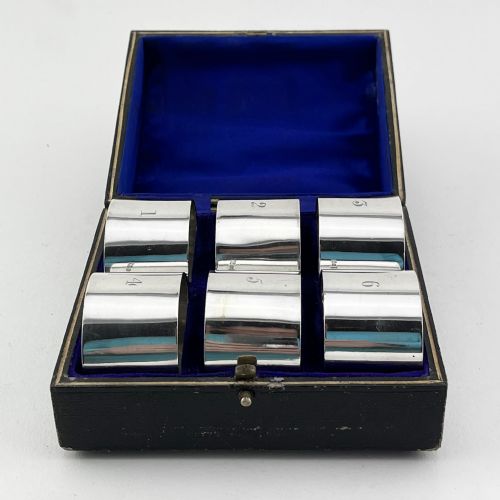
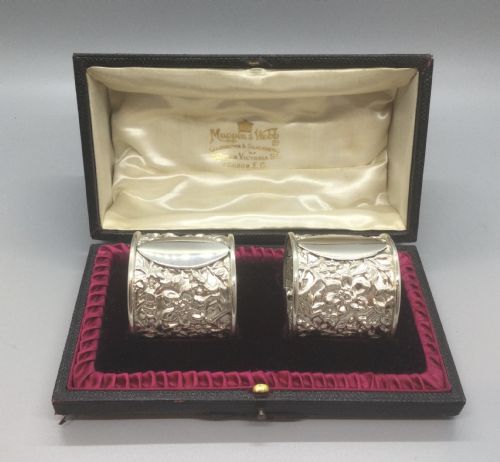
A boxed silver napkin set brings matching rings or dining pieces together in a fitted presentation case.
Boxed Silver Napkin Set
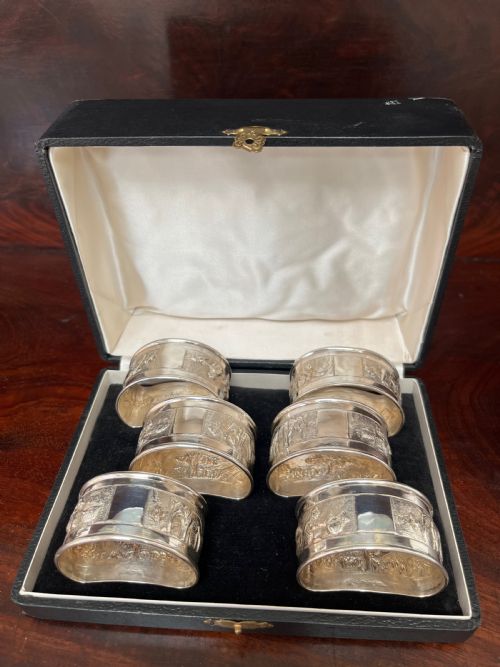
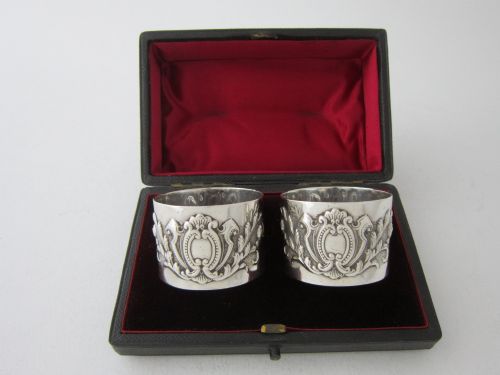
A boxed silver napkin set comprises matching rings or christening pieces housed in a fitted presentation container, originating predominantly from the Victorian, Edwardian, and Art Deco periods. Buyers looking for a boxed silver napkin set encounter configurations ranging from pairs up to sets of twelve, fashioned in solid sterling silver or silver plate.
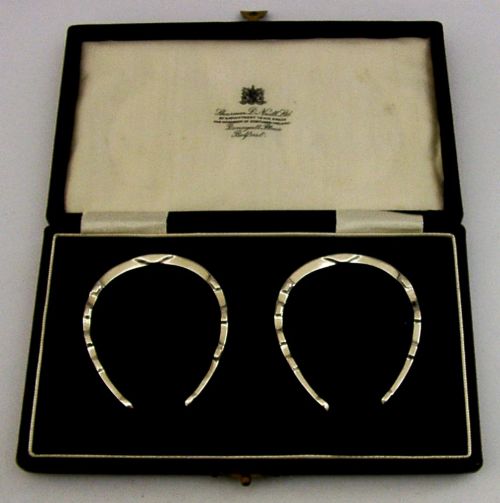
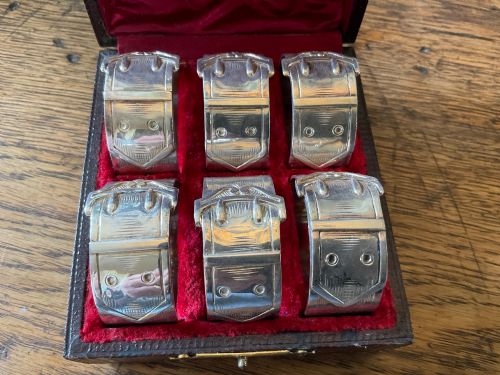
The assortment on this page includes specific forms such as horse shoe napkin rings, belt buckle designs, and christening sets comprising forks and spoons alongside rings. These items span various English assay offices including Birmingham, Chester, and London, reflecting traditional dining customs of the nineteenth and twentieth centuries.
Materials and construction methods
Makers utilised solid sterling silver and silver plate for the metal components, often shaping the rings with plain bodies, octagonal outlines, or Chippendale style borders. Silversmiths employed techniques such as stamping, casting, and engraving to produce ornate patterns or structural motifs like horse shoes and belt buckles.
The original presentation cases combine sturdy wooden or card carcasses covered in leatherette, leather, or cloth, lined internally with velvet, silk, or satin to cushion the metalwork securely.
Some Edwardian sets arrived tucked inside inlaid wooden boxes, adding an extra layer of hidden storage for the dining table.
Distinctions in craftsmanship and preservation
Quality in a boxed silver napkin set rests upon the thickness of the silver or plating, the crispness of the chased or engraved detailing, and the integrity of the original fitted box. Sets that retain their matching numbering sequence and original silk or velvet linings demonstrate higher desirability among collectors.
The distinction between solid sterling silver and silver plate influences the standing of a set, as does the presence of clear hallmarks indicating the maker, assay office, and year of production.
C.T. Burrows & Sons·Tiffany & Co·Cartier·George Unite
The Boxed Silver Napkin Set Glossary
- Sterling silver
- A silver alloy containing 92.5 percent pure silver and 7.5 percent other metals, usually copper, ensuring durability for tableware.
- Silver plate
- A layer of silver fused to a base metal core, offering the appearance of solid silver at a different cost.
- Assay office
- An official body that tests the purity of precious metals and stamps items with hallmarks.
- Hallmark
- A series of official marks applied to precious metal items showing the standard of purity, assay office, and year mark.
- Cased
- Refers to items sold within their original fitted presentation box or case.
Boxed Silver Napkin Set: Frequently Asked Questions
What periods do these sets come from?
The available pieces span the Victorian, Edwardian, and Art Deco eras, extending from the nineteenth century through the 1950s.
Most examples date from the late Victorian and Edwardian periods, reflecting the peak of fitted dining accessories.
Are the presentation boxes original?
Many listings include the original velvet, silk, or leatherette lined boxes specifically fitted for the matching rings or christening pieces.
These cases often feature maker labels or retailer details stamped inside the lid.
How do I identify solid silver from plated sets?
Solid silver pieces bear hallmark stamps indicating the sterling standard alongside the assay office and date letter.
Silver plated alternatives lack these official precious metal hallmarks and rely on maker marks denoting plating methods.
How were these sets used originally?
Families utilised matching napkin rings at the dining table to identify individual napkins throughout the week.
Christening sets served as traditional gifts for newborns, combining functional feeding utensils with a keepsake ring.