


Antique Dining Table Silverware
Antique dining table silverware brings together silver and silver plate table accessories spanning from the eighteenth century to the mid twentieth century.
Antique Dining Table Silverware
When buyers search for antique dining table silverware, they encounter a range of dining accessories including napkin rings, toast racks, cutlery canteens, centrepieces, sauce boats, candlesticks, and serving tongs. These items encompass Georgian, Victorian, Edwardian, Art Deco, and mid-twentieth-century periods, reflecting the shifting formal dining habits of past centuries.
The pieces most frequently met on this page are Victorian and Edwardian sterling silver napkin rings alongside twentieth-century cutlery sets and cased tablewares. Objects span from the eighteenth century through to the 1950s, utilising materials such as sterling silver, silver plate, oak, brass, and stainless steel.
Dining table silverware serves both functional and decorative purposes during formal meals, ranging from individual place settings like knife rests and napkin rings to large centrepieces and candelabra. Styles extend from Queen Anne and George III traditions through to Art Nouveau and Art Deco designs.
Materials and construction methods
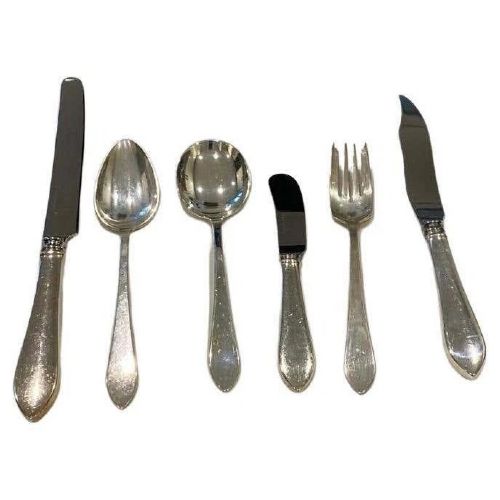
Items in this category rely predominantly on sterling silver and silver plate, often combined with structural elements in oak, brass, or steel. Cutlery canteens integrate silver handles or blades with stainless steel components, while novelty pieces and presentation items utilise plated base metals over copper or brass.
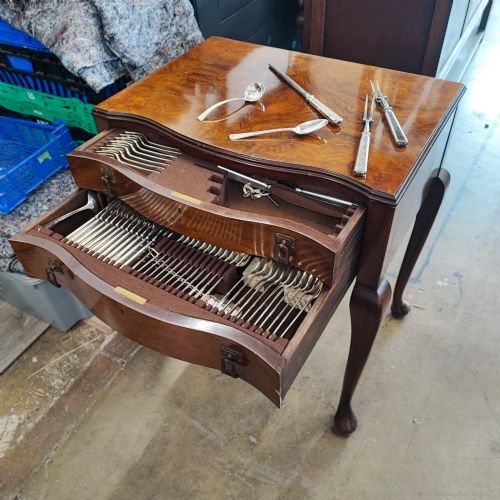
Manufacturing techniques combine traditional hand-forging, silversmithing, and casting with nineteenth-century electroplating methods developed by firms such as Elkington. Cased sets and fitted boxes frequently incorporate velvet and silk linings to house individual silver components securely.
Listings feature sterling silver and silver plate table accessories spanning from the 18th century through to the 1950s.
Distinctions in quality and execution
The distinction between standard table accessories and finer pieces rests upon the crispness of chased or engraved decoration, the weight of the solid silver, and the durability of the silver plate over base metal. Hallmarks indicating specific makers, assay offices, and date letters provide clear evidence of origin and standard.
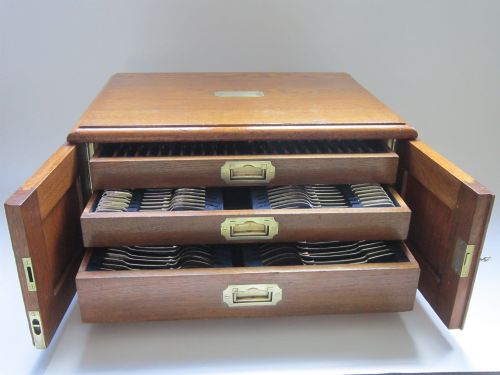
Cased sets and canteens achieve higher standing when the original fitted box, often lined in silk or velvet, remains intact alongside a complete matching complement of items such as napkin rings or flatware pieces.
Elkington and Co·Reilly and Storer·Tiffany
The Antique Dining Table Silverware Glossary
- Sterling silver
- A silver alloy containing 92.5 percent pure silver and 7.5 percent other metals, typically copper, used to ensure durability in tableware. British pieces carry hallmark stamps verifying this standard.
- Silver plate
- A manufacturing method where a thin layer of silver is bonded to a base metal such as copper, brass, or nickel silver. This technique allowed larger dining items like candelabra and centrepieces to be produced more affordably.
- Toast rack
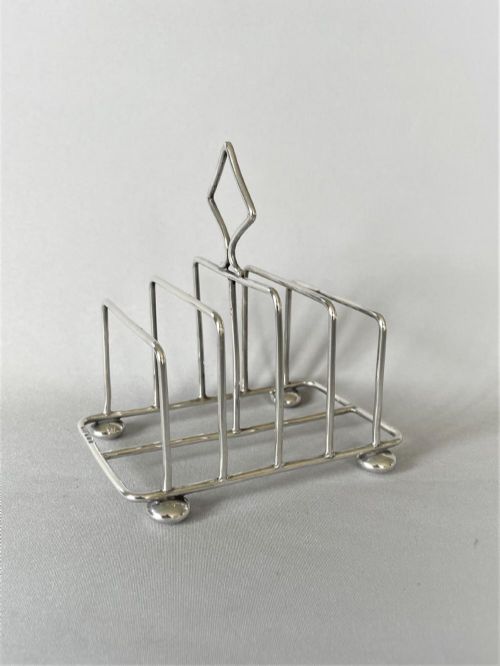
- A small tabletop frame featuring individual metal divisions designed to hold slices of toast upright. These pieces date across Georgian, Victorian, and Edwardian periods.
- Epergne
- A large table centrepiece featuring a central bowl with multiple branching arms holding smaller baskets or dishes. They serve as decorative centerpieces for formal dining tables.
- Fiddle pattern
- A traditional nineteenth-century cutlery handle design characterised by a narrow stem widening towards a squared, upturned end resembling a fiddle. This pattern appears frequently in Victorian canteens.
Antique Dining Table Silverware: Frequently Asked Questions
How do I identify silver plate from solid silver?
Solid sterling silver pieces bear hallmarks that include a lion passant, an assay office mark, and a date letter denoting the year of testing. These official stamps guarantee the precious metal content of the object.
Silver plated items generally lack these sterling marks and may instead show maker marks associated with electroplating firms. Over time, heavy wear on plated items can reveal the base metal underneath.
What are knife rests used for?
Knife rests hold carving knives and dining cutlery above the tablecloth between courses. This practice kept the table linen clean and prevented blades from touching the surface.
Typically formed as small paired stands in silver or silver plate, they became popular table accessories during the Victorian and Edwardian periods.
What period do most napkin rings date from?
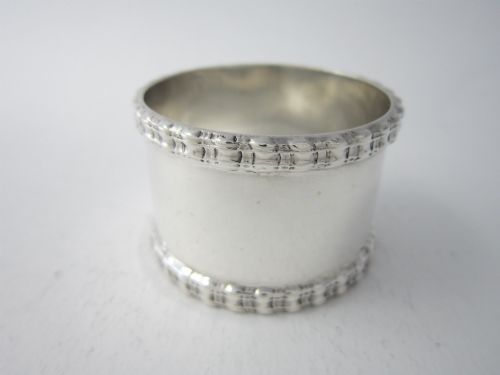
The majority of antique napkin rings encountered originate from the Victorian and Edwardian eras. During these periods, individual table settings became increasingly formal and personalized.
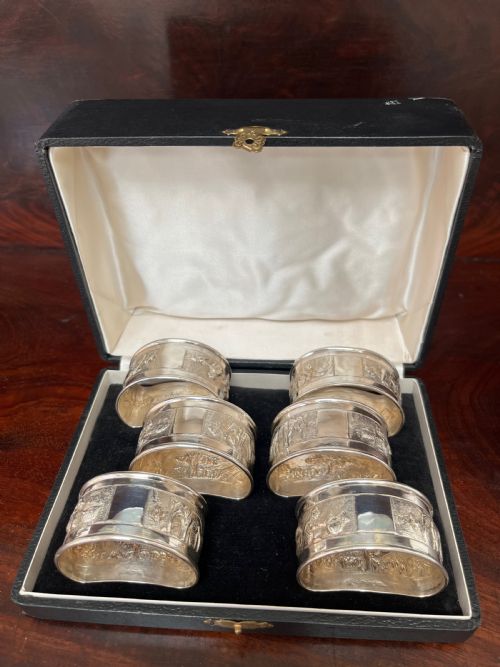
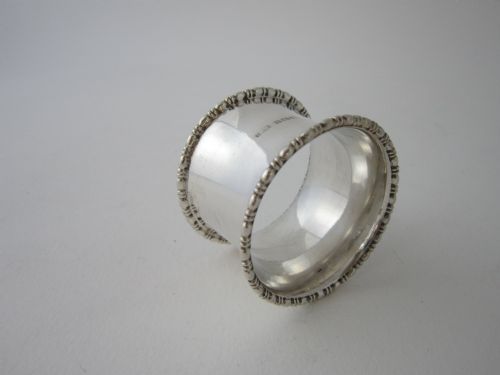
Silver napkin rings often feature engraved monograms, chased floral patterns, or plain polished surfaces. They were produced individually, in pairs, or as matched sets within fitted cases.