


Cased Silver Napkin Rings
Cased silver napkin rings combine solid sterling silver or silver plate with fitted presentation boxes lined in velvet or silk, offering both formal dining utility and preserved heritage.

Cased Silver Napkin Rings
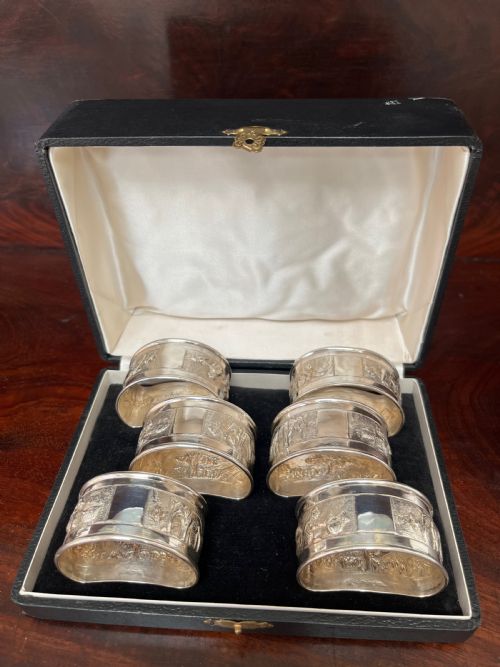
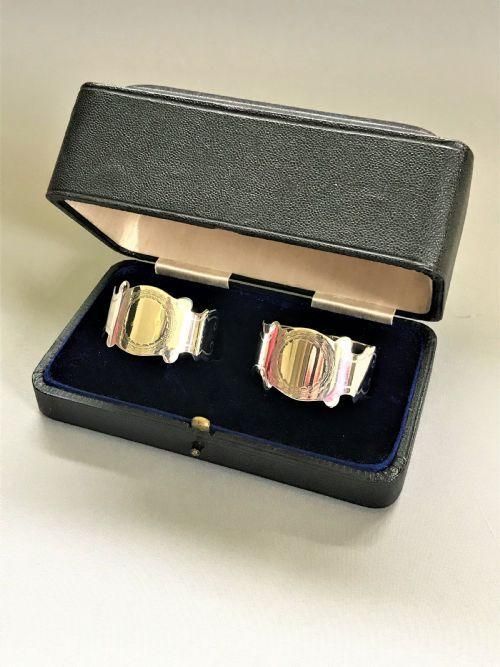
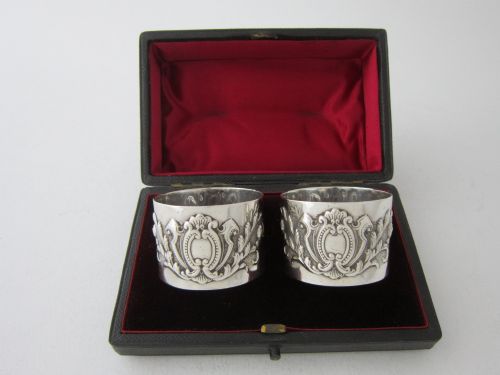
Cased silver napkin rings are dining accessories presented in dedicated fitted boxes lined with materials such as silk, velvet, or leatherette. These sets span from the Victorian and Edwardian eras through the George V period and into the mid-twentieth century.
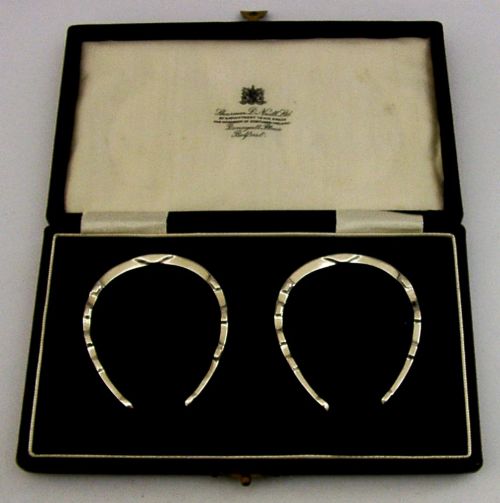
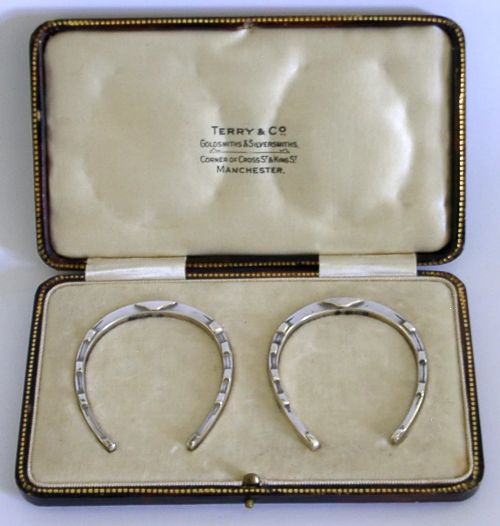
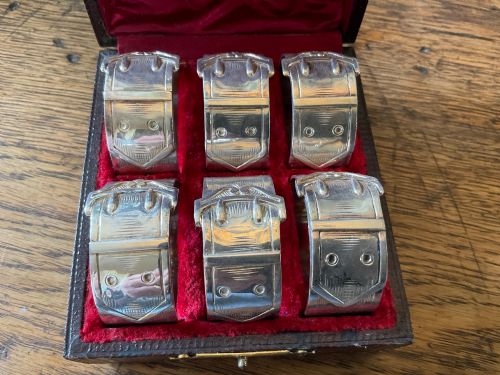
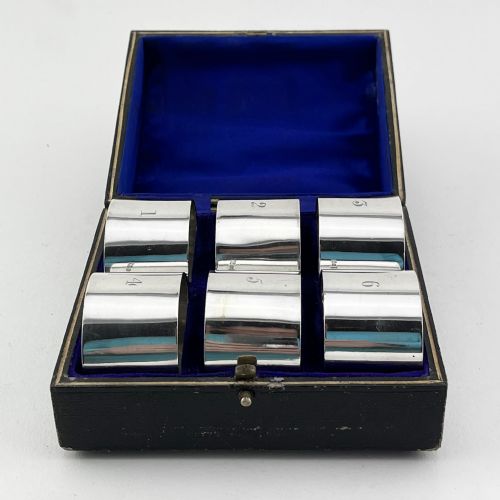
Buyers encounter individual pairs alongside larger sets of four, six, or more, occasionally matched with christening pieces. Forms range from plain bands to novelty motifs like horseshoes, belt buckles, and naturalistic pine cones.
Originating predominantly from English assay offices including Birmingham, Sheffield, and London, these items reflect formal dining customs where individual rings were numbered or initialled for family members and guests.
How They Were Made
Silversmiths utilised sterling silver or silver plate, shaping metals through casting, piercing, engraving, and stamping techniques. Novelty shapes such as belt buckles and horseshoes required detailed dimensional forming.
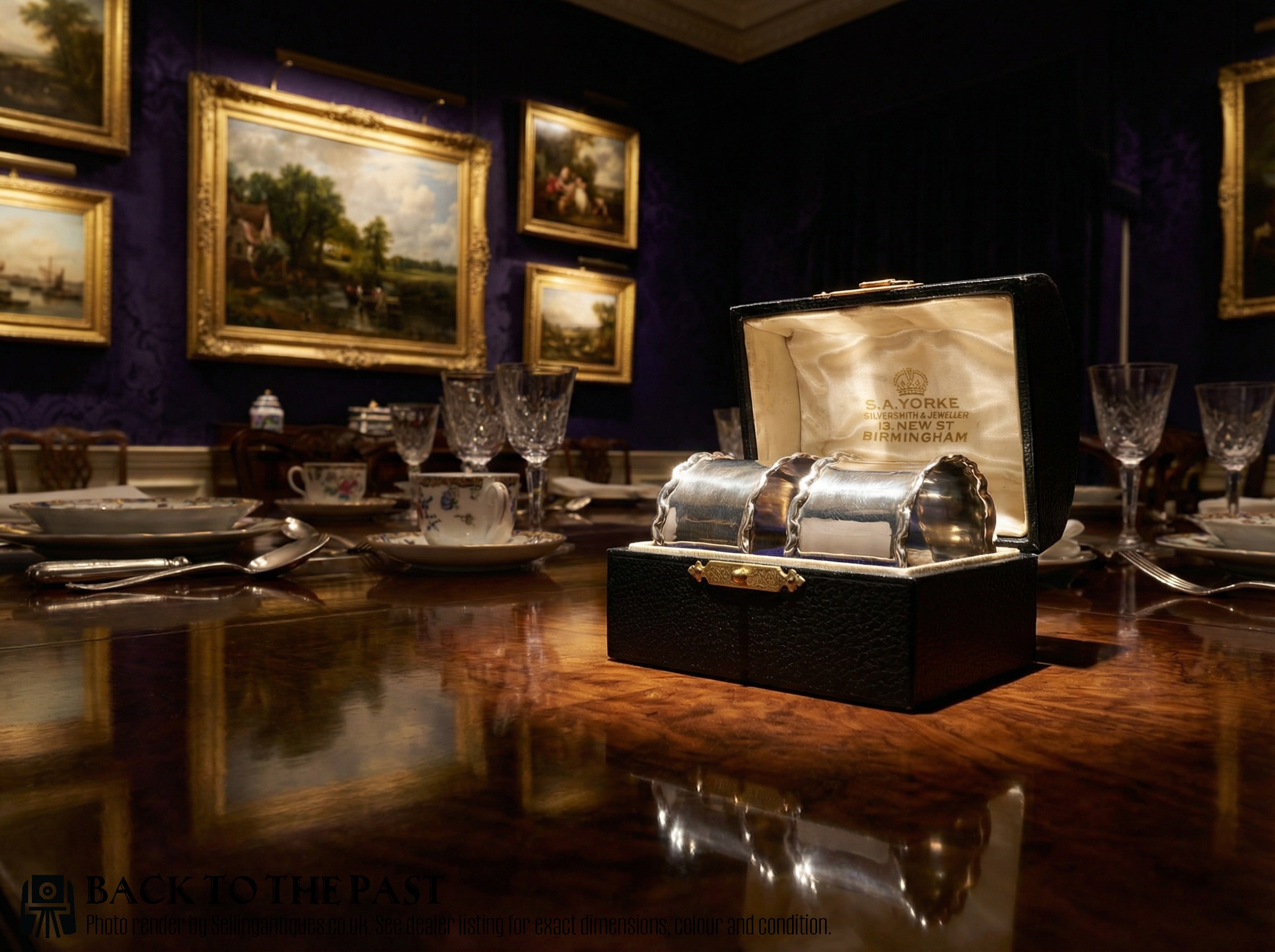
Presentation cases were constructed from wood covered in leather or leatherette, then fitted with internal platforms upholstered in silk, satin, or velvet to securely cradle each ring.
Cased Silver Napkin Rings Retail Price Guide 2026
Typical asking prices for cased silver napkin rings among the pieces listed under this phrase on Sellingantiques today, from the lower quarter to the upper quarter. They describe what is for sale here now, not the wider market.
Some Victorian diners trusted novelty horseshoe napkin rings to bring a touch of stable-yard luck straight to the formal dining table.
What Varies in Quality
Quality rests in the weight and gauge of the silver, the crispness of hand-engraved decoration, and the complexity of figural forms like novelty motifs. Maker attribution to notable silversmiths also elevates the standing of a set.
The preservation of the original fitted box adds distinction, particularly when the internal silk or velvet lining and exterior leather remain intact and undamaged by time.
C.T. Burrows & Sons·James Dixon & Sons·Asprey & Co·Cooper Brothers·F.H. Adam & Co·Selfridge & Co·Walker & Hall·Rolason Brothers·Robert Chandler·Broadway & Co·George Adams·Elkington·Thomas Thomason & Co·Mappin & Webb
The Cased Silver Napkin Rings Glossary
- Sterling silver
- A silver alloy containing 92.5 percent pure silver by mass, with the remainder consisting of other metals like copper for durability.
- Hallmark
- An official stamp applied by an assay office indicating metal purity, the place of testing, and the date letter for the year of manufacture.
- Assay office
- A designated body that tests precious metals for purity and applies official hallmarks, with major English offices located in London, Birmingham, and Sheffield.
- Silver plate
- A base metal substrate coated with a thin layer of pure silver, providing the appearance of solid silver at a different production tier.
- Aesthetic Movement
- A late nineteenth-century design style emphasising visual beauty over narrative subject matter, often featuring stylised natural elements.
Cased Silver Napkin Rings: Frequently Asked Questions
What are cased silver napkin rings?
These items are matching sets or pairs of dining rings made from sterling silver or silver plate, housed in custom-fitted presentation boxes.
Designed for formal dining tables, the fitted cases preserved the finish of the metal and protected the items between uses.
How do I date cased silver napkin rings?
Dating relies primarily on the official hallmarks stamped into the silver, which include town marks, maker's marks, and date letters corresponding to assay office records.
Stylistic cues such as Victorian engraving, Edwardian proportions, or Art Deco geometric forms also help determine the period of manufacture.
Were these rings used daily?
Many sets were produced for formal dining, family gatherings, or special occasions, while numbered examples served large households to assign specific places at the table.
The presence of original fitted velvet or silk-lined boxes suggests they were treated as valued possessions rather than casual everyday items.
How should I store cased silver napkin rings?
Keeping the pieces inside their original fitted cases protects them from dust and reduces exposure to airborne elements that cause tarnishing.
Store the boxes in a dry environment away from direct sunlight to preserve the structural integrity of the leatherette, silk, and velvet linings.