
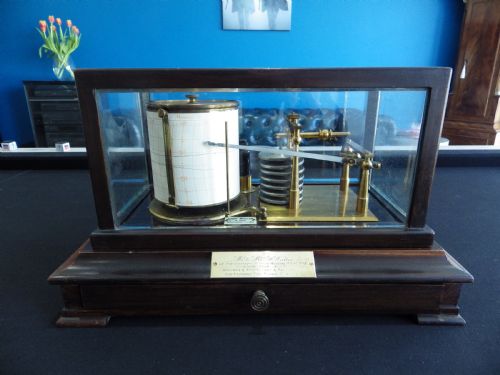


Cased Aneroid Barometer
When you examine a cased aneroid barometer, you hold a piece of precision domestic science designed to track atmospheric pressure without the messy mercury.
Cased Aneroid Barometer
A cased aneroid barometer groups together self-recording barographs, wall-hanging domestic weather dials, and compact pocket altimeters housed in protective enclosures. These pieces originate primarily from the Victorian and Edwardian eras, extending through the interwar period into the mid-twentieth century.
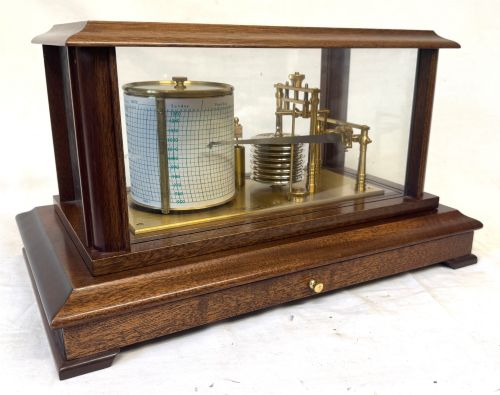
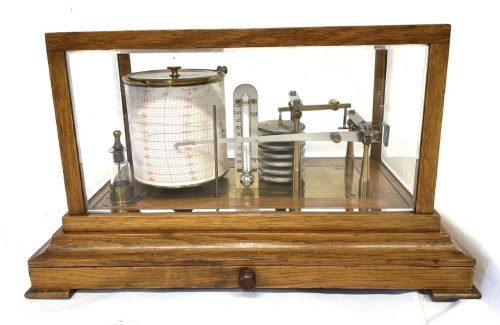
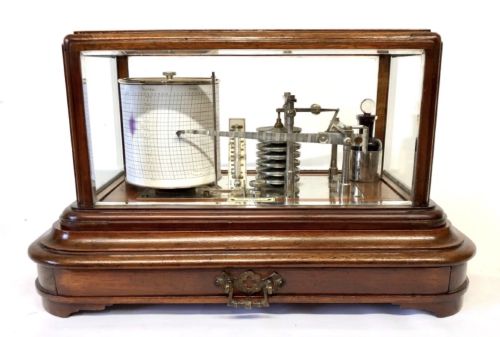
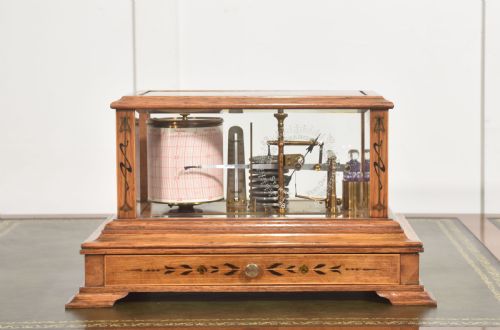
The most frequent form encountered on this page is the oak or mahogany cased barograph, often fitted with a chart drawer, bevelled glass panels, and an ancillary thermometer. Domestic pocket versions and desk instruments in brass or leather cases also appear regularly alongside large shop displays.
Origin points span domestic English makers in London, Edinburgh, and provincial hubs, as well as continental workshops from France. Surviving examples frequently retain paper charts, original leather carrying cases, or retailer inscriptions from prominent outfitters and opticians.
Materials and Construction
The cabinetry relies on dense hardwoods such as oak, mahogany, walnut, and burr walnut, joined to glass panels that protect the delicate internal linkages. Brass and steel form the mechanical chassis and vacuum chambers, while paper charts record the movement over time.
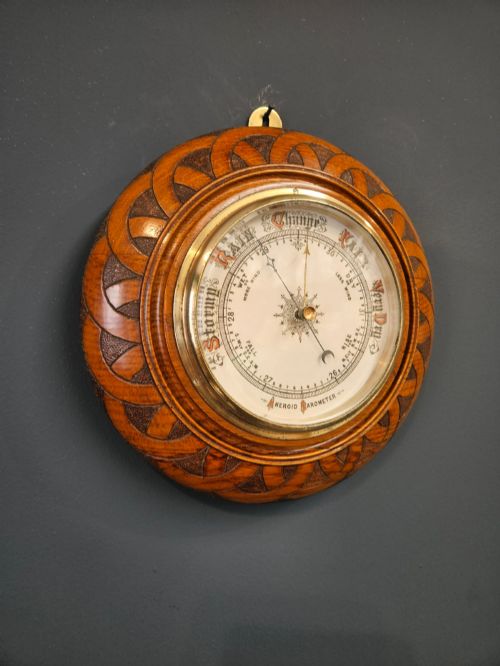
Cabinet makers utilised geometric turning, carved foliage, and occasional Art Nouveau inlay to ornament the wooden housings. Bevelled glass fits tightly into glazed frames to keep dust from the paper drums and delicate needles.
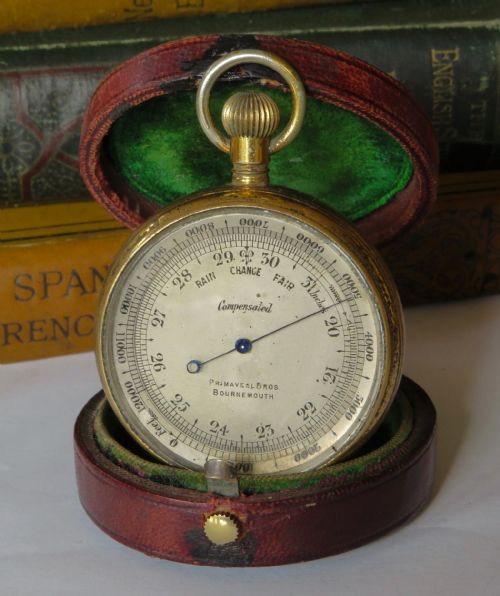
Makers housed pocket and surveying instruments in stitched leather or polished brass shells, ensuring portability. Larger instruments integrated stationery drawers beneath the brass recording drums to hold spare weekly paper sheets.
One pocket barometer earned its keep on a Victorian snooker tour, doubling as an early tournament award for a sharp-eyed cueist.
Cabinetry and Movement Standard
The standard of timber selection and cabinet joinery dictates the upper tier of these scientific instruments. Finely figured walnut veneers, crisp hand-carved oak leaves, and heavy bevelled glass set superior pieces apart from plain utilitarian boxes.
The complexity of the internal mechanism also determines quality, separating simple dial barometers from multi-diaphragm barographs fitted with precision bimetallic thermometers and ink-recording arms. Maker reputation heavily influences the grade, with signed assemblies by established opticians commanding greater attention than anonymous workshop output.
The preservation of original components, such as ink pens, paper drawer fittings, and accompanying paperwork, completes the distinction between a standard survivor and a notable collector's piece.
Negretti and Zambra·Short and Mason·Dollond of London·Louis Casella London·Jules Richard·R Fuess
The Cased Aneroid Barometer Glossary
- Aneroid barometer
- A device that measures atmospheric pressure by the expansion and contraction of an elastic metal capsule, omitting liquid entirely. Lucien Vidi patented the core design in the mid-nineteenth century.
- Barograph
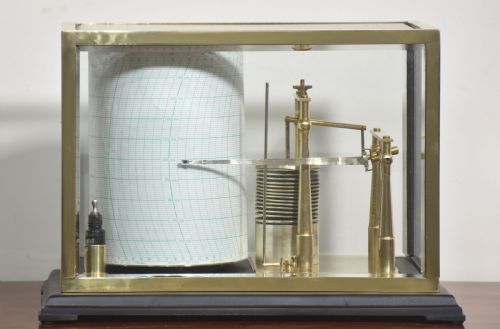
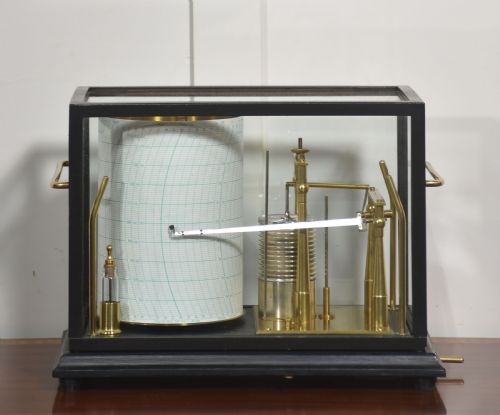
- A self-registering aneroid barometer that plots pressure changes onto a revolving paper drum using an ink-filled arm. These units usually run on a clockwork mechanism housed inside the brass cylinder.
- Altimeter
- A specialised pocket aneroid instrument calibrated to show altitude above sea level based on barometric pressure drops. Mountaineers and surveyors utilised these portable brass discs.
- Bevelled glass
- Glass panes with edges ground and polished to an angled slope, fitted into the inspection doors of better instrument cases. This detail catches light and improves visibility of the recording drum.
- Compensated
- An adjustment within the barometer mechanism that corrects for ambient temperature fluctuations so heat does not skew the pressure reading. Signed scientific instruments often note this feature on the dial face.
Cased Aneroid Barometer: Frequently Asked Questions
How does a barograph work?
A series of stacked metal vacuum chambers expands or contracts as atmospheric pressure shifts outside. This physical movement transfers through precise levers to an inked arm that traces a continuous line onto a rotating weekly paper chart.
Clockwork housed within the revolving brass drum turns the paper cylinder once every seven days. This creates a permanent visual record of weather trends rather than a single momentary reading.
Were these used in homes?
Victorian and Edwardian households displayed decorative oak and walnut barometers in hallways and libraries to anticipate local rain or shine. They served as both functional scientific tools and fashionable status objects for middle-class interiors.
Larger barographs were often kept by estate managers, railway stations, and local businesses to log weather patterns. Retailers like Harrods even retailed them for domestic placement.
How do I read an aneroid barometer?
You tap the glass lightly to settle any friction in the mechanical linkages before reading the pointer against the calibrated scale. The outer markings translate pressure units into expected weather conditions such as storm, rain, change, fair, and very dry.
Comparing the primary pointer to a secondary hand set manually lets you track whether pressure is rising or falling over the course of the day.
Are replacement paper charts available?
Blank weekly charts for vintage barographs can still be sourced through specialist scientific instrument suppliers and collector societies. Many antique instruments even retain their original unused paper stocks in built-in drawers.
Using correct period-style charts preserves the operational authenticity when running the clockwork drum for display purposes.