


Carved Wooden Writing Box
A carved wooden writing box is a portable desk or document repository offering tactile history and solid craftsmanship.
Carved Wooden Writing Box
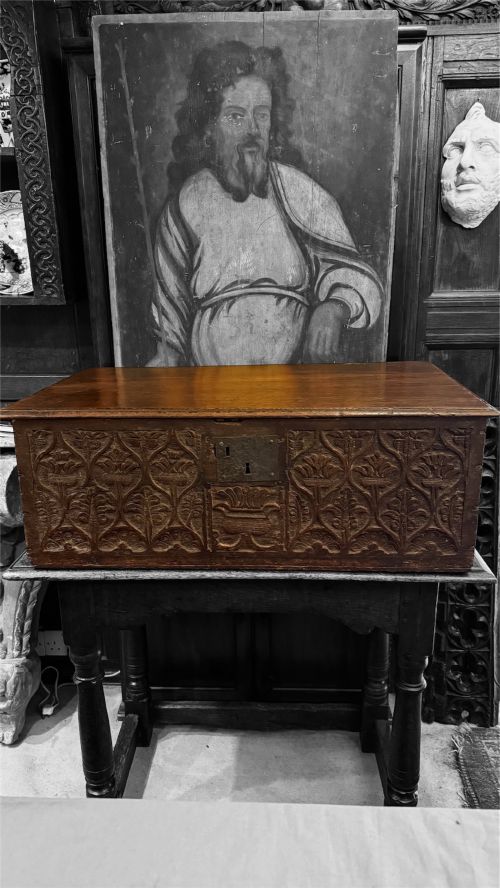
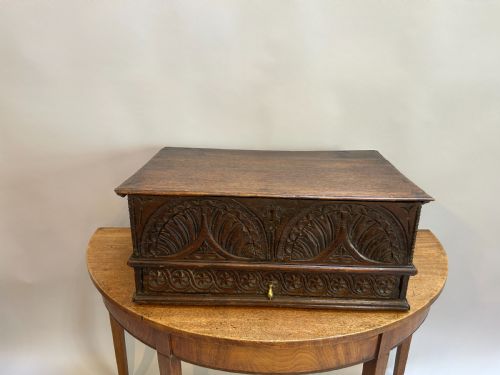
A carved wooden writing box is a portable receptacle designed to hold writing materials, correspondence, and important documents. These pieces range from early table boxes and bible boxes to later writing slopes and stationery chests.
The selections span centuries, running from seventeenth-century oak examples to nineteenth-century coromandel, ebony, and mahogany pieces. Buyers encounter vernacular English oak items alongside intricate Anglo-Indian and Tunbridge Ware productions.
Early examples often serve dual functions as bible boxes or deed repositories, while later nineteenth-century forms include fitted interiors for inkwells and slopes for writing. The forms reflect changing domestic habits and the increasing importance of personal correspondence over time.
Materials and construction
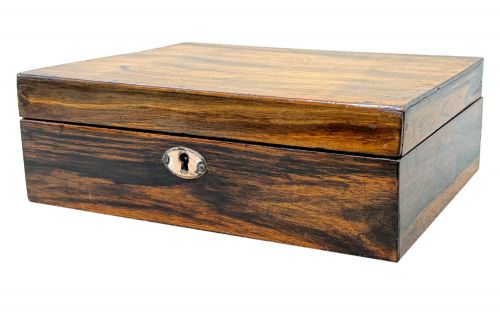
The primary materials recorded are native timbers like oak alongside exotic hardwoods such as coromandel, ebony, and burr walnut. Artisans employed dense domestic woods for seventeenth-century pieces and rich imported timbers for nineteenth-century boxes.
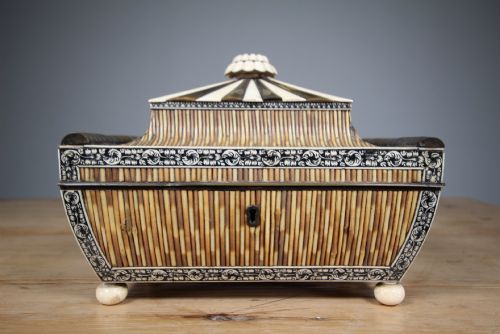
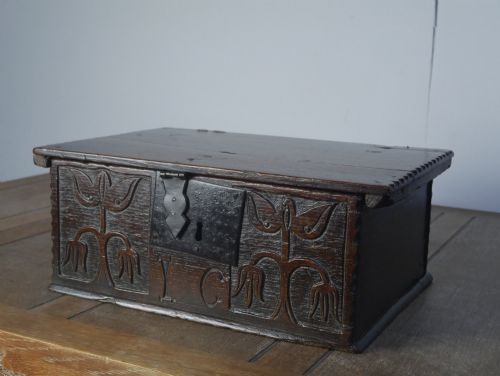
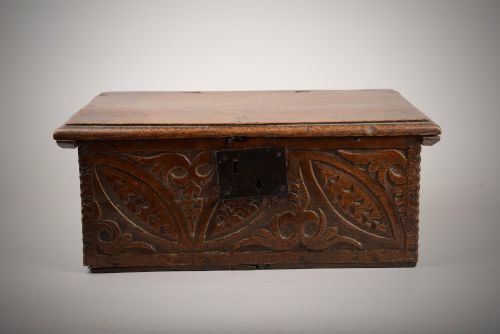
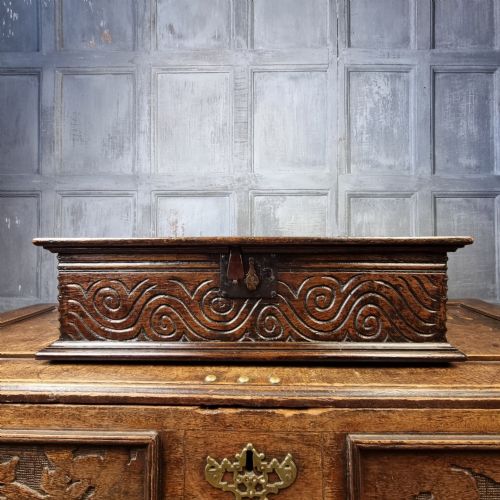
Construction methods rely on solid wood joinery, often augmented by carved surface decoration, incised patterns, and applied mouldings. Certain nineteenth-century items incorporate bone, antler, or intricate inlay work such as Tunbridge Ware to ornament the exterior surfaces.
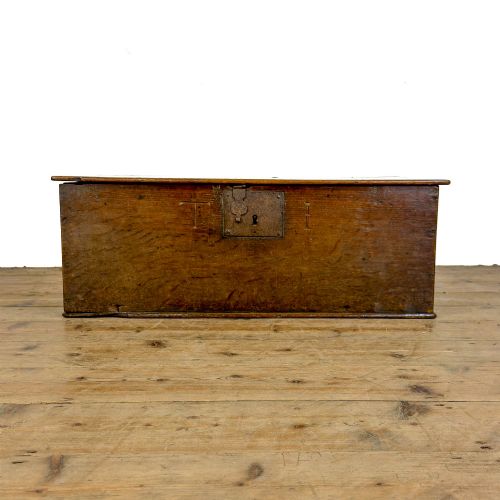
Iron and brass hardware, including hinges, escutcheons, and carrying handles, secure the lids and facilitate portability. Internal arrangements feature fitted compartments, secret drawers, and sloping writing surfaces lined with appropriate materials.
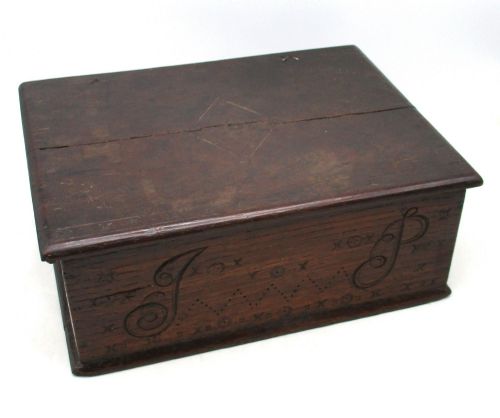
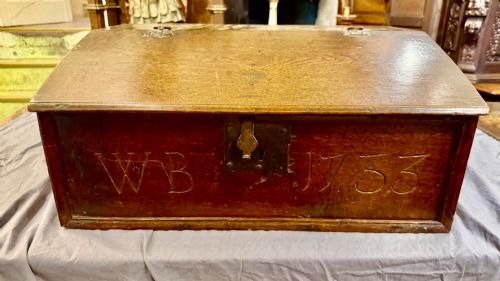
One seventeenth-century Welsh box retains the original owner's initials and date carved directly into the oak.
What separates the finest examples
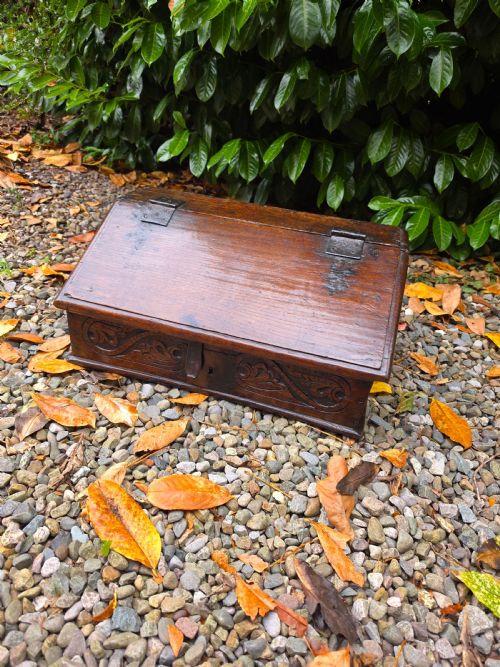
Quality rests in the crispness and depth of the carved ornamentation, whether dealing with seventeenth-century oak friezes or nineteenth-century Anglo-Indian floral motifs. Superior pieces display confident, intentional tool work rather than shallow or hurried surface scoring.
The integrity of the timber and the retention of original interior fittings heavily influence the standing of a box. Examples preserving their internal drawers, original hardware, and uncompromised structural joinery command greater appreciation among collectors.
The Carved Wooden Writing Box Glossary
- Bible box
- A desk box originally utilised to store religious texts and personal documents. These seventeenth-century oak pieces often feature sloping lids suitable for reading or writing.
- Writing slope
- A portable box with a hinged, slanted lid that opens to reveal a writing surface and internal storage. They became particularly popular during the nineteenth century.
- Coromandel wood
- A dense, heavily figured timber imported from Asia, frequently utilised for nineteenth-century luxury boxes and workboxes. It is recognisable by its dark brown colour and striking black stripes.
- Tunbridge ware
- A type of decorative woodwork characterised by tiny mosaic tiles formed from different coloured woods to create pictorial designs. This technique decorates specific nineteenth-century boxes on this page.
- Frieze
- A decorative band running along the upper portion of a box front, often carved with geometric or floral patterns in seventeenth-century oak examples.
Carved Wooden Writing Box: Frequently Asked Questions
What is a bible box used for?
A bible box served historically to store family bibles, legal documents, and personal papers safely in the home. The sloping lid allowed the box to function as a makeshift slanted desk when placed on a table.
These pieces belong to the seventeenth and eighteenth centuries, constructed primarily from sturdy oak to protect valuable contents from moisture and wear.
How do I tell a seventeenth century box from a nineteenth century one?
Seventeenth-century boxes are typically constructed from heavy English oak, featuring hand-carved panels, geometric mouldings, and visible peg joinery. They display simpler functional forms geared toward document storage.
Nineteenth-century boxes frequently utilise exotic timbers like coromandel, ebony, or mahogany, often featuring brass stringing, elaborate fitted interiors, and smoother machine-assisted finishes.
Can I use a writing slope for daily correspondence?
Many nineteenth-century writing slopes remain entirely functional for holding stationery, pens, and modern letters. The internal compartments and fold-out surfaces accommodate contemporary writing habits well.
Care should be taken to protect antique wood finishes from moisture, ink spills, and excessive direct sunlight during regular use.
What distinguishes an Anglo-Indian writing box?
Anglo-Indian writing boxes display dense, intricate carved decoration executed in exotic woods such as ebony or coromandel. They frequently incorporate regional motifs and alternative materials like bone or antler inlay.
These nineteenth-century pieces combine British furniture forms with traditional Indian craftsmanship, resulting in highly decorative portable desks.