

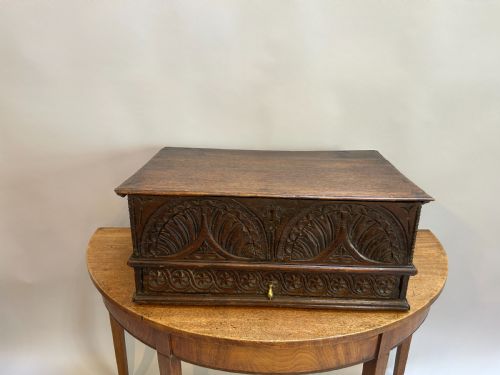
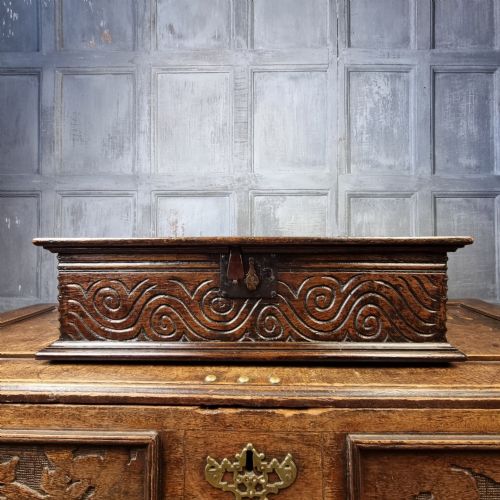


Carved Oak Bible Chest
A carved oak bible chest offers rugged solidity and rich seventeenth-century history, providing a compact repository for domestic manuscripts and devotional texts.
Carved Oak Bible Chest
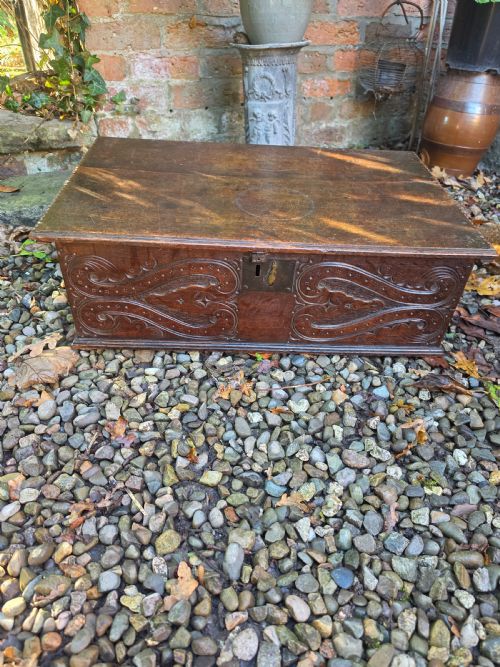
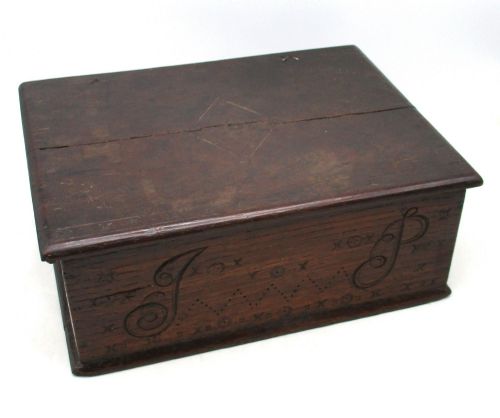
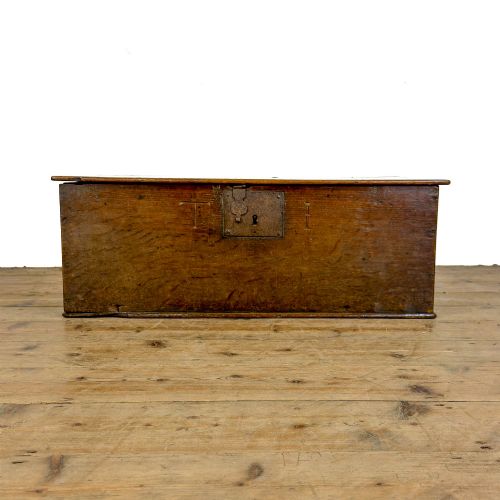
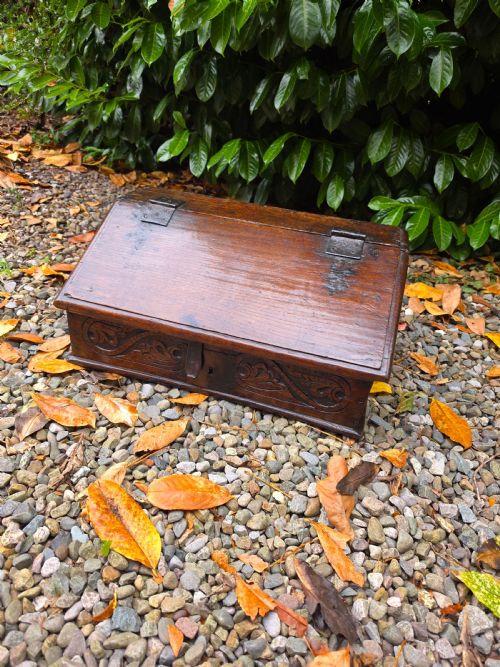
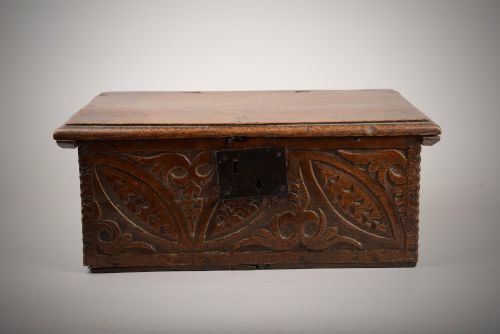
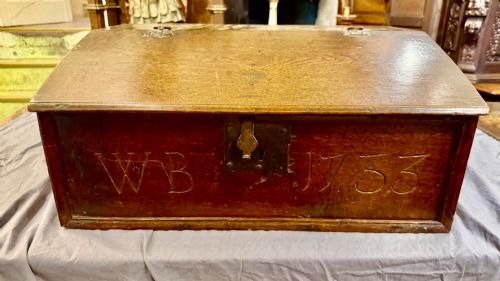
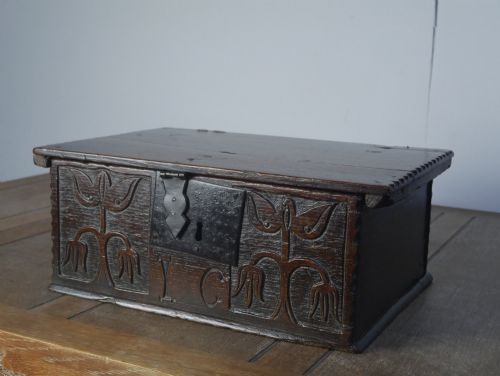
A carved oak bible chest typically presents as a compact table box, desk box, or coffer designed to safeguard sacred texts and family documents. These pieces frequently date from the seventeenth and eighteenth centuries, reflecting early English and Welsh craftsmanship.
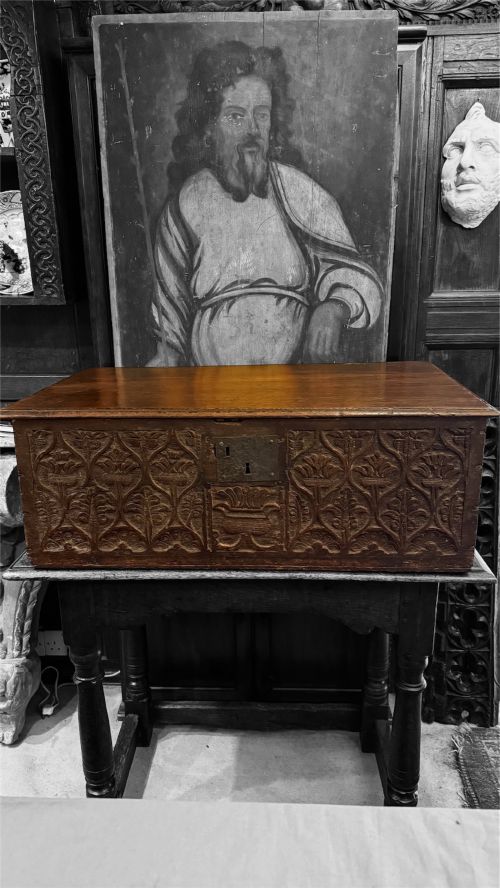
The form encompasses slant-front writing boxes, document boxes, and examples fitted with internal drawers or resting upon bespoke stands. Buyers encounter varied regional characteristics, from chip-carved Welsh pieces to Jacobean examples featuring carved friezes and demi-lune front panels.
How they were made
Constructed primarily from solid oak, these boxes often incorporate secondary woods such as holly and bog oak for decorative inlay work. Structural and decorative hardware relies on iron, wrought iron, and brass hinges or lock plates.
Carved Oak Bible Chest Retail Price Guide 2026
Typical asking prices for carved oak bible chest among the pieces listed under this phrase on Sellingantiques today, from the lower quarter to the upper quarter. They describe what is for sale here now, not the wider market.
Listings feature oak boxes incorporating contrasting holly and bog oak inlay alongside wrought iron hardware.
What varies in quality
Quality rests upon the crispness and depth of the original carving, the integrity of the timber surfaces, and the survival of internal fittings like small drawers or original stands. Pieces retaining dated inscriptions, specific provenance, or contrasting inlay work command greater distinction.
The proportion of the box and the balance between the lid, side panels, and front decoration dictate visual success. Proportionate scaling and untouched patination elevate a piece far above utilitarian boxes of the same era.
The Carved Oak Bible Chest Glossary
- Bible Box
- A small portable wooden chest historically used to store and protect a family bible. These pieces often feature sloping or flat lids and sit upon tables or dedicated stands.
- Coffer Bach
- A small Welsh chest or box traditionally made as a love token or dowry piece. The term translates from Welsh as little coffer.
- Chip Carving
- A decorative technique where small chips are removed from the surface of the wood to create geometric or linear patterns. This style is frequently observed on Welsh and seventeenth-century boxes.
- Slant Front
- A hinged writing flap angled toward the user to provide a comfortable surface for penning documents. This configuration appears on desk boxes and document cases.
- Frieze
- A broad horizontal band of carved ornamentation situated beneath the top edge of the box. It often displays scrolling motifs or geometric patterns typical of the period.
Carved Oak Bible Chest: Frequently Asked Questions
What is a bible box used for?
These boxes served as secure storage for household Bibles and important family manuscripts during a time when books were precious commodities.
Owners kept them on tables or desks, frequently utilising the flat or sloping lids as makeshift writing surfaces.
How do I tell seventeenth-century oak from later copies?
Seventeenth-century pieces display authentic tool marks, traditional joinery such as pegged mortise and tenon joints, and deep natural patination acquired over centuries.
Examining the underside and interior reveals the consistency of the ageing process across all structural timbers.
Did these boxes sit on stands?
While many were designed to rest on existing tables or surfaces, some seventeenth and eighteenth-century examples were paired with companion or bespoke stands.
These configurations effectively transformed the table box into a small freestanding chest on stand.
Where were most of these boxes made?
Surviving examples originate primarily from English and Welsh workshops operating during the seventeenth and eighteenth centuries.
Regional variations appear in the decorative motifs, such as distinct chip carving traditions found in Welsh pieces.