
Carved Wooden Windsor Chair
A carved wooden windsor chair combines sturdy vernacular seating with centuries of regional British craftsmanship.
Carved Wooden Windsor Chair
A carved wooden windsor chair is a traditional seating form defined by a solid wooden seat into which the legs and back spindles are wedged directly, rather than relying on a separate frame. These pieces emerge from regional British traditions spanning the Georgian and Victorian periods, taking various domestic and farmhouse forms.
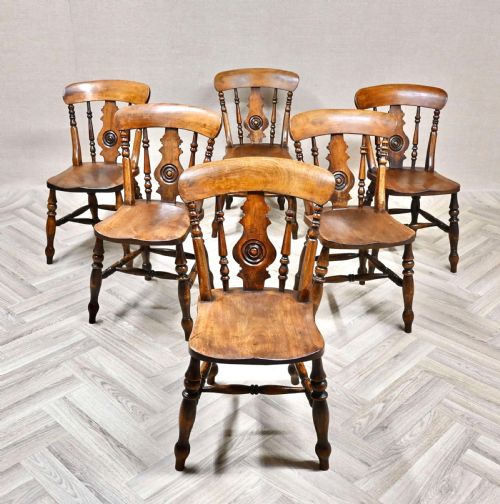
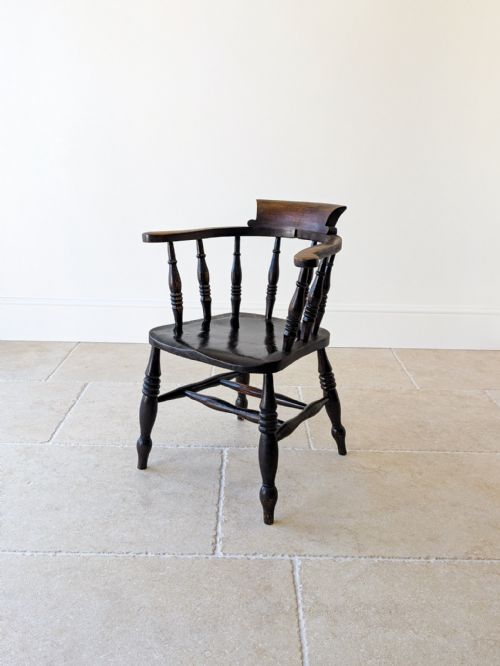
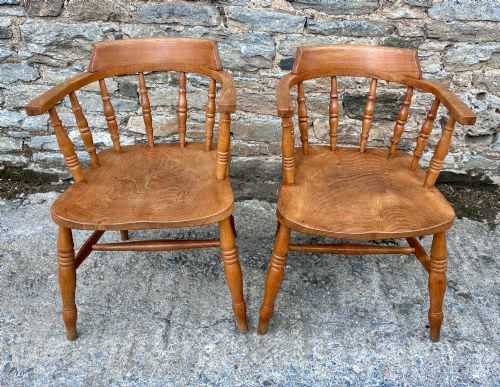
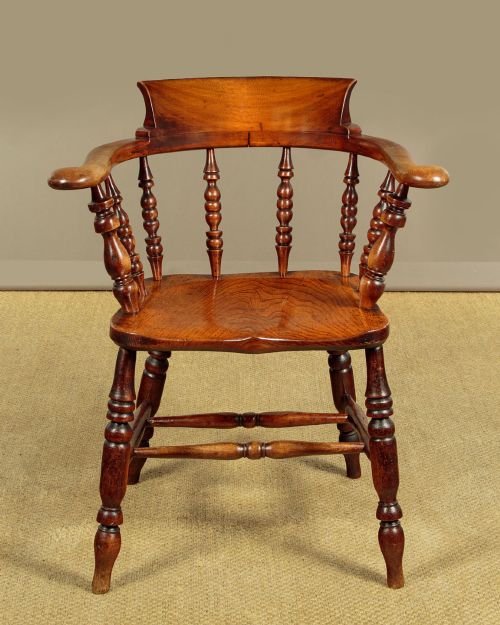
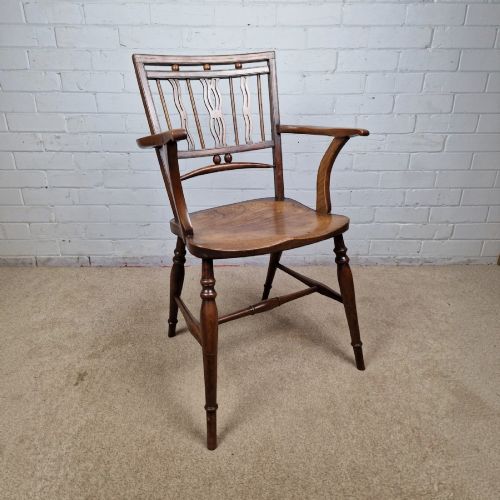
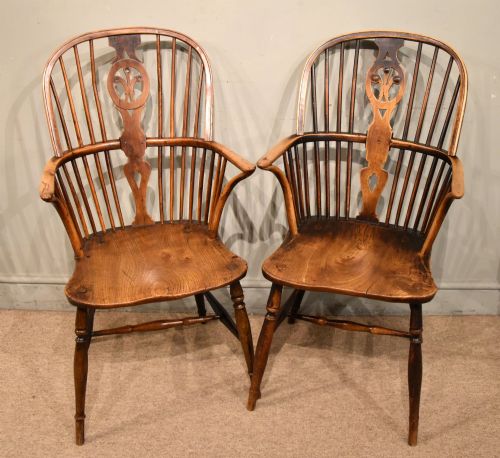
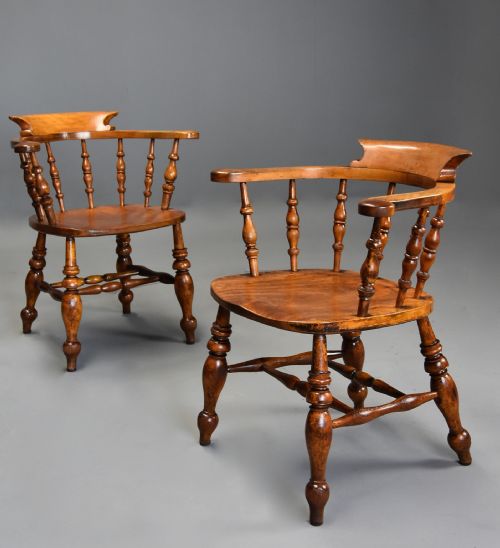
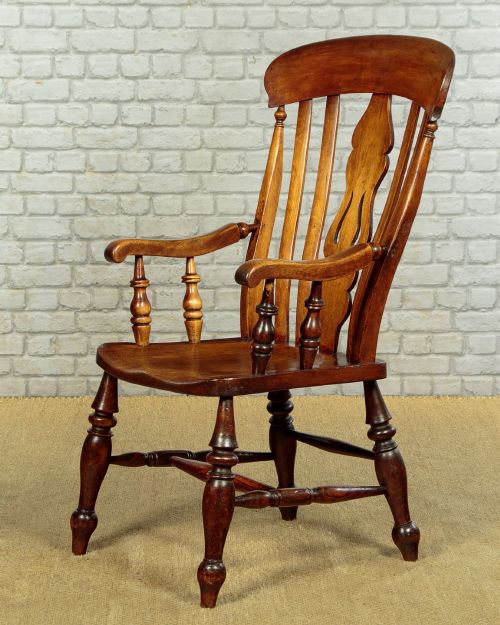
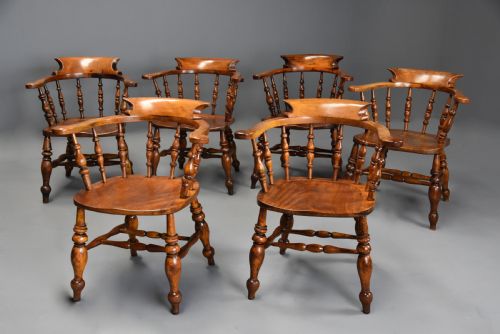
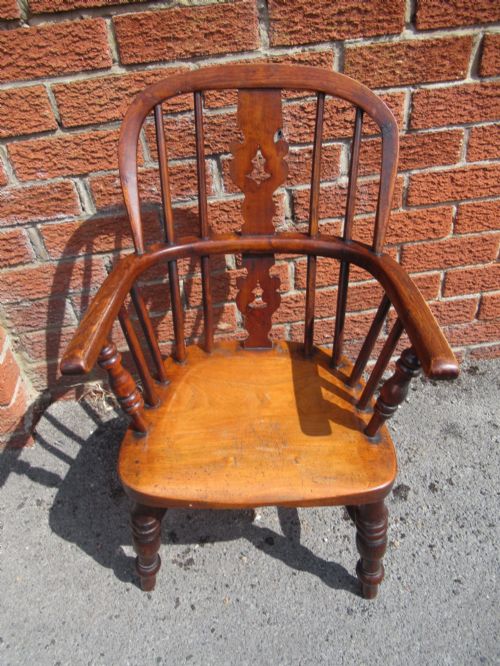
Buyers browsing this selection frequently encounter sturdy kitchen armchairs, smokers bows, wheelbacks, and Captains chairs originating across England, Wales, and Scotland. Many examples date from the nineteenth century, showcasing distinct local variations in back splats, such as spindle and lyre motifs or perforated bullseyes.
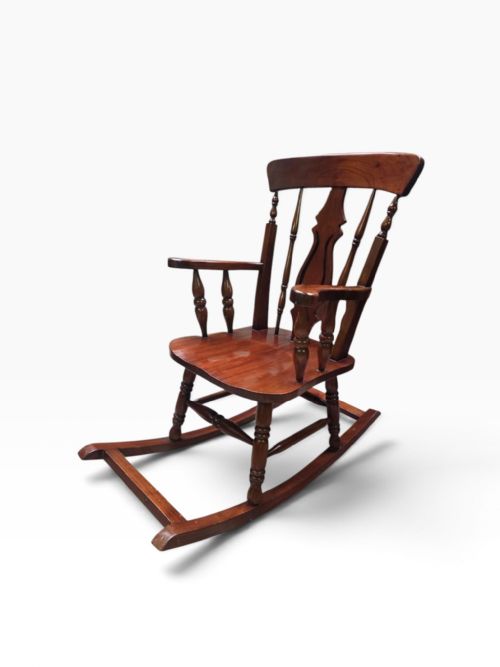
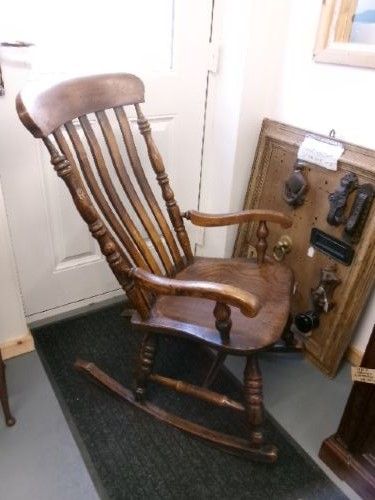
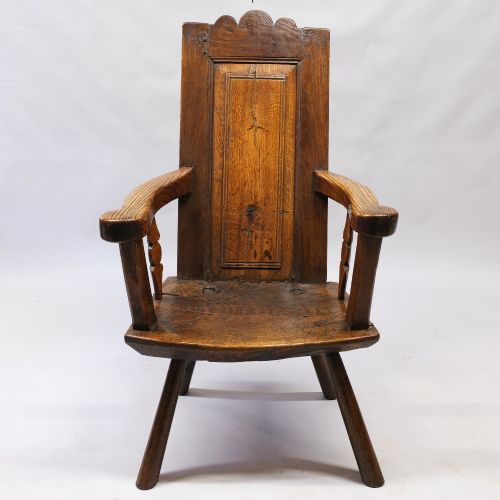
Originating as practical utility seating for farmhouses and country homes, these chairs range from low-back Windsor designs to high-back armchairs and rocking chairs. Regional styles often dictate specific timber combinations and turning details, reflecting the workshop traditions of areas like the Thames Valley or Yorkshire.
How they were made
Makers constructed these chairs using a combination of turned green wood for the spindles and legs, alongside heavily carved solid timber for the seats. Elm typically provided the deep, durable seat base due to its interlocking grain, which resisted splitting when the legs and back uprights were driven in.
The superstructures relied on resilient timbers such as ash, beech, and birch for the steam-bent hoops and slender spindles. Finer regional examples incorporated yew, fruitwood, and laburnum, utilising contrasting woods to highlight the structural joints and decorative turnings.
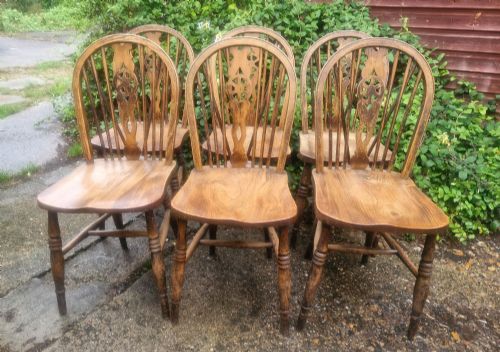
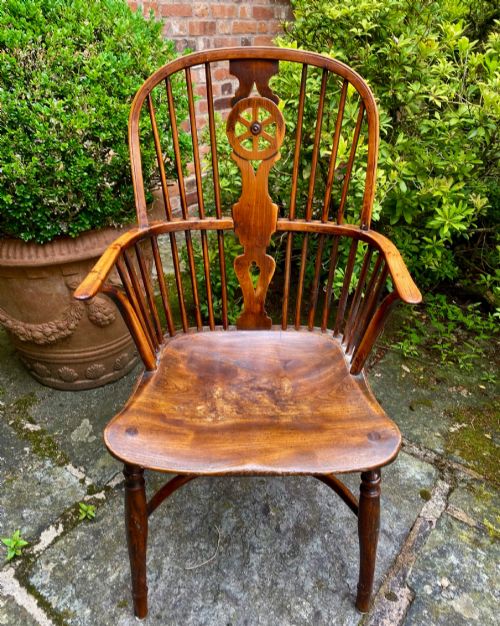
Some nineteenth-century makers cleverly recycled old cartwheels to carve the intricate pierced wheelback splats seen on kitchen chairs.
What varies in quality
Quality rests upon the harmony of the timber selection and the retention of crisp turning details on the arm supports and leg spindles. Chairs featuring contrasting woods, such as yew-wood bows paired with elm seats, demonstrate greater ambition from the maker.
The integrity of the construction governs the tier of the piece, particularly the tightness of the wedged joints and the depth of the saddle-shaped seat carving. Examples possessing a rich, warm patina developed through decades of domestic use stand apart from heavily refinished specimens.
The Carved Wooden Windsor Chair Glossary
- Smoker's bow
- A low-backed Windsor armchair with a continuous curved armrail, often used in public houses and farmhouses.
- Wheelback
- A Windsor chair featuring a pierced wooden splat carved in the shape of a spoked cart wheel.
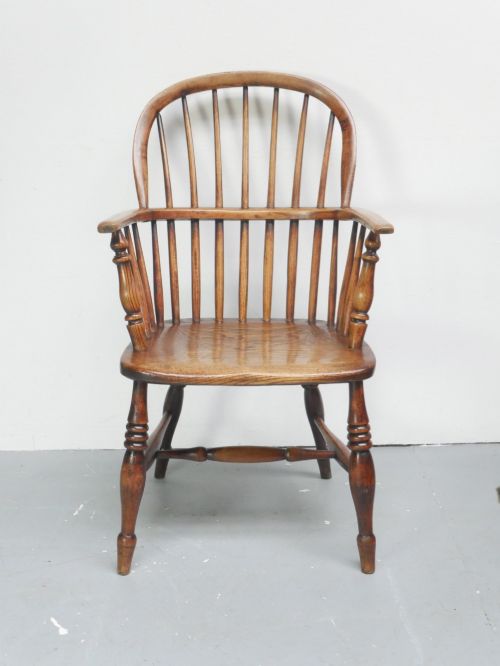
- Spindle back
- A chair back constructed from multiple vertical wooden rods fitted between a top rail and the seat.
- Comb-back
- A high-backed Windsor variant where the vertical spindles extend upward to pierce a horizontal headboard resembling a comb.
- Saddle seat
- A thick wooden seat base sculpted with depressions for comfort during prolonged sitting.
Carved Wooden Windsor Chair: Frequently Asked Questions
How do I identify a regional style?
Makers incorporated distinct local turning patterns, back splat designs, and timber choices that varied by county or workshop tradition. Examining the specific combination of woods and the shape of the crest rail often reveals the regional origin.
Scottish and Welsh pieces frequently display narrower proportions or higher backs compared to English country examples, while Thames Valley chairs often utilise yew.
Where were these chairs used?
These pieces served as everyday seating in farmhouses, cottages, kitchens, and country houses across Britain. Their robust construction made them suitable for heavy domestic labour and daily dining.
Commercial settings such as inns and reading rooms also utilised sturdy low-back variants like smokers bows for public seating.
How should I care for timber seats?
Maintain the wood by applying traditional beeswax periodically to nourish the grain and preserve the surface sheen. Avoid placing timber furniture near direct heat sources or rapid temperature shifts.
Allowing the wood to breathe and dusting it with a soft cloth prevents dryness while protecting the historic patina built up over generations.
Are these chairs comfortable for daily use?
The ergonomic saddle-shaped seats and raked backs provide surprisingly supportive seating for dining or writing. Many examples were specifically engineered to accommodate long hours of domestic tasks.
Pairing a low-back or rocking variant with a simple cushion allows the traditional form to function comfortably in modern living spaces.