






Carved Wooden Salon Settee
A carved wooden salon settee offers an ornate seating option for a formal room, combining period timber frames with upholstered comfort.
Carved Wooden Salon Settee
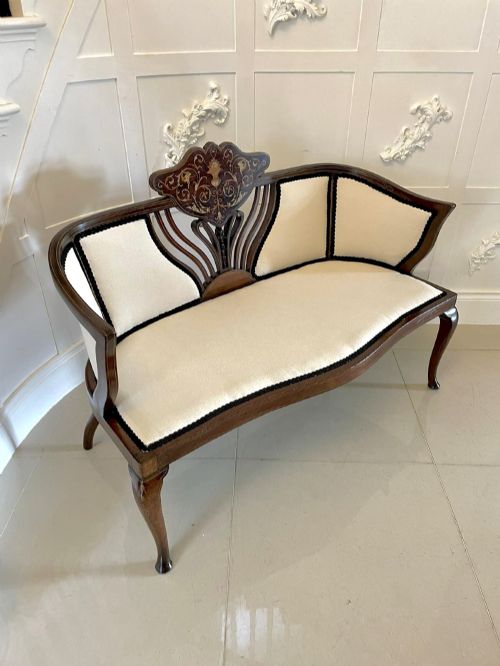
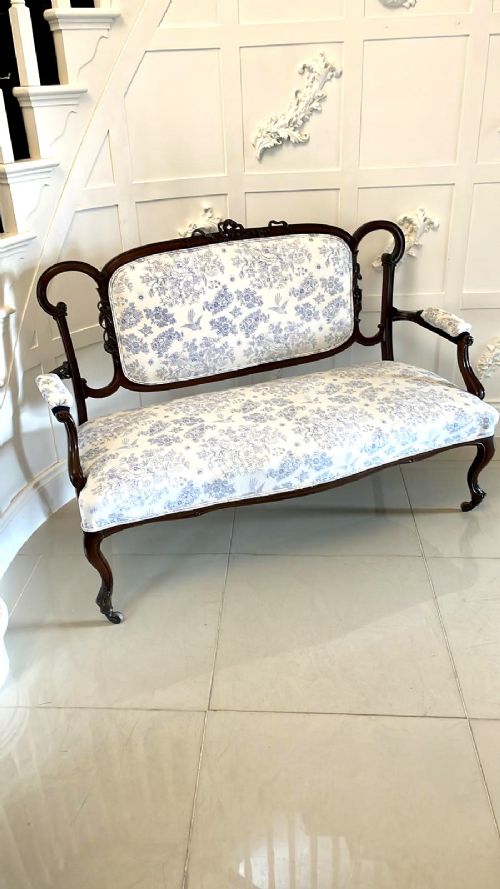
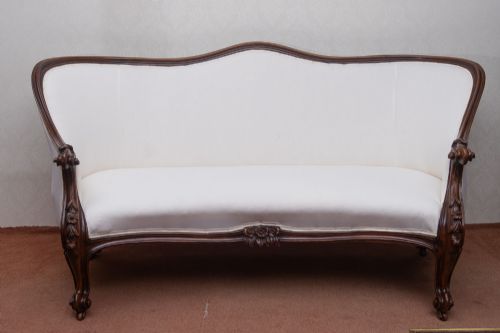
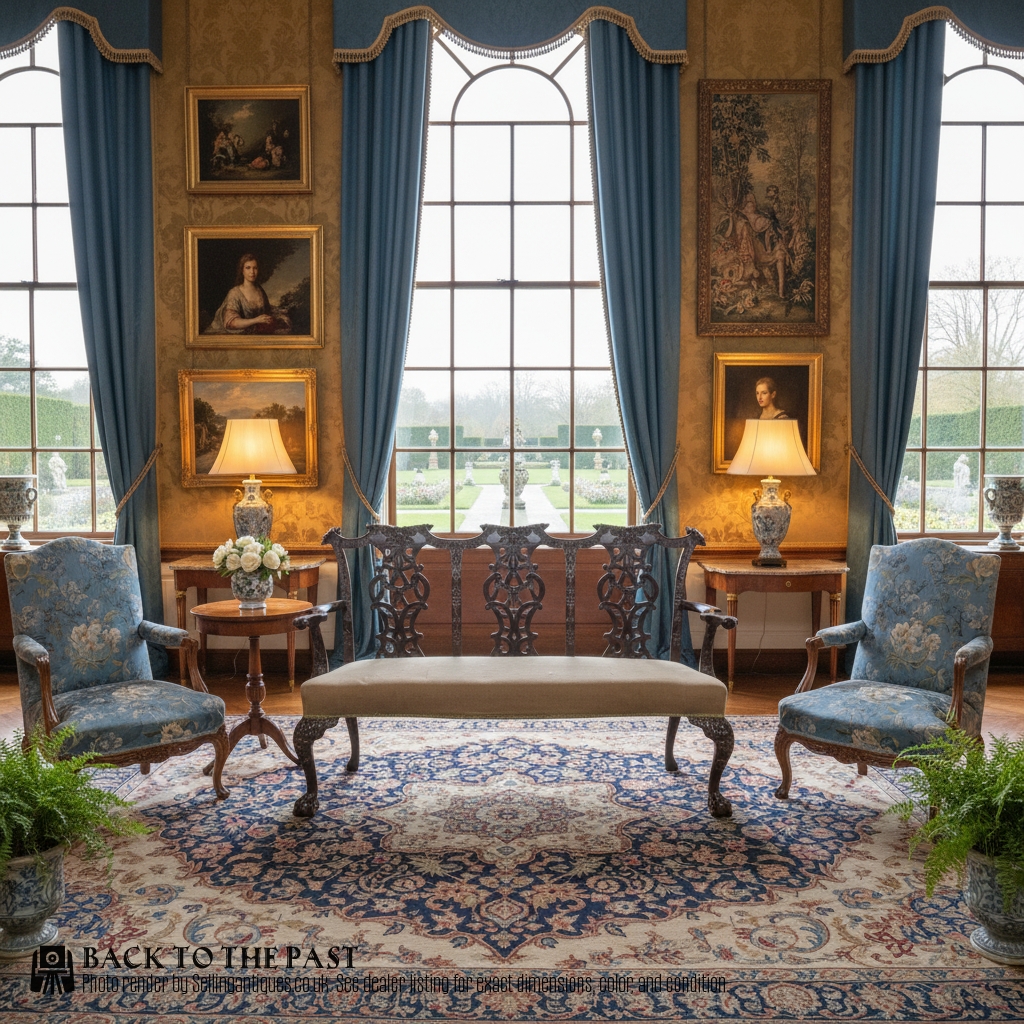
When you search for a carved wooden salon settee, you encounter seating forms spanning the Victorian and Edwardian eras alongside the nineteenth century. These pieces emerge in styles ranging from Rococo Revival and Louis XV to Chippendale, taking the form of settees, two-seat sofas, and larger parlour suites.
You are most likely to meet mahogany or walnut frames, often featuring inlaid boxwood or giltwood finishes. They serve as central furnishings in a drawing room or salon, designed to anchor a period interior with traditional woodwork.
How they were made
Frames rely on carved solid timbers such as mahogany, walnut, and giltwood, shaped to reflect revivalist aesthetics from the nineteenth and early twentieth centuries. Artisans employed detailed hand-carving techniques on the show wood, creating floral motifs and scrollwork along the crest rails and cabriole legs.
Inlay work utilises boxwood set into the mahogany surfaces to add linear contrast. Upholstery fabric completes the construction, providing padded seating surfaces that range from original textiles to frames prepared for re-upholstery.
Carved Wooden Salon Settee Retail Price Guide 2026
Typical asking prices for carved wooden salon settee among the pieces listed under this phrase on Sellingantiques today, from the lower quarter to the upper quarter. They describe what is for sale here now, not the wider market.
One compact model turns up described simply as an end of bed two-seater.
What varies in quality
The refinement of the timber carving dictates the standard of the frame, separating simple turned mouldings from deeply chiselled Rococo or Louis XV ornamentation. Precision in the boxwood inlay and the crispness of the giltwood application further distinguish standard production from finer workshop output.
Structural integrity of the wood and the preservation of the original show timber determine the overall merit of the piece. Upholstery condition varies, with some settees retaining historical fabric while others require complete restoration of the interior webbing and padding.
The Carved Wooden Salon Settee Glossary
- Giltwood
- Wood that has been coated with gold leaf or a similar gilding material. This finish appears on revival salon furniture to create a bright, reflective surface.
- Boxwood inlay
- Small pieces of pale boxwood embedded into a contrasting darker timber such as mahogany. It forms delicate geometric or floral patterns across the woodwork.
- Louis XV Revival
- A nineteenth-century design style imitating the flowing curves, cabriole legs, and asymmetrical ornamentation of French eighteenth-century furniture. It dominates many salon settees of this period.
- Parlour suite
- A matching set of seating and occasionally tables designed for a formal reception room. These groupings share identical timber frames and upholstery treatments.
Carved Wooden Salon Settee: Frequently Asked Questions
Where should I place a salon settee?
A carved wooden salon settee suits formal reception spaces, drawing rooms, or large bedrooms where period seating is appropriate. Its finished wooden back and carved frame allow it to sit away from walls as a central room feature.
Ensure the scale of the settee matches the proportions of the room, as nineteenth-century salon pieces often feature deep frames and prominent crest rails that draw the eye.
How do I identify the wood?
Inspect the grain and colour of the exposed frame where the finish permits a clear view. Mahogany and walnut are the primary timbers used in these nineteenth-century and Edwardian pieces.
Lighter golden or reddish tones typically indicate mahogany, while darker, richer brown figures with varied grain patterns point toward walnut.
Can I use modern fabric for re-upholstery?
Many buyers choose to update the upholstery fabric to suit contemporary interiors while retaining the antique wooden frame. A professional upholsterer can strip the piece down to the webbing and apply modern textiles.
Selecting a fabric weight appropriate for the frame's scale ensures the finished settee maintains its correct proportions and structural support.
What is the difference between a settee and a sofa?
In historical terminology, the two terms often overlap, though salon settees tend to have lighter wooden frames and exposed carved woodwork. Sofas from the Victorian era frequently present larger, more heavily padded structures with less visible timber.
Both forms provide multi-seat options, but a salon settee specifically emphasises decorative carving and formal presentation.