


Carved Wooden Lamps
Carved wooden lamps bring warmth and character to a room, combining tactile timber craftsmanship with functional illumination.
Carved Wooden Lamps
When you search for carved wooden lamps, you encounter a variety of forms ranging from tall standard lamps to smaller table lamps and converted bases. These pieces span several distinct periods including the Victorian era, the Edwardian period, and the 1920s.
The selection includes floor lamps, standard lamps, and table lamps fashioned from various timbers. You will also find items originating from English workshops as well as continental and international makers.
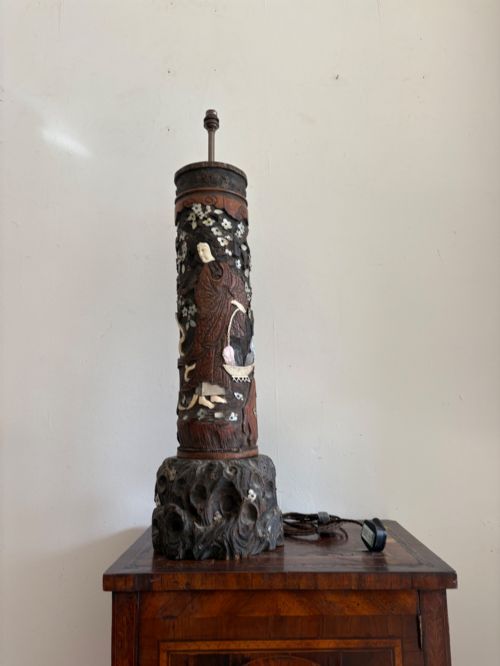
Many items in this category reflect broader stylistic revivals such as Jacobean, Georgian, and Neoclassical designs. Others present regional or exotic characteristics, including Anglo-Indian, Kashmiri, and Chinese craftsmanship.
Materials and construction methods
The pieces rely on a foundation of dense timbers such as mahogany, walnut, oak, and other hardwoods. Artisans utilised these materials for their durability and grain patterns, often enhancing them with hand-carved details.
Techniques range from traditional turning on a lathe to intricate hand-chizzelling seen in floral, foliate, and figural motifs. Some items incorporate gilding, limed finishes, or inlaid elements to create textural contrast.
Conversion work also appears, where older architectural fragments, vases, or pillars are adapted to hold electrical fittings. Structural integrity is maintained through traditional joinery suited to each specific form.
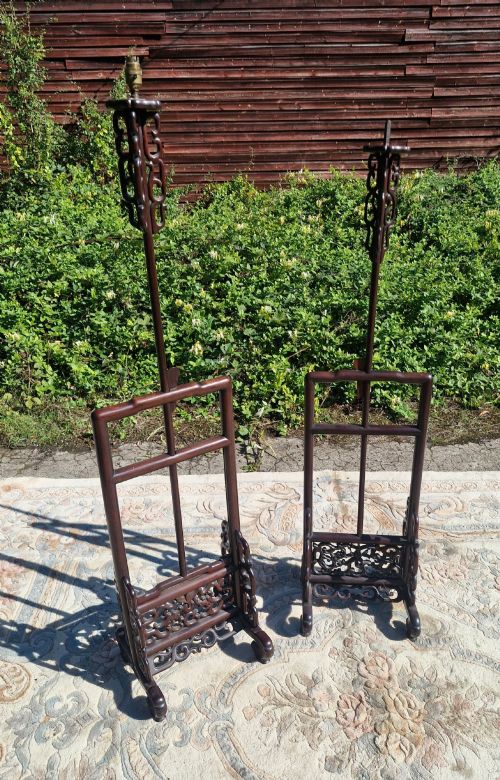
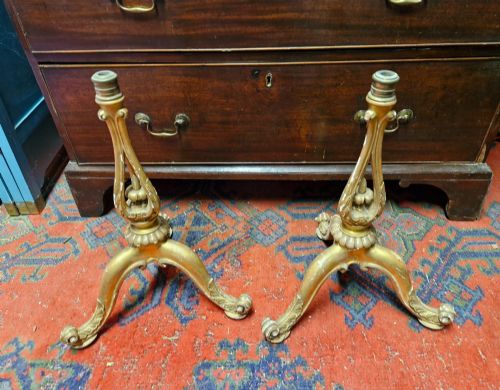
A whimsical pair of carved wooden cherubs once stood ready to illuminate the room before joining the archive.
Distinctions in quality
Quality rests upon the crispness and depth of the carving rather than mere surface decoration. Superior examples display confident, undercut details where the maker commanded the grain without splintering the timber.
Proportion and balance dictate the architectural success of a lamp, particularly in taller standard lamps and floor-standing models. Finer pieces maintain stability through well-weighted bases and harmonious scaling from foot to socket.
The choice and treatment of the wood further separate standard production from exceptional work. Richly figured burr walnut, well-matched mahogany, and carefully applied gilding or patination indicate workshop standards of a higher order.
Trevor Page and Co·Shapland and Petter
The Carved Wooden Lamps Glossary
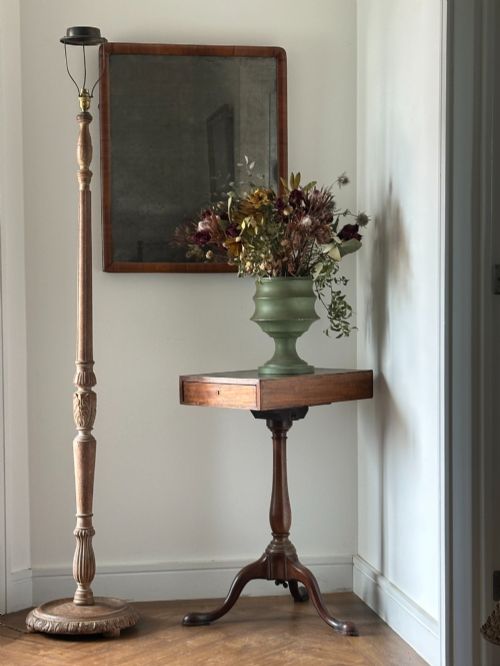
- Standard lamp
- A tall floor-standing lamp designed to illuminate a room from standing height. These pieces often feature turned columns or carved pillars.
- Tripod base
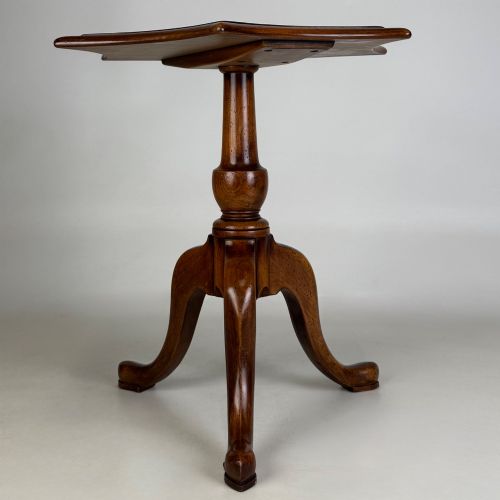
- A support structure resting on three feet, commonly utilised on smaller tables and standard lamp bases for stability. This configuration frequently incorporates cabriole or pad feet.
- Giltwood
- Timber that has been coated with a thin layer of gold leaf or gilt finish. This technique highlights carved details through reflective brilliance.
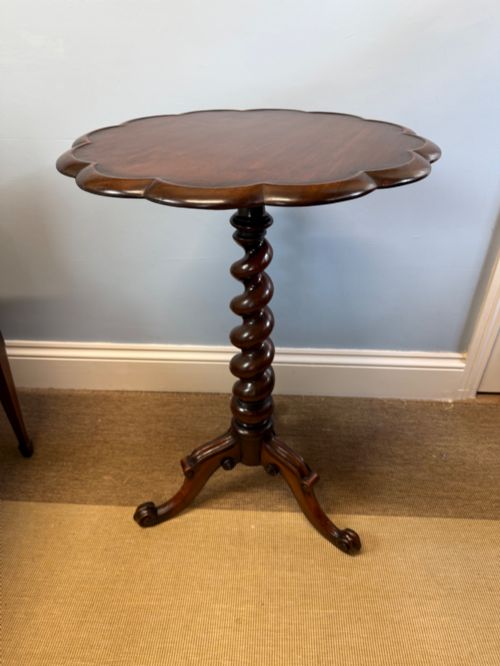
- Barley twist
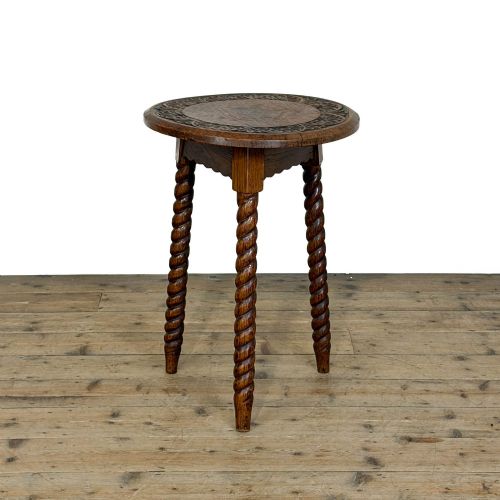
- A decorative turning style resembling a spiralling rope or helix, popular in furniture and lamp standards during the Victorian era and earlier revivals.
- Limed oak
- Oak timber treated with a white pigment or lime finish that settles into the grain pores. This process lightens the overall tone while accentuating the natural texture of the wood.
Carved Wooden Lamps: Frequently Asked Questions
How do I date a wooden lamp?
Dating relies on observing the timber species, turning styles, and tool marks visible on the underside or interior parts. Stylistic clues such as Victorian twist turning or Edwardian inlay provide a reliable baseline.
Electrical wiring and fittings often indicate later updates, so focus your assessment on the carved wooden body itself rather than modern plugs or lamp holders.
Are these lamps converted from other items?
Some items begin life as architectural pillars, vases, or candlesticks before being adapted into lamps. Such conversions are a traditional practice in antique lighting.
Examine the base and top aperture to understand how the electrical cord runs through the structure without compromising the antique integrity of the wood.
What woods were commonly used?
Cabinetmakers and turners utilised dense hardwoods capable of holding fine details without splitting. Mahogany, walnut, and oak appear frequently across the available inventory.
Exotic timbers and softer woods like gilder's pine also surface, particularly in continental pieces or items featuring applied gilt finishes.
How do I care for antique wood?
Maintain the timber by keeping lamps away from direct heat sources and strong sunlight, which can dry out and fade the polish. Dust regularly with a dry, soft cloth.
Avoid silicone-based polishes and instead apply a traditional beeswax sparingly when the wood appears dry, buffing it gently to preserve the natural patina.