



Carved Mahogany Lamp Base
A carved mahogany lamp base brings rich timber warmth and sculptural presence to a room, offering the stability every proper reading corner requires.
Carved Mahogany Lamp Base
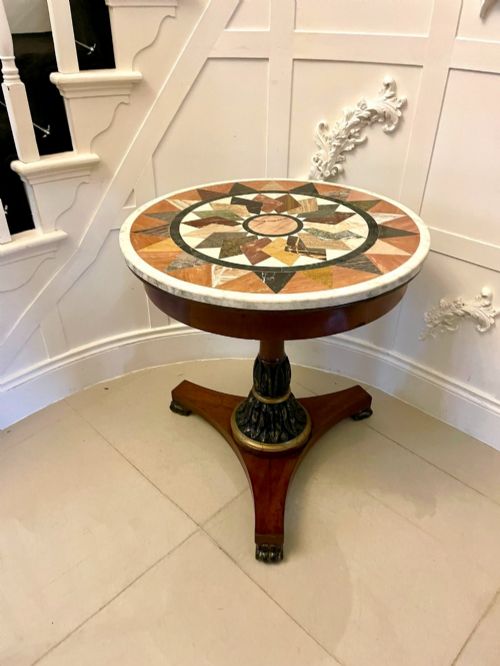
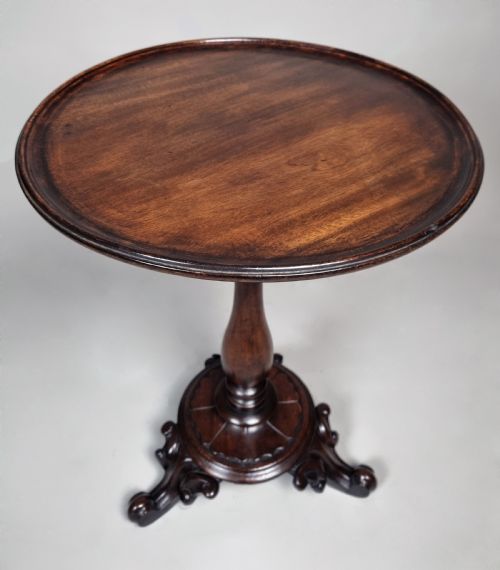
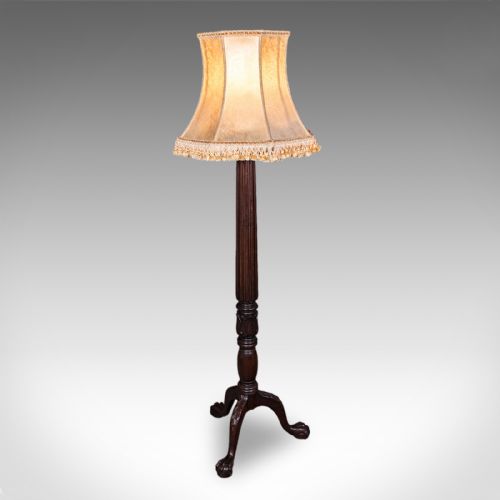
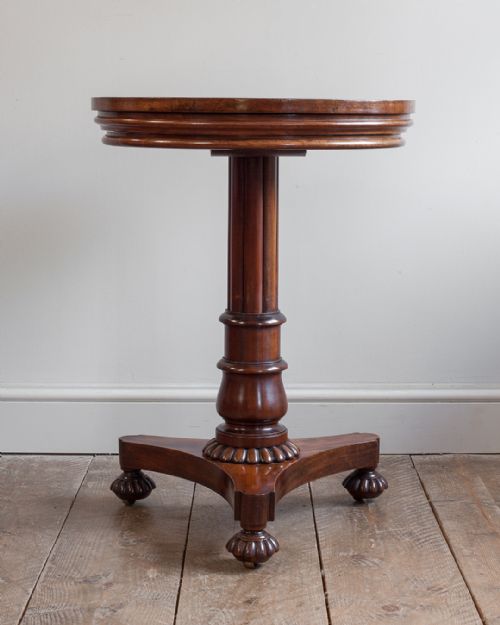
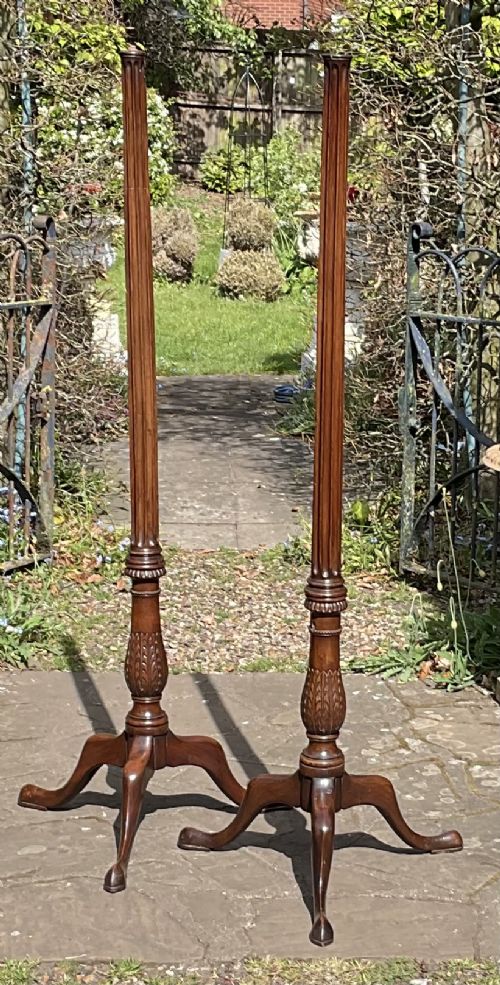
When you search for a carved mahogany lamp base, you are looking for turned and carved timber supports that have often been adapted from earlier occasional furniture or made specifically as floor and table standards. The examples appearing on this page span the Georgian, Regency, William IV, and Victorian periods, alongside Edwardian pieces and later revivals.
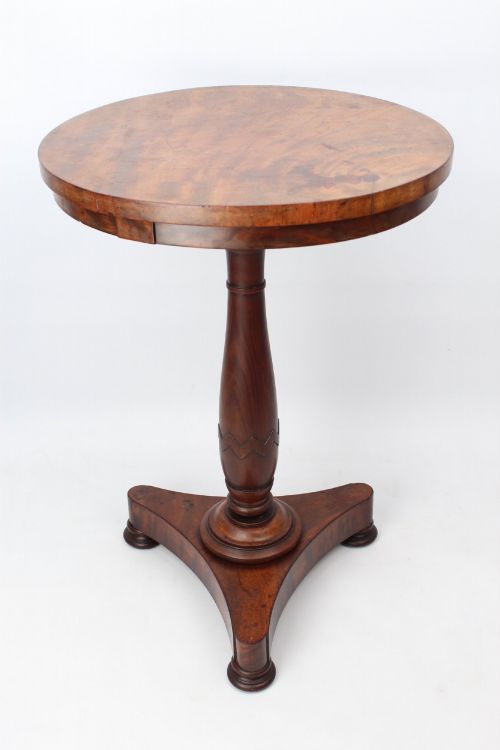
The forms vary considerably across the selection, ranging from standard lamps and floor lights to smaller wine tables, side tables, and occasional tables that serve a similar height and function. Mahogany dominates the materials, frequently accompanied by flame mahogany veneer, rosewood, brass fittings, fabric elements, and occasional marble tops.
How they were made
Cabinet makers utilised solid mahogany and rich flame mahogany veneer over secondary timbers, shaping heavy tripod bases and central pillars through turning and hand carving. These construction methods ensured the heavy weight needed at the base to support the upward reach of a standard lamp or the surface load of a wine table.
Metal components such as brass brackets, collars, and weighted fittings were integrated into the design to secure joints and enhance stability, while occasional marble inserts provided contrasting textures on top surfaces.
Several items here started life holding wine or sewing equipment before retiring into a dignified second career as illumination.
What varies in quality
The distinction between standard examples and the finest pieces lies in the depth and crispness of the timber carving, particularly around the pillars, knees, and tripod feet. Superior items display well-figured grain and rich patination that only deep mahogany develops over generations of polishing.
Proportion and structural integrity also separate the range, as pieces designed with balanced weight distribution and original brass mounts retain a commanding presence without showing clumsy later alterations.
The Carved Mahogany Lamp Base Glossary
- Mahogany
- A durable tropical hardwood prized for its deep reddish-brown colour and stability in furniture construction. It takes a fine polished finish that deepens in warmth over centuries.
- Flame mahogany veneer
- A thin slice of wood cut from the fork of the mahogany tree where the branch meets the trunk. This produces a dramatic, flickering flame-like pattern highly valued on table tops and panels.
- Tripod base
- A three-legged support structure commonly found on standard lamps and occasional tables. It provides steady contact on uneven floors through widely splayed feet.
- Wine table
- A small, portable occasional table with a raised edge or dished top designed for holding glasses and bottles. Many period examples now function well as sturdy lamp supports.
- William IV
- A British design period spanning the 1830s characterised by robust classical revival forms, heavy scrolls, and bold carved mahogany elements.
Carved Mahogany Lamp Base: Frequently Asked Questions
Are these lamps converted from old tables?
Many standard lamps from the nineteenth century utilise turned timber columns and sturdy tripod bases derived from classical furniture forms. Cabinet makers and later restorers often adapted these architectural pillars to house electrical wiring.
Other pieces on this page were built specifically as floor lamps or heavy table lamps from the outset. Examining the internal core and base construction reveals whether the piece began life as a lighting standard or a support table.
How do I care for mahogany?
Polished mahogany responds best to regular dusting with a soft, dry cloth and occasional applications of traditional beeswax. Avoid placing timber pieces near direct heat sources or strong sunlight to prevent the wood from drying out.
Keeping the surface nourished maintains the deep reddish-brown lustre and protects the grain from minor scuffs. Gentle care ensures the carved details remain crisp and defined for decades.
How do I tell Regency from Victorian pieces?
Regency pieces generally display refined classical proportions influenced by Greek and Roman archaeology, featuring restrained brass mounts and elegant reeded columns. Victorian and William IV designs tend to be heavier and bolder, incorporating exuberant scrollwork and more pronounced carved foliage.
Looking closely at the turning style and the weight of the timber helps distinguish the lighter Regency aesthetic from the heavier Victorian output.
Where should I place a floor lamp?
Standard lamps with heavy tripod bases suit corners of drawing rooms and libraries where they anchor the seating arrangement. Their substantial timber presence requires enough floor space to stand clear of heavy foot traffic.
Positioning them beside armchairs or alongside occasional tables creates a balanced reading area while showing off the turned mahogany pillar.