

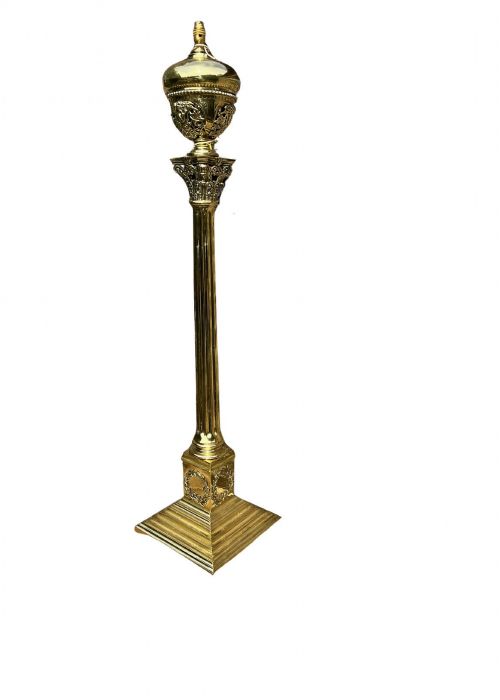


Gold Urn Lamps
Gold urn lamps bring classic proportion and warm metallic light to a room, drawing on centuries of classical design.
Gold Urn Lamps
Gold urn lamps take their form from classical vessels, combining traditional shapes with domestic lighting functions. When searching for gold urn lamps, buyers encounter pieces fashioned from metal, porcelain, and carved wood.
The selection on this page spans the nineteenth century through the Art Deco period, encompassing Victorian, Edwardian, and continental designs. Table lamps predominate, alongside standard lamps and converted vases.
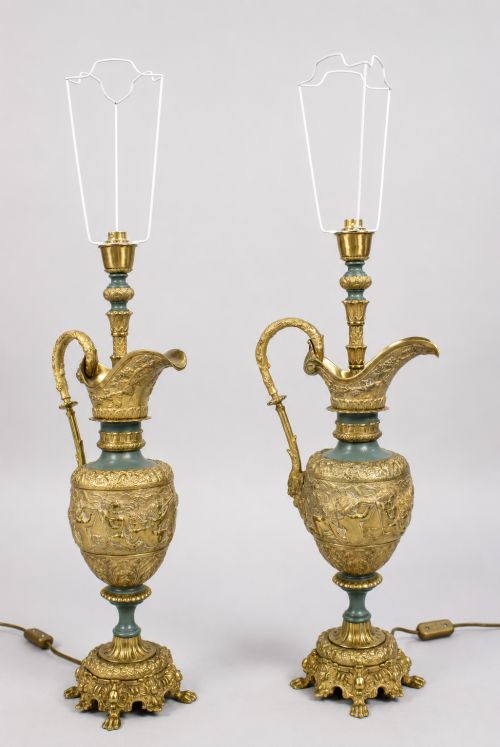
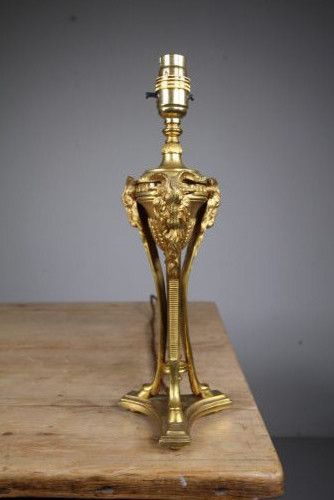
Many examples utilise metallic finishes, including ormolu, gilt bronze, and gilt metal, to achieve their characteristic sheen. Others employ porcelain bodies decorated with classical motifs, cherubs, or Chinoiserie patterns.
Materials and construction
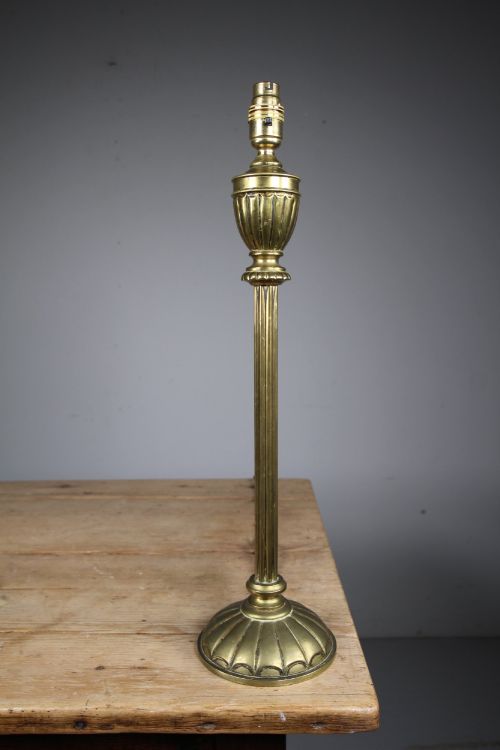
Maker's workshops employed cast brass, bronze, and ormolu, frequently combining these metals with marble bases for stability and weight. Ormolu mounts and gilded metal elements required skilled casting and hand-finishing.
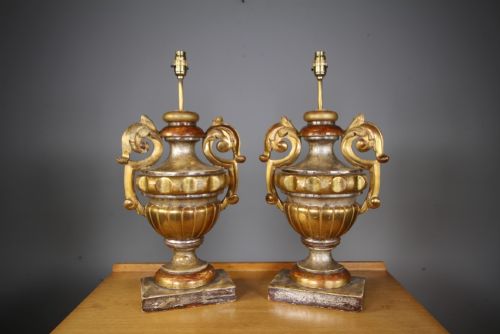
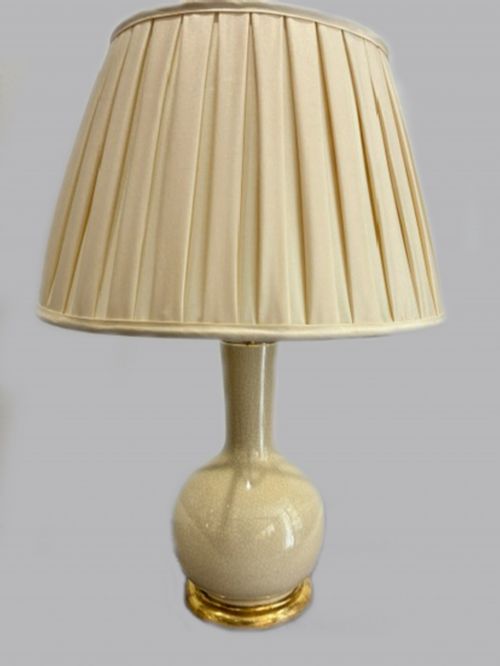
Ceramic bodies utilise Paris porcelain, crackle ware, and glazed earthenware, often hand-painted and accented with gold leaf. Carved wooden variants make use of pine and giltwood, reflecting traditional joinery and carving techniques of the nineteenth century.
Listings feature nineteenth-century and early twentieth-century pieces, incorporating materials such as ormolu, Paris porcelain, marble, and carved giltwood.
Assessing quality and craftsmanship
The distinction between standard production and superior craftsmanship lies in the crispness of the cast mounts and the depth of the gilding. Finely chased ormolu details and hand-painted porcelain decoration indicate workshop precision.
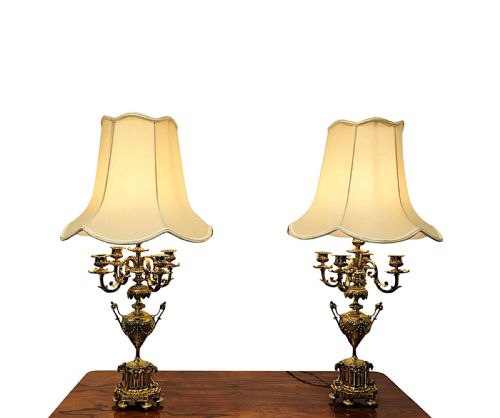
Materials contribute significantly to overall standard, with heavy marble plinths and substantial bronze or brass castings elevating a piece. The integration of converted elements, such as nineteenth-century candelabra or vases fitted with mounts, depends upon the harmony of the conversion.
The Gold Urn Lamps Glossary
- Ormolu
- Gilded bronze produced by applying a mercury and gold amalgam to a bronze base and heating it. This technique creates a durable, warm metallic finish seen on many nineteenth-century mounts.
- Ewer
- A large jug with a wide spout, historically used for water but frequently adapted into the vessel shapes utilised for table lamps. These forms draw directly from classical antiquity.
- Chinoiserie
- A European artistic style reflecting Chinese motifs and decorative techniques. It appears on lacquered tôleware and porcelain lamps from the Victorian and later periods.
- Neoclassical
- A style reviving the architectural and decorative elements of ancient Greece and Rome. It informs the urn shapes, classical masks, and symmetrical designs of these lamps.
Gold Urn Lamps: Frequently Asked Questions
What periods do these lamps come from?
The pieces span from the nineteenth century through the Edwardian era and into the 1920s and 1930s Art Deco period. Styles range from Victorian revival to French Neoclassical.
Craftsmanship reflects the prevailing aesthetic of each decade, utilising materials typical of European workshops.
How were these lamps converted?
Many examples originate as decorative vases, candelabra, or spirit kettles subsequently adapted for electrical lighting. Metal mounts and wiring are added to house lamp fittings.
This adaptation process preserves the decorative body while updating the object for modern domestic interiors.
Are the bodies made of porcelain or metal?
Listings include both ceramic and metallic constructions. Porcelain bodies feature hand-painted details and Paris porcelain finishes, while metal examples utilise brass, bronze, and gilt metal.
Combinations of marble and gilt bronze also appear across the selection.
How do I style a gold urn lamp?
These lamps function effectively on side tables, desks, or chests where their metallic finishes and classical proportions can serve as focal points. They complement traditional and eclectic interiors alike.
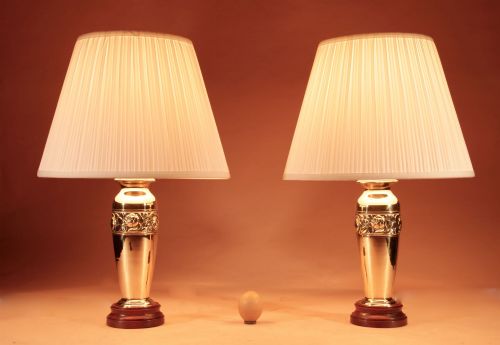
Pairing them with appropriate fabric shades completes the visual balance of the piece.