




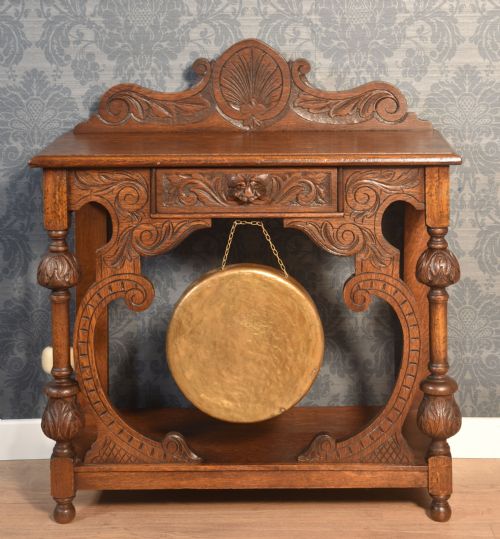


Carved Wooden Gong
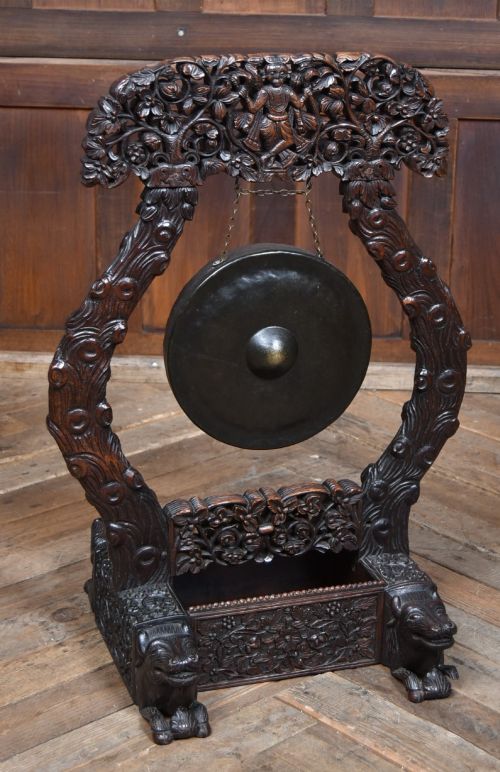
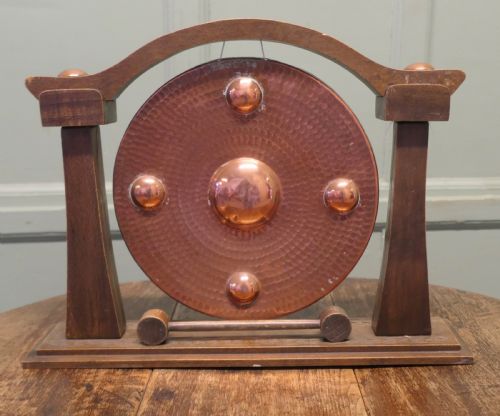
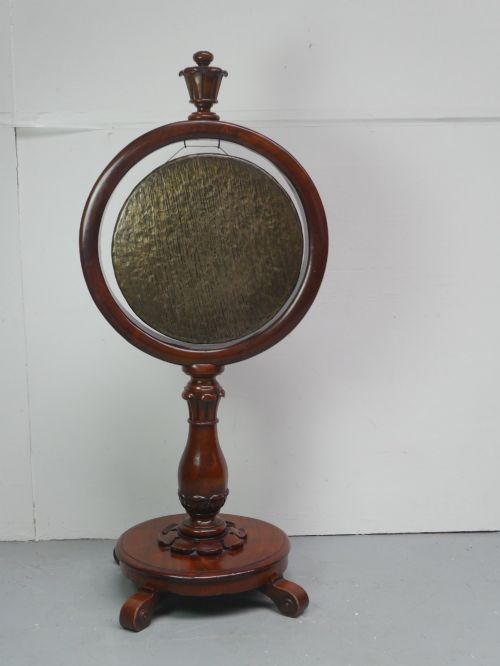
These carved wooden gong pieces are substantial Victorian dinner gongs that bring a rich acoustic presence and period craftsmanship into a home.
Carved Wooden Gong
When you search for a carved wooden gong, you encounter nineteenth-century dinner gongs originating from country houses and domestic interiors. These domestic signal pieces combine functional brass elements with substantial timber frames designed to summon household residents to meals.
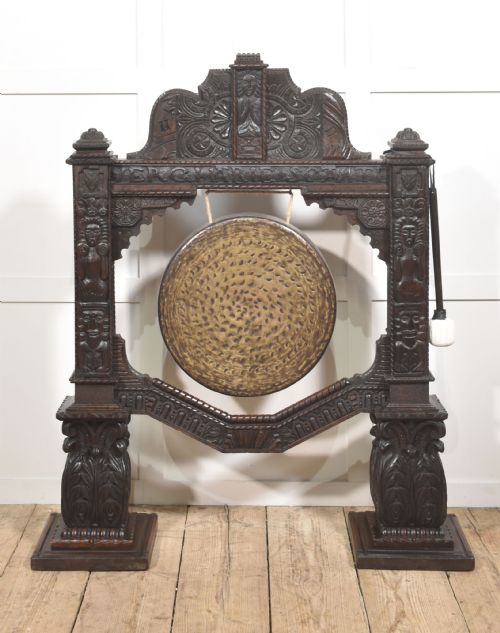
The most common versions met on this page belong to the Victorian era and the Victorian Gothic Revival style. They take the form of floor-standing or table-top frames that suspend a resonant metal disc by means of rope or cord.
Examples range from modest domestic items to monumental pieces such as the Scottish Country House dinner gong. Their primary forms centre on architectural timber surrounds built to house the striking apparatus.
How they were made
Maker workshops utilised dense hardwoods including oak, walnut and mahogany to construct the supporting frames. These timbers were heavily carved by hand, often incorporating the architectural motifs characteristic of the Gothic Revival style.
The suspended gongs themselves consist of hammered brass plates hung securely within the wooden structures using durable rope or cord. This combination of heavy timber and metal requires robust joinery to support the weight and resonance of the instrument.
Carved Wooden Gong Retail Price Guide 2026
Typical asking prices for carved wooden gong among the pieces listed under this phrase on Sellingantiques today, from the lower quarter to the upper quarter. They describe what is for sale here now, not the wider market.
What varies in quality
The distinction between standard domestic items and the finest pieces rests upon the ambition of the timber carving and the scale of the frame. Monumental examples demonstrate deeper relief work and more complex architectural detailing across the oak or walnut structure.
Quality also reveals itself in the proportion between the timber surround and the brass gong, where superior pieces maintain a balanced aesthetic harmony. The choice of primary wood, particularly figured walnut or mature oak, dictates the visual weight of the object.
The Carved Wooden Gong Glossary
- Dinner Gong
- A domestic instrument comprising a metal disc suspended in a frame, used historically to announce meals. These objects typically date from the nineteenth century.
- Gothic Revival
- An architectural and decorative style popular during the Victorian period. It employs medieval motifs such as pointed arches, tracery and heavy relief carving.
- Brass
- A copper and zinc alloy used to form the striking plate of the gong. This material produces the resonant tone when hit with a mallet.
- Cord
- The twisted fibrous material used to hang the metal gong within its wooden frame. Strong rope or cord ensures the disc remains securely suspended while vibrating.
Carved Wooden Gong: Frequently Asked Questions
What is a carved wooden gong?
A carved wooden gong is a Victorian household instrument featuring a brass disc suspended inside an elaborately carved timber frame.
These pieces served a practical purpose in large country houses by summoning residents to dinner.
How do I date a dinner gong?
Dating relies on examining the timber species, construction methods and stylistic indicators such as Gothic Revival details. Most examples on this page originate from the nineteenth century.
Secondary clues include the type of cord or rope used for suspension and the tooling marks on the wood.
Where were dinner gongs placed?
These gongs stood in hallways, reception rooms or near dining spaces where their sound could carry throughout the house.
Their substantial timber frames required sturdy placement on furniture or directly on the floor.
What materials are used in these gongs?
The structural frames utilise hardwoods such as oak, walnut and mahogany, often featuring deep hand-carving. The sound-producing element consists of a brass plate.
Natural fibre rope or cord completes the piece by suspending the metal within the timber surround.