
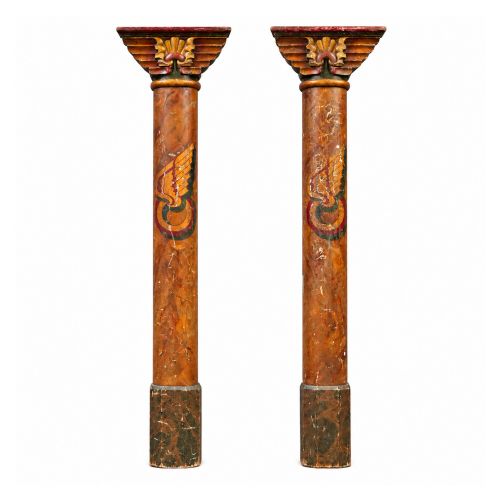
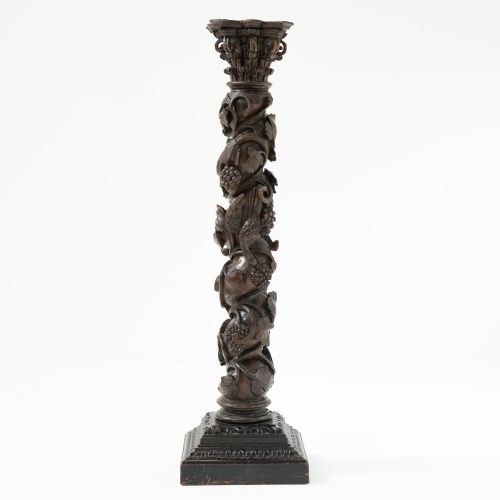
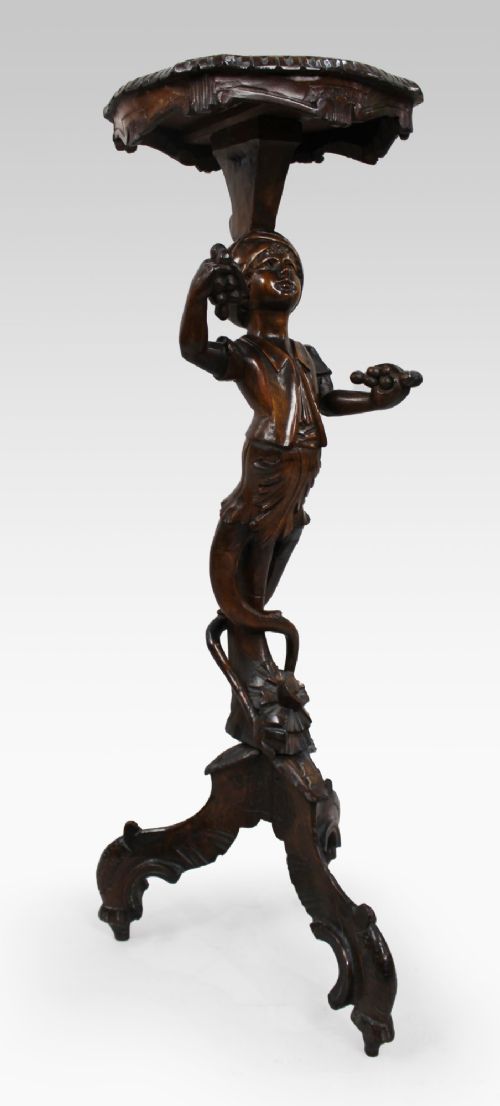
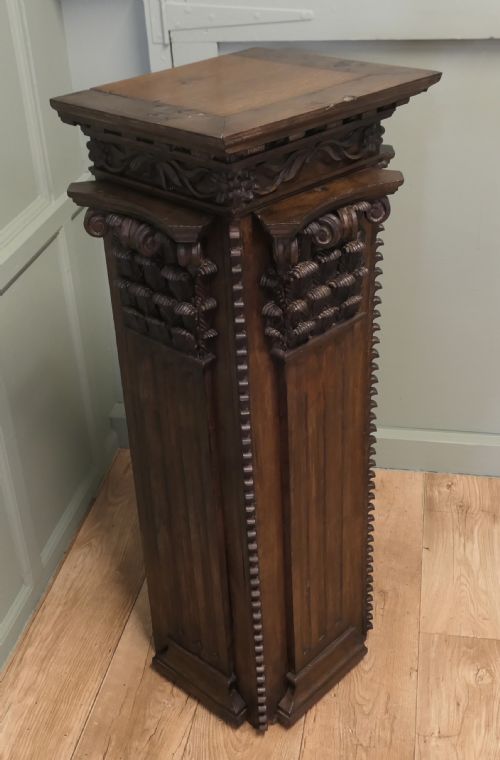
Carved Wooden Column
These carved wooden column pieces offer solid structural presence and classical detail, prized for displaying sculpture and lamps.
What They Are
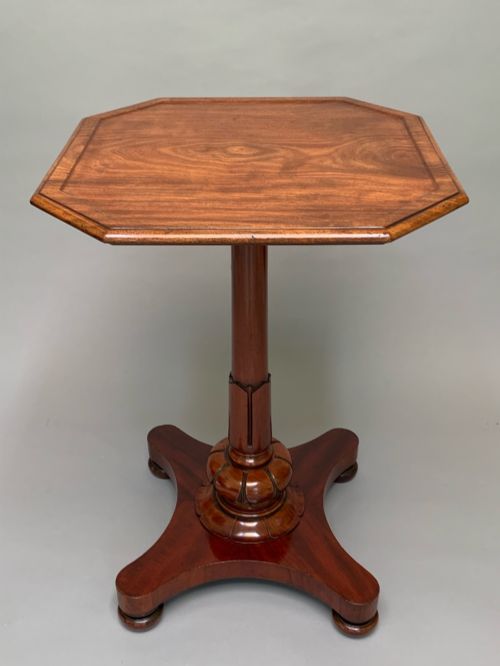
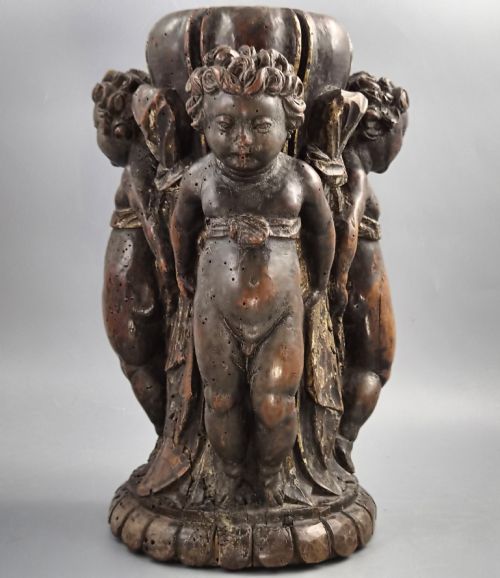
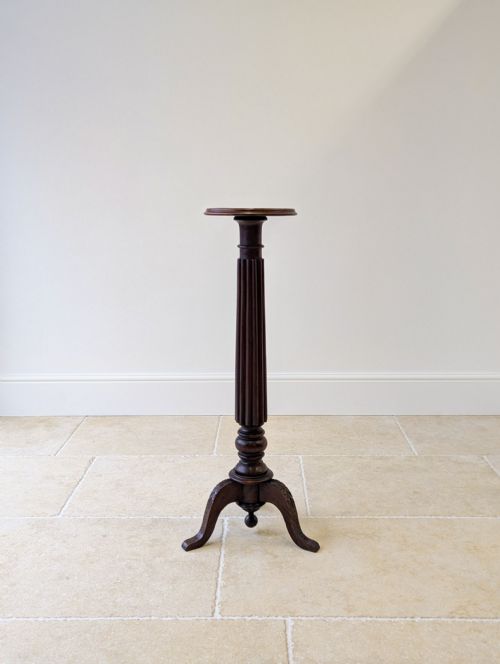
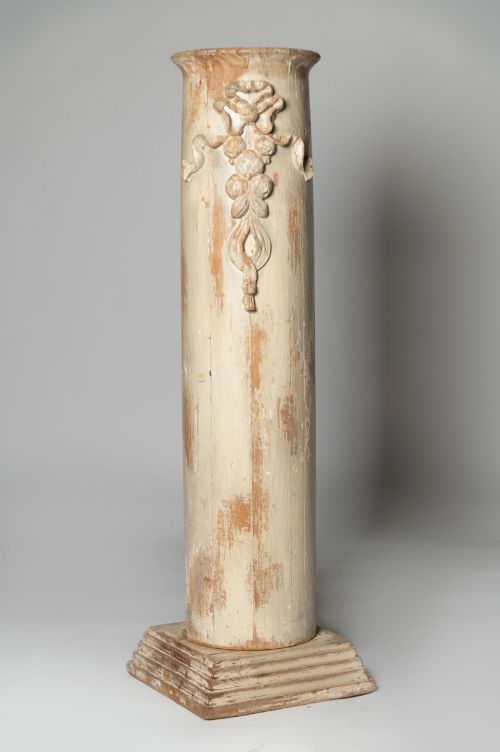
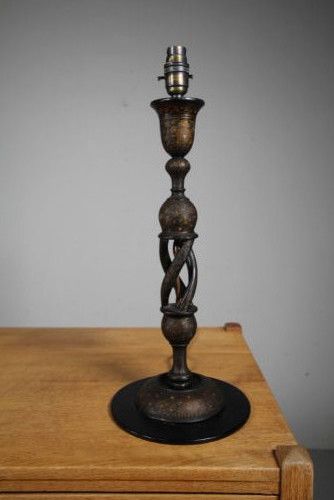
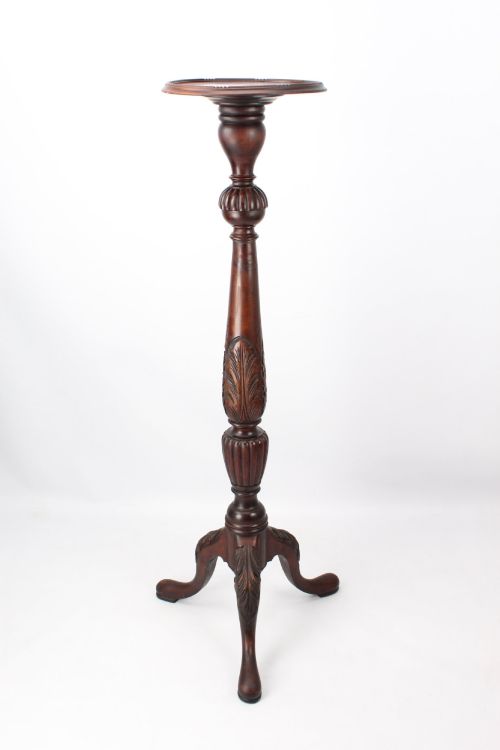
A carved wooden column stands as a sturdy support or display mount, appearing in forms such as torchières, pedestals, candle stands, and plinths. The evidence shows items originating from the nineteenth century, including specific dates like 1850, 1890, and 1900.
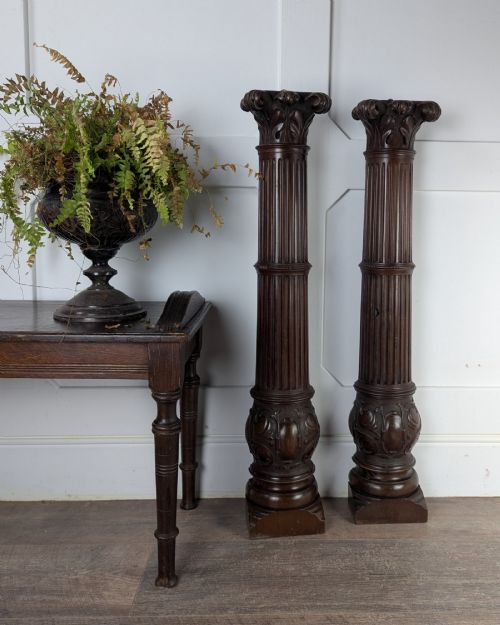
Makers shaped these items into classical fluted formats with Corinthian capitals, cylindrical bodies, and Revival styles including French Chateau, Baroque, Renaissance, and Chippendale. Buyers encounter pairs, sets of three, and individual stands originating from Italy, France, and Asia.
The assortment spans utilitarian candle stands to decorative pedestals suited for interior display. Each piece relies on solid timber construction shaped to elevate objects within a room.
How They Were Made
Artisans carved these objects from walnut, mahogany, and dense hardwoods using hand tools to shape classical fluting and capitals. Timber selection dictated the depth and crispness of the ornamental relief work.
Surface treatments recorded in the evidence include original green paint and decorated finishes applied over the bare timber base. Carpenters joined structural sections to ensure stability under heavy display items.
Retail Price Guide 2026
Typical UK retail prices for carved wooden column, calculated from the Sellingantiques database of over a million retail prices indexed since 2003. This retail price guide relies exclusively on Sellingantiques data; no external sources or auction records are used, so the figures do not describe the wider market.
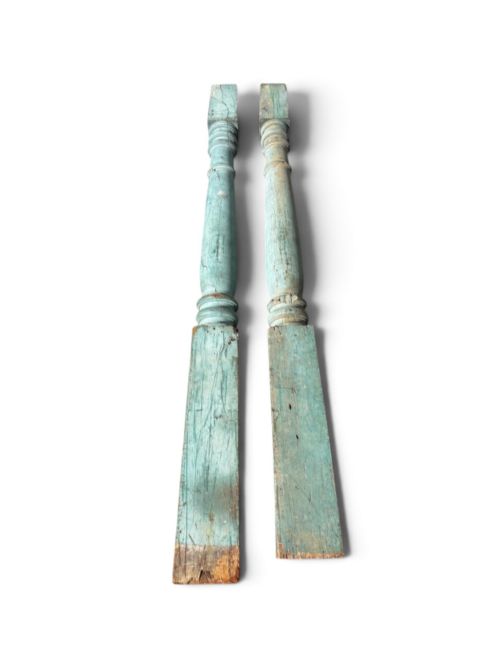
At least one column wears its original green paint like a sturdy old garden gate.
What Varies in Quality
Quality rests in the precision of the hand carving on capitals and flutes, where sharper chisel work distinguishes finer examples. The choice of timber also marks the grade, with dense walnut and mahogany achieving greater definition than softer woods.
The integrity of the original surface finish, whether aged paint or polished hardwood, determines visual cohesion across pairs and sets. Proportion and architectural balance dictate the success of the classical form.
The Carved Wooden Column Glossary
- Capital
- The uppermost member of a column, situated above the shaft. Classical examples in the evidence display Corinthian leaf and scroll ornamentation.
- Plinth
- The heavy square slab beneath the base of a column. It provides a stable foundation for the vertical shaft above.
- Fluting
- Shallow vertical grooves carved into the shaft of a column. This decorative technique creates vertical emphasis and catches the light.
Frequently Asked Questions
What holds up a heavy lamp on these columns?
The solid timber construction and wide base plates provide natural gravity stability for heavy lamps and urns.
Buyers place them in corners or halls where the footprint remains secure against accidental knocks.
How do I clean antique painted columns?
Dust gently with a dry, soft cloth to protect the fragile nineteenth-century painted surfaces from moisture damage.
Avoid chemical cleaning agents that strip historic pigment layers.
Can I use matched pairs outdoors?
These interior architectural elements use historic adhesives and timbers vulnerable to damp British weather conditions.
Keep them inside dry reception rooms and galleries to preserve the wood and paint.
How do I spot a Renaissance Revival column?
Look for heavy proportions, bold classical motifs, and deep relief carving drawn from sixteenth-century Italian models.
These details distinguish Revival work from lighter Chippendale or classical fluted designs.