

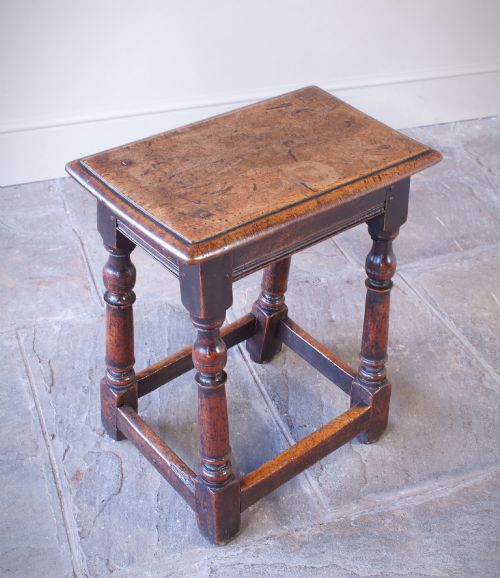
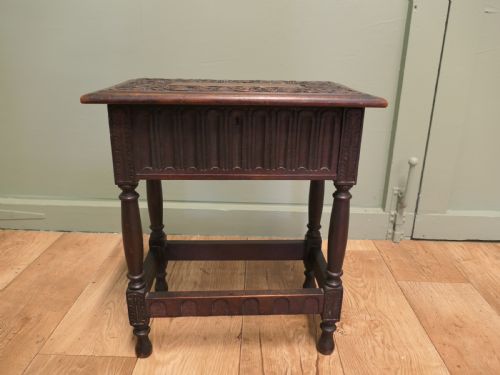
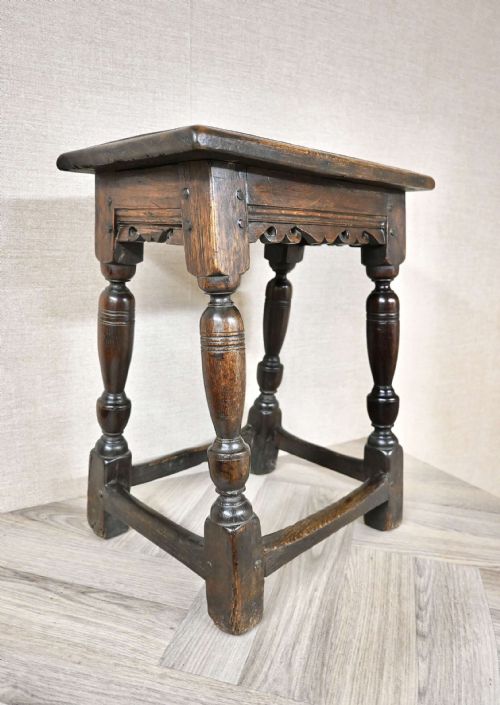
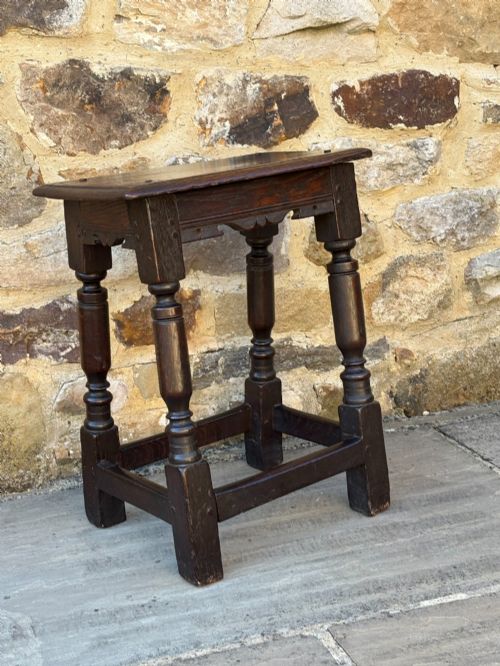
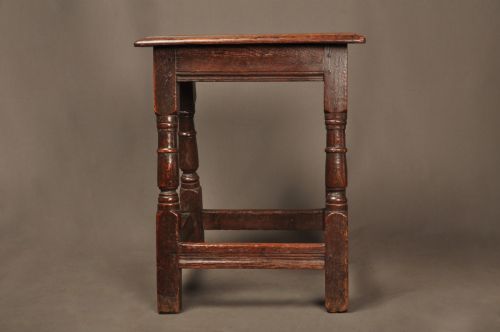
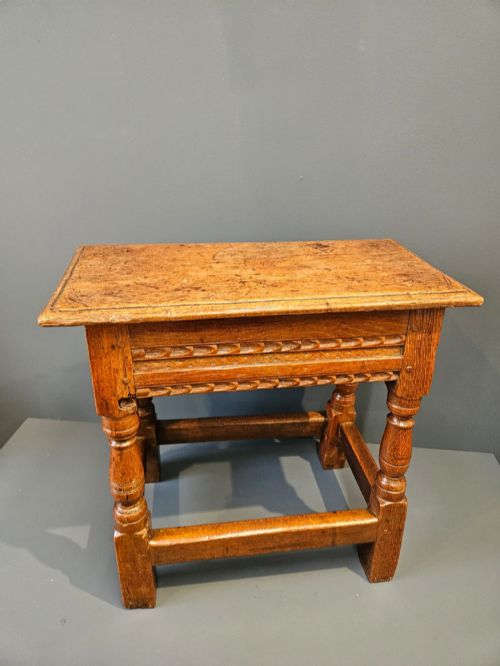


Carved Wooden Coffin Stool
These carved wooden coffin stool examples are robust low seats and sturdy occasional tables rooted in centuries of domestic history.
Carved Wooden Coffin Stool
When you search for a carved wooden coffin stool, you are examining sturdy low timber seating and occasional tables historically associated with both domestic utility and parish customs. These pieces frequently share the form of the joint stool, constructed with pegged mortise and tenon joints designed for heavy daily service.
The selections available range from authentic seventeenth-century examples down to nineteenth-century and revival pieces produced in Victorian and Edwardian workshops. Oak is the primary timber encountered across these periods, occasionally accompanied by walnut, reflecting centuries of traditional British cabinet making.
How they were made
The construction relies heavily on solid oak timbers shaped with hand tools, featuring pegged joints that secure the legs to the upper frame without metal fasteners. Turnery on the legs provides structural rigidity alongside decorative profiling, while the tops are constructed from solid boards attached to the rails.
Carving is typically executed in low relief directly onto the frieze rails or edge boards, utilising geometric patterns, scrolling foliage, or strapwork motifs derived from sixteenth and seventeenth-century vernacular design traditions.
Carved Wooden Coffin Stool Retail Price Guide 2026
Typical asking prices for carved wooden coffin stool among the pieces listed under this phrase on Sellingantiques today, from the lower quarter to the upper quarter. They describe what is for sale here now, not the wider market.
Listings span from the seventeenth century through Georgian and Victorian revival periods, predominantly utilising solid oak.
What varies in quality
Quality rests upon the proportion of original timber surviving in the structure, the crispness of the hand carving on the rails, and the integrity of the original pegged joinery. Earlier pieces display the tool marks and subtle timber shrinkage associated with period craftsmanship.
Revival and later nineteenth-century interpretations vary according to the fidelity of their historical styling and the quality of the selected oak stock. A well-proportioned silhouette and tight joinery separate the finer specimens from later utilitarian reproductions.
The Carved Wooden Coffin Stool Glossary
- Joint stool
- A sturdy wooden seat constructed using pegged mortise and tenon joinery rather than traditional turned and glued spindles. These items served multiple household purposes in early domestic interiors.
- Frieze
- The horizontal wooden band running beneath the top board of the stool, frequently decorated with carved strapwork or gouge work. This structural member receives much of the decorative detail.
- Mortise and tenon
- A traditional woodworking joint where a projecting tongue fits snugly into a corresponding cavity and is secured with a wooden peg. This method provides immense durability to early furniture.
- Strapwork
- A decorative carving motif resembling interlaced leather bands or flat ribbons, popular in Elizabethan and Jacobean design. It adds texture and linear pattern to the wooden rails.
Carved Wooden Coffin Stool: Frequently Asked Questions
What is a coffin stool?
A coffin stool is a traditional low wooden seat, functionally identical to a joint stool, historically used in domestic settings or during parish burial rites.
Many examples date to the seventeenth century or later revival periods and function effectively as sturdy occasional tables today.
How do I date a joint stool?
Dating relies on examining the tool marks, timber shrinkage, construction methods, and stylistic carving details present on the piece.
Period pieces display authentic hand-worked surfaces and pegged joinery that differ noticeably from later revival interpretations.
Are these stools comfortable for seating?
These pieces were built primarily for utility and sturdy durability rather than cushioned lounging, featuring solid wooden tops.
They serve wonderfully as low side tables, plant stands, or occasional seats in traditional and contemporary rooms.
What timber was used?
Oak is the predominant material found across these listings, valued for its strength and availability in early British furniture.
Occasional examples appear in walnut, each showing distinct grain patterns and colouration developed over centuries.