
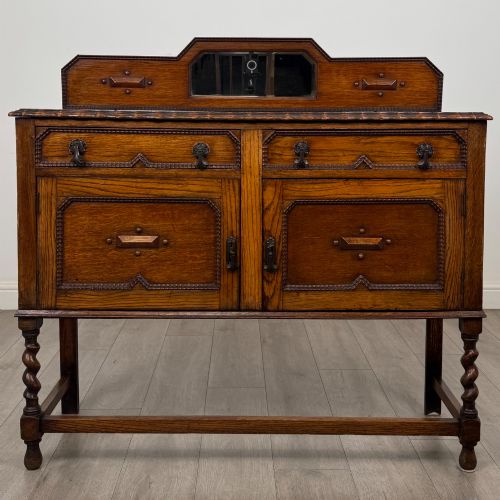
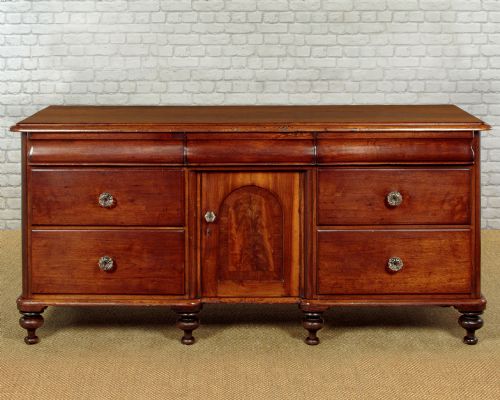
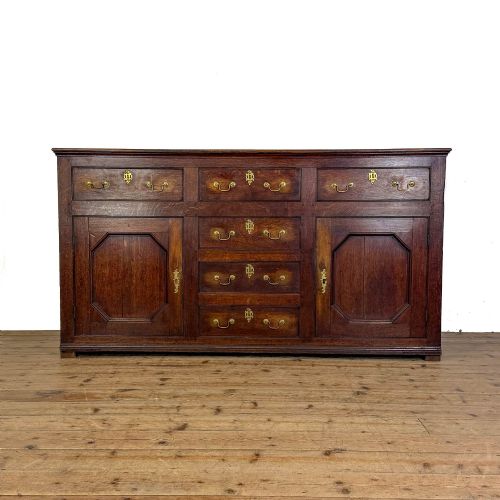
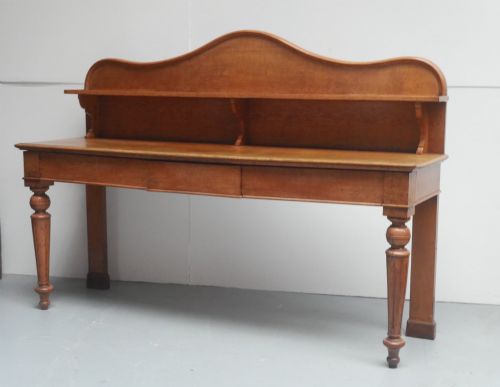
Carved Wooden Buffet Table
A carved wooden buffet table anchors a formal dining room with substance, bringing centuries of skilled cabinet-making and functional surface space to your home.

Carved Wooden Buffet Table
A carved wooden buffet table serves as a sturdy piece of dining furniture designed for serving food and displaying silver or ceramic wares. When you search for this phrase, you encounter a range of heavy serving furniture spanning the eighteenth, nineteenth, and early twentieth centuries.
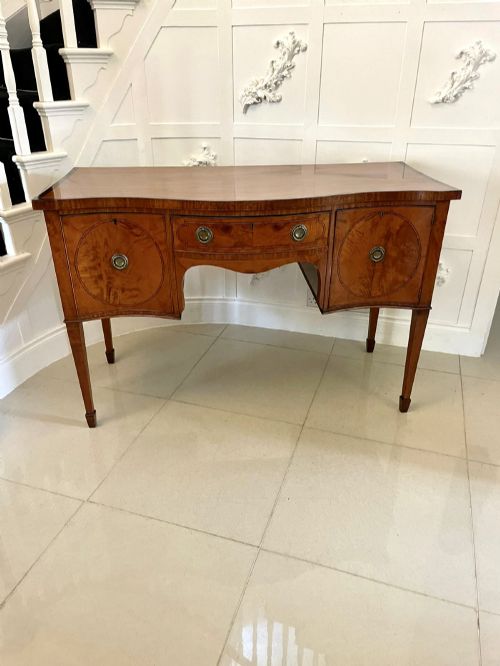
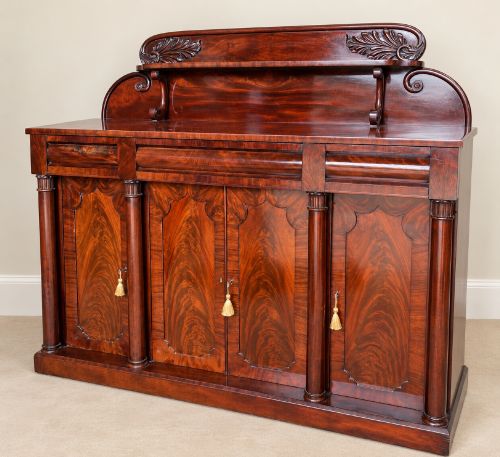
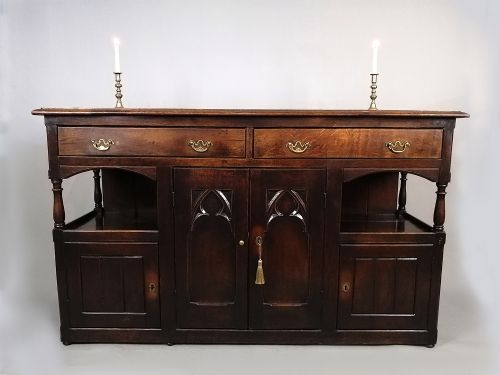
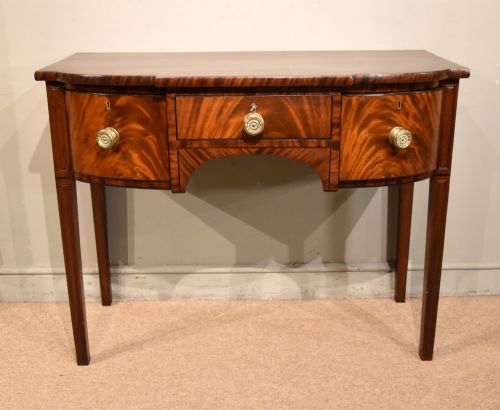
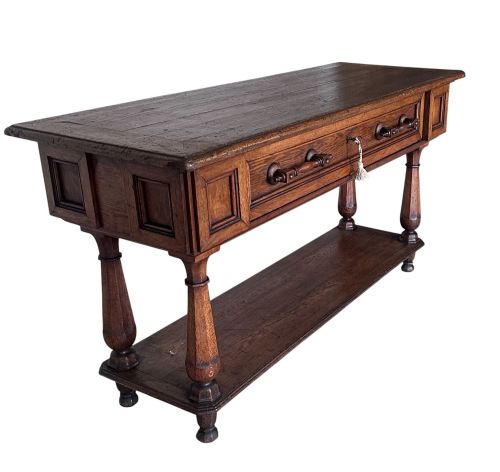
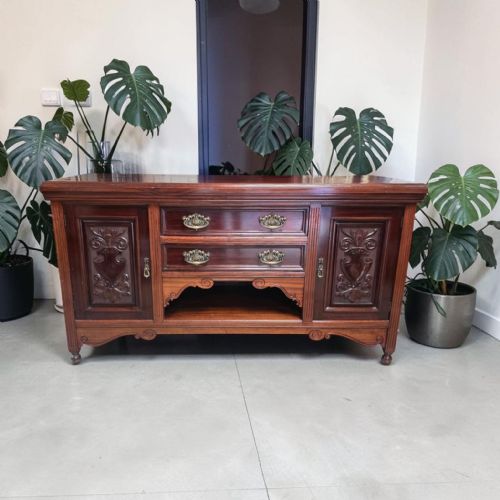
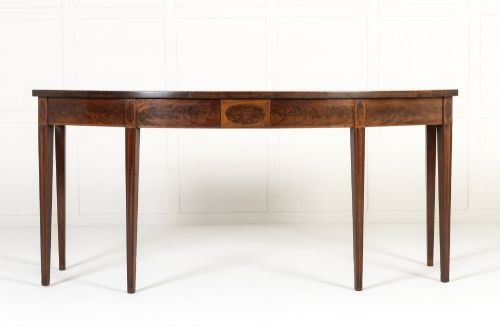
The pieces on this page appear in various regional styles including Regency, Georgian, Edwardian, and Victorian forms. Sideboards, serving tables, and dresser bases dominate the selection, often featuring carved wooden details executed in oak, mahogany, and walnut.
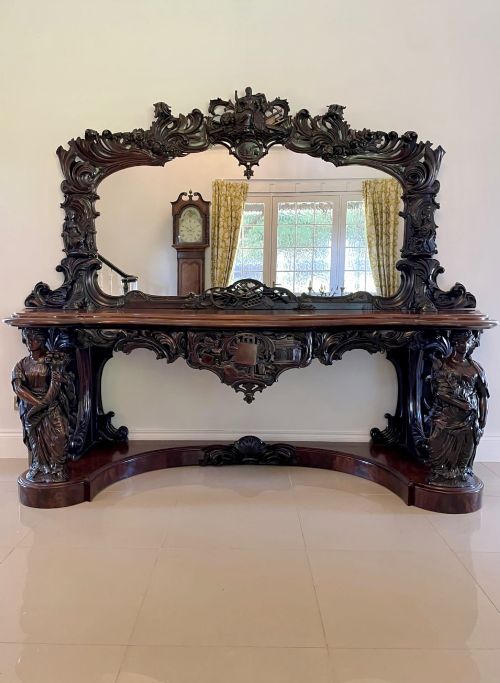
Makers utilised dense native and imported timbers, shaping them into serpentine fronts, pedestal bases, and mirrored consoles. You are most likely to meet nineteenth-century walnut and mahogany examples alongside solid oak country pieces.
Materials and construction
Cabinet-makers constructed these serving tables from solid hardwoods like oak, mahogany, and walnut, frequently applying flame mahogany veneer or satinwood and wood inlay for decorative contrast. Brass hardware such as handles and rails provided structural accents and functional utility.
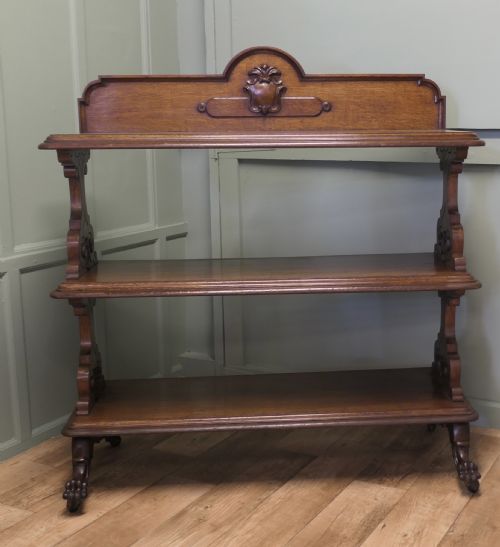
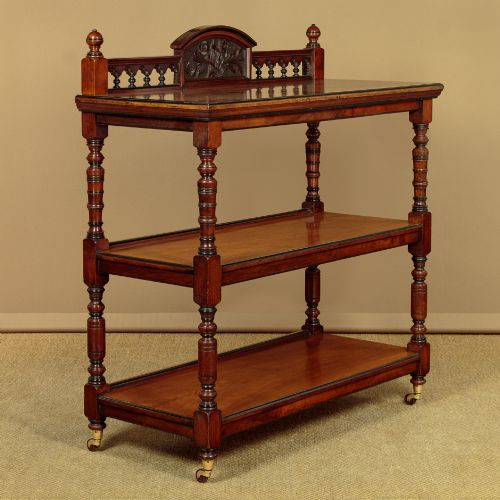
Joinery techniques relied heavily on traditional hand-carving directly into the timber, evident in the relief work on oak dressers and mahogany consoles. Artisans shaped structural elements using hand saws and chisels, resulting in robust framing designed to bear heavy dining loads.
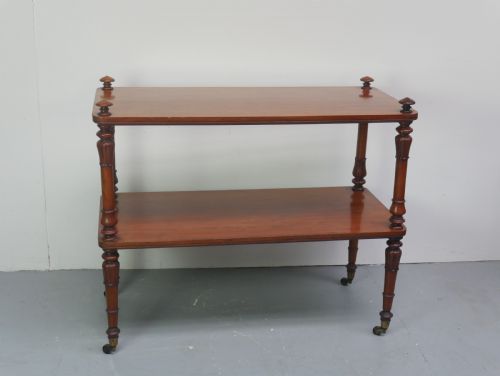
One remarkably honest three-tier buffet managed to travel through time without losing a single shelf along its journey.
Judging quality in antique serving furniture
Quality reveals itself in the depth and crispness of the hand-carved ornamentation rather than superficial polish. Superior examples display sharply defined motifs and symmetrical proportions that demonstrate the carver's complete control over the dense timber.
The selection of primary woods and secondary framing timbers dictates the longevity and structural integrity of each piece. Finer items utilise choice cuts of flame mahogany, figured walnut, or quarter-sawn oak with harmonious grain matching across drawer fronts and top boards.
M. D. Miller & Sons·Gillows
The Carved Wooden Buffet Table Glossary
- Serpentine
- A furniture front or edge shaped with a central convex curve flanked by two concave curves. This contour requires precise woodworking skill to achieve balance.
- Pedestal
- A structural support column or pillar positioned beneath the ends of a large serving table. These often feature heavy carving or scrollwork.
- Dresser base
- The lower section of a kitchen or dining dresser equipped with drawers and cupboards, utilised independently as a serving surface. These pieces omit the upper plate rack.
- Flame mahogany veneer
- A thin slice of mahogany timber cut from the fork of the tree where branches join the trunk. It creates a distinctive, fiery flame-like grain pattern across large surfaces.
Carved Wooden Buffet Table: Frequently Asked Questions
How were buffet tables used historically?
Dining rooms utilised these heavy tables for laying out dishes before service and storing silver cutlery within integrated drawers. Wealthy households displayed fine ceramics and decorative vessels upon the upper surfaces during grand dinners.
The furniture acted as a central hub for dining room organisation, bridging the gap between kitchen preparation and formal dining etiquette. Servants accessed the drawers and cupboards for linens and serving utensils throughout the meal.
Where should I place a large buffet table?
Formal dining rooms provide the traditional setting, positioned flat against a primary wall to allow unhindered movement around the central dining table. Large console variants also suit wide hallways and spacious entrance passages.
Ensure adequate clearance around the piece for opening drawers and cabinet doors without obstruction. Pairing the surface with a matching mirror or artwork enhances its visual weight in the room.
What distinguishes a sideboard from a buffet?
Sideboards traditionally incorporate more enclosed cupboard storage and drawer configurations designed for comprehensive dining room organisation. Buffets often lean towards open serving surfaces, pot boards, or fewer enclosed compartments.
Over time, makers used these terms interchangeably, leading to modern listings grouping similar serving furniture together. Examining the internal layout clarifies whether the piece prioritises storage or open display space.