



Indian Wooden Sideboard
An indian wooden sideboard brings rich carved timber and colonial craftsmanship straight into a dining room or hallway.
Indian Wooden Sideboard
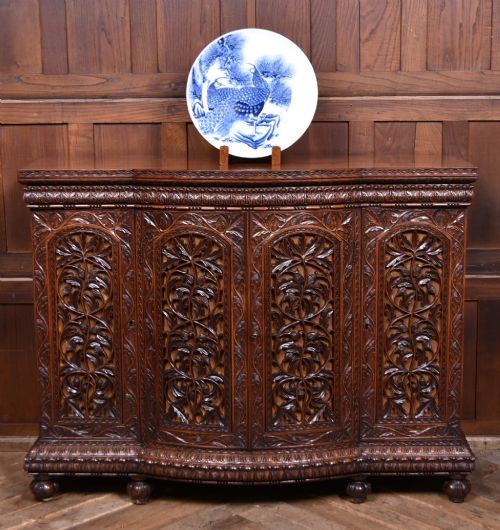
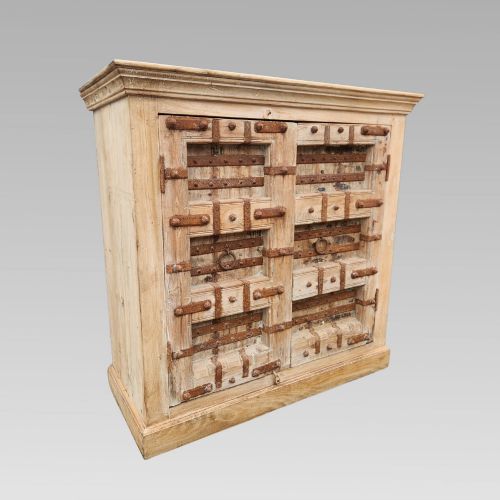
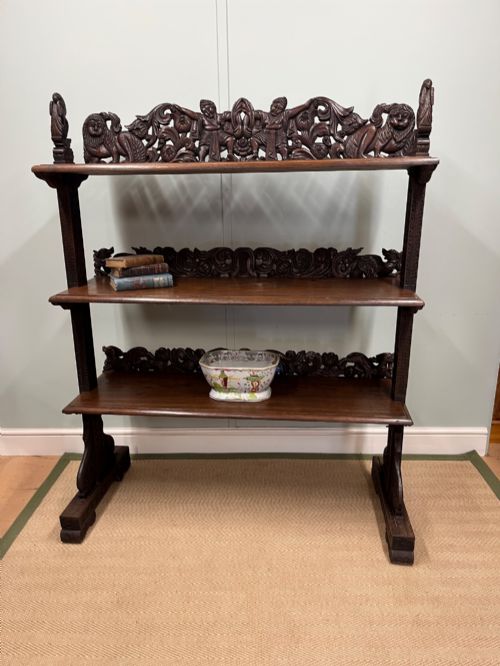
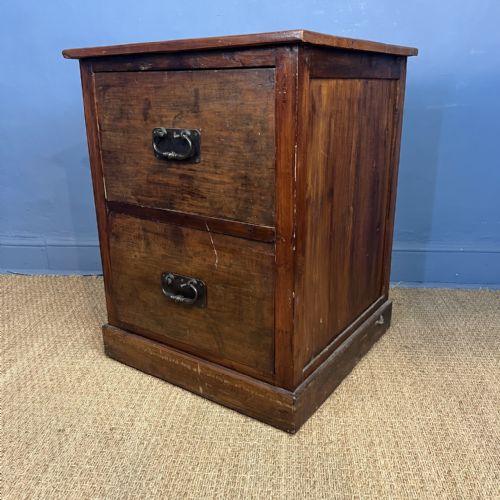
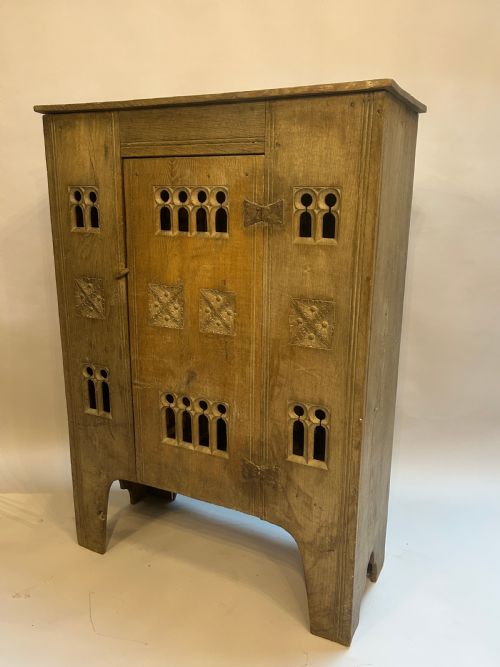
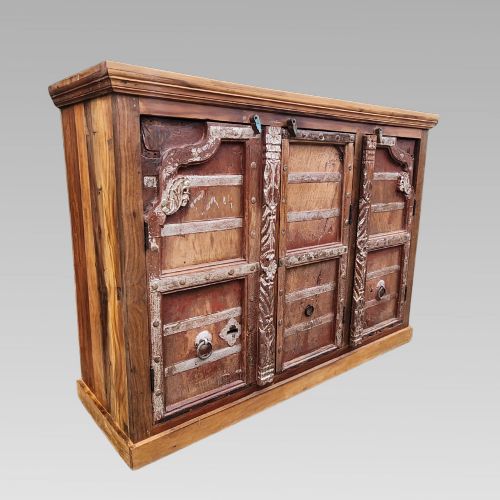
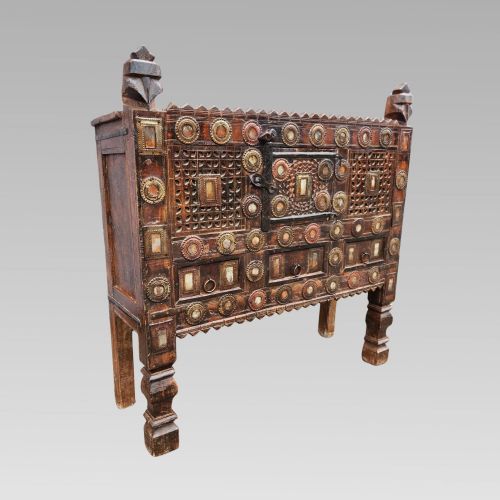
An indian wooden sideboard encompasses practical storage furniture spanning the nineteenth century through the early twentieth century, including pieces from the Victorian and Regency eras. Buyers browsing for an indian wooden sideboard encounter forms ranging from traditional sideboards and buffets to carved cabinets, dowry chests, and filing cabinets.
The pieces on offer showcase diverse regional and stylistic influences, grouping traditional Indian and provincial folk art alongside Anglo-Indian and Anglo-Burmese designs. These substantial items serve as functional storage while displaying dense surface carving and distinctive silhouette details.
Materials and construction
Constructed primarily from dense tropical timbers like padauk wood, teak, rosewood, and satinwood, these pieces rely on the inherent durability of their materials. Artisans utilised iron hardware and glass panels to complement the solid hardwood frames.
Joinery and ornamentation combine structural cabinetmaking with elaborate hand carving, frequently featuring deep relief work. Workshops shaped these woods into three-tier buffets, breakfront pedestals, and panelled storage cupboards using traditional hand tools.
Listings feature teak, padauk wood, rosewood, and satinwood across the nineteenth and early twentieth centuries.
Evaluating craftsmanship and condition
The standard of carving sets the tier of an individual piece, distinguishing shallow surface patterns from deeply undercut, highly detailed figural or floral work. The complexity of the architectural silhouette, such as an inverted breakfront, also elevates the stature of the furniture.
Selection of timber dictates much of the visual weight, with richly figured padauk and contrasting satinwood commanding particular attention. The integrity of the original hardware and the crispness of the joinery complete the measure of quality.
The Indian Wooden Sideboard Glossary
- Padauk
- A dense, heavy tropical hardwood prized for its deep reddish-brown colour and durability in colonial furniture. It takes a fine finish and supports intricate hand carving.
- Damchiya
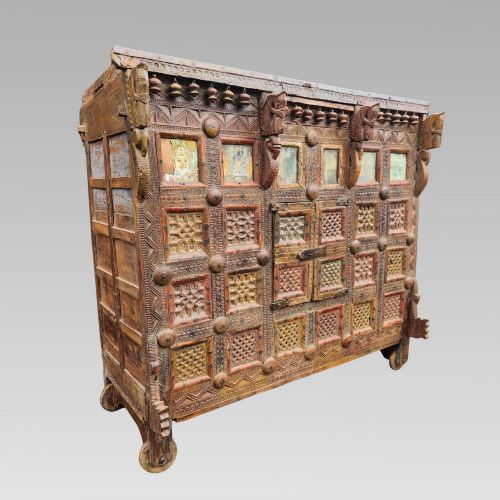
- A traditional Indian dowry chest or low storage cabinet, often featuring carved panels and integrated compartment spaces. These pieces served practical domestic functions in households.
- Breakfront
- A cabinet or sideboard whose central section projects forward from the flanking outer sections. This architectural form adds depth and formal presence to the piece.
- Anglo-Indian
- Furniture made in India during the British colonial period, combining traditional local craftsmanship with European forms and functional requirements. These works merge distinct cultural design traditions.
- Satinwood
- A yellowish hardwood known for its lustrous, reflective grain, utilised in fine cabinetmaking for decorative contrast and polished surfaces.
Indian Wooden Sideboard: Frequently Asked Questions
What rooms suit an indian wooden sideboard?
These substantial storage pieces fit naturally into dining rooms for tableware or hallways for linens and daily items. Their decorative carved surfaces allow them to function as focal points in large living spaces.
Placing them against plain walls highlights the detailed woodwork without visual competition from surrounding decor.
How do I care for padauk and teak?
Regular dusting with a dry, soft cloth prevents particle buildup in the deep recesses of the hand carvings. Avoiding direct sunlight and sudden temperature changes protects the natural timber from drying out.
Applying a minimal amount of appropriate furniture wax occasionally maintains the lustre of the polished hardwood.
How are Anglo-Indian pieces dated?
Examinations of construction methods, timber choice, and hardware styles provide clues to the age of a cabinet or sideboard. Nineteenth-century examples often feature hand-cut joints and distinct regional carving motifs.
Comparing the silhouette to documented Victorian or Regency forms helps narrow down the production era.
What is a damchiya chest?
A damchiya is a traditional storage chest or low cabinet originating from western India, historically used for dowry items. They feature hinged lids or carved doors concealing interior compartments.
Today these pieces serve as low sideboards or statement storage furniture in contemporary homes.