
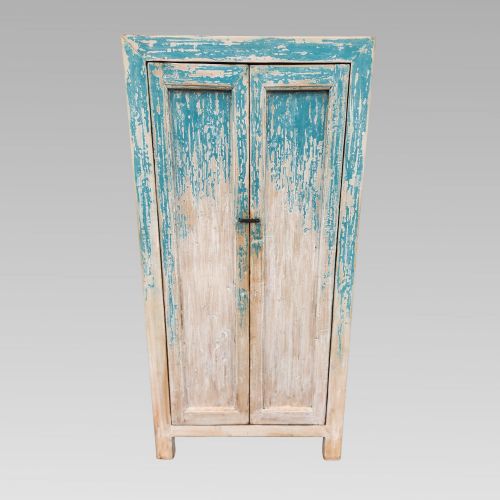
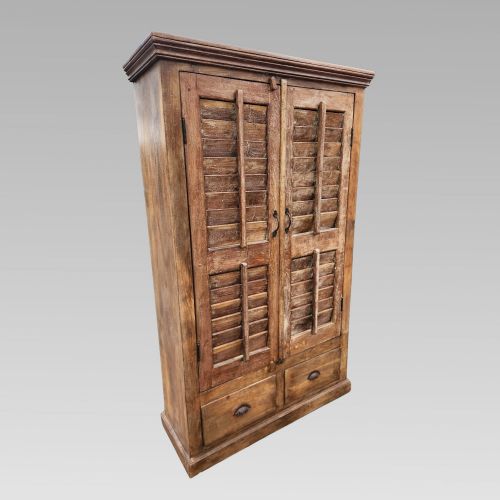
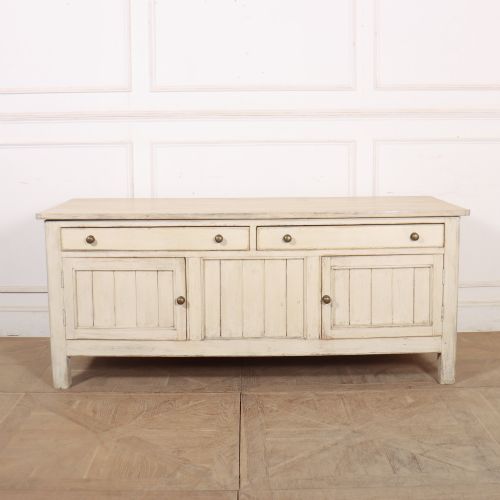


Rustic Timber Storage Cupboard
A rustic timber storage cupboard provides robust household organisation through solid pine, oak, teak, and fruitwood construction shaped across the eighteenth, nineteenth, and early twentieth centuries.
Rustic Timber Storage Cupboard
A rustic timber storage cupboard encompasses utilitarian storage furniture built across various regional traditions, including English country pieces, Indian provincial workshops, and Italian country furniture. These functional items range from housekeeper larders and kitchen dressers to wall-hanging corner cabinets and tall wardrobes.
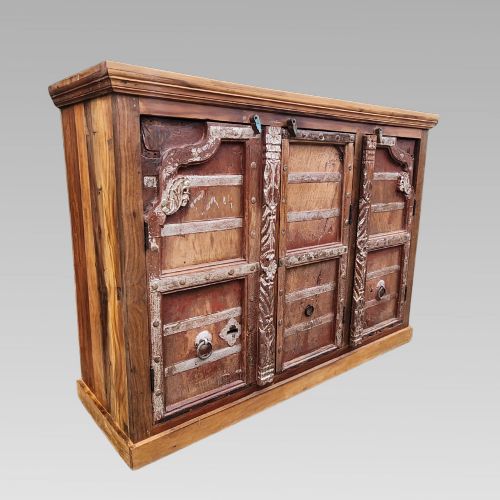
Buyers exploring this selection frequently encounter nineteenth-century painted pine pieces, Georgian oak corner cabinets, and reclaimed teak or rosewood examples from the early twentieth century. These foundational storage forms served domestic needs in kitchens, bedrooms, and halls across multiple eras.
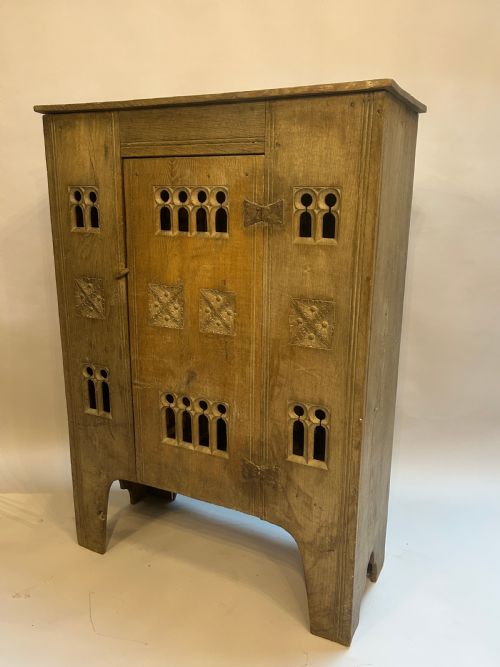
The category bridges formal period cabinetry and robust vernacular craftsmanship, displaying the practical design choices of makers working in pine, oak, chestnut, and fruitwood. Each piece balances storage capacity with regional aesthetic traditions.
Materials and construction methods
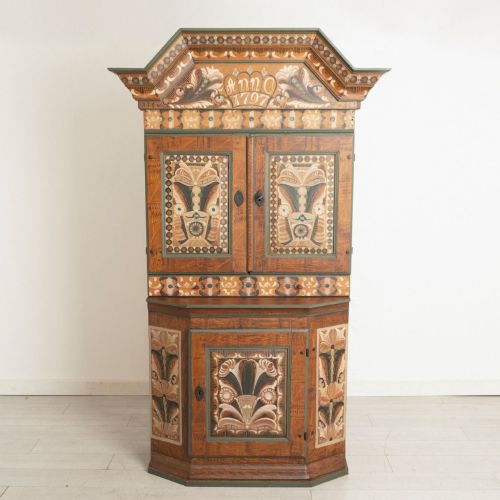
Construction relies heavily on solid timbers such as pine, oak, teak, fruitwood, chestnut, and cedar, often assembled using traditional joinery suited to heavy domestic use. Surfaces frequently display original paint finishes, scumble glaze, polychrome pigments, or natural wood patination.
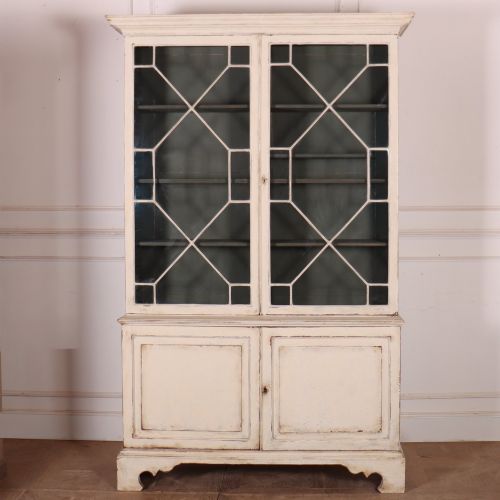
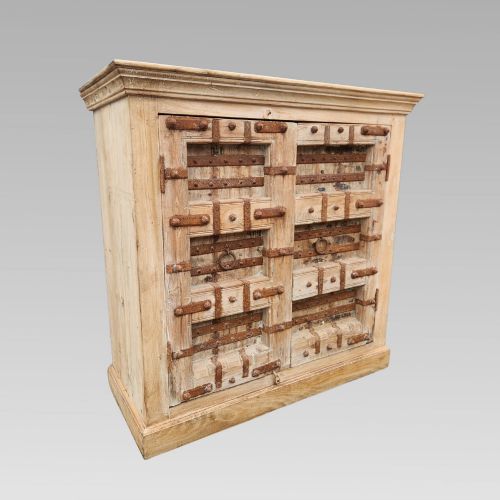
Metal elements including iron and brass hardware provide functional hinges, latches, and pulls, whilst glass panels appear in glazed bookcase and cabinet doors. Structural elements range from simple panelled doors to louvre designs and multi-drawer configurations.
Materials represented across the collection include pine, oak, teak, fruitwood, chestnut, cedar, rosewood, iron, brass, glass, and paint.
Distinguishing quality in vernacular storage
Quality within these utilitarian pieces rests upon the integrity of the original timber, the survival of early or original paint surfaces, and the proportion of the form. Pieces retaining untouched surface treatments and honest structural wear demonstrate superior character.
The refinement of regional joinery and the harmonious integration of iron or brass fittings elevate individual examples above standard utility furniture, marking the distinction between everyday workshop production and finer country craftsmanship.
The Rustic Timber Storage Cupboard Glossary
- Housekeeper cupboard
- A large utilitarian storage piece traditionally used for linens, dry goods, or provisions in large country houses. These tall cupboards often combine deep shelving with lower drawers.
- Scumble paint
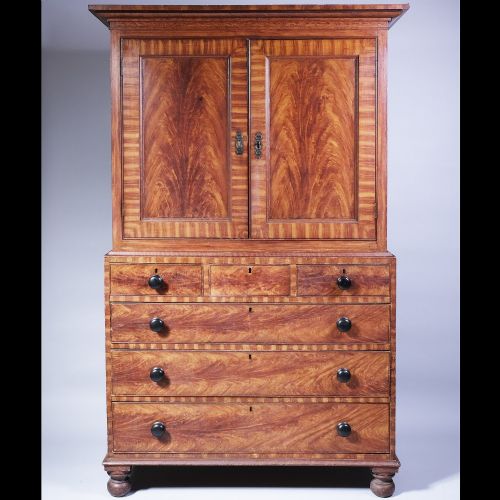
- A decorative surface finish applied by dragging or wiping translucent glaze over a lighter base coat to imitate more expensive wood grain or add texture. It protects the underlying softwood while providing depth.
- Dresser base
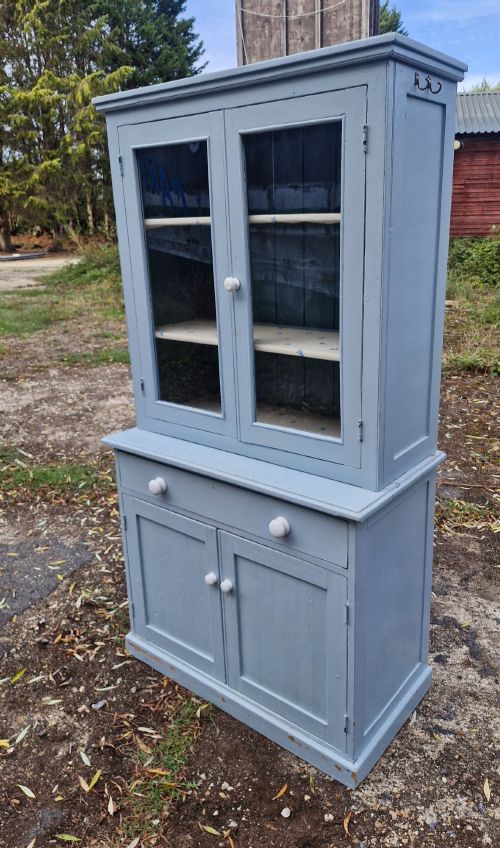
- The lower section of a kitchen dresser featuring cupboards and drawers without the upper plate rack. These sturdy items served as secondary work surfaces and primary storage in farmhouse kitchens.
- Corner cupboard
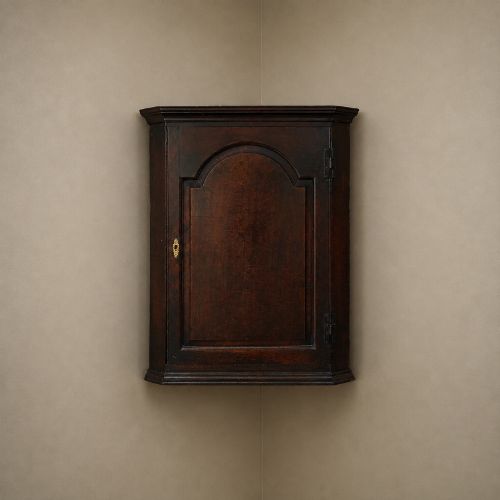
- A specialised cabinet designed to fit neatly into the ninety-degree angle of a room. Both wall-hanging and floor-standing versions maximise difficult corners for domestic storage.
- Polychrome paint
- A multi-coloured surface decoration applied to furniture, frequently seen on Italian and continental pieces. This technique introduces vibrant hues directly onto timber panels.
Rustic Timber Storage Cupboard: Frequently Asked Questions
What is a housekeeper cupboard?
A housekeeper cupboard is a tall, capacious storage unit traditionally utilised in large domestic households for housing linens, dry goods, and provisions.
These pieces typically combine substantial internal shelving with deep lower drawers or compartments to keep household supplies organised.
How do I care for original painted timber?
Caring for original painted timber requires gentle dusting with a dry, soft cloth and avoiding harsh chemical cleaning agents that might strip historic finishes.
Keeping the piece away from direct heat sources and dramatic humidity fluctuations preserves the stability of both the wood and the paint layer.
Are these cupboards suitable for modern kitchens?
These cupboards integrate well into contemporary kitchens by offering substantial freestanding storage capacity that breaks up fitted units.
Their deep shelves and drawer configurations accommodate modern kitchenware whilst introducing historic character and warmth to the space.
How can I tell a Georgian cupboard apart from a Victorian one?
Georgian cupboards often display proportion and timber choices rooted in classical eighteenth-century design principles, frequently utilising oak or fruitwood.
Victorian pieces lean towards heavier proportions, broader use of pine, and functional scumble paint or utilitarian finishes designed for robust domestic service.