


Carved Wooden Bear Ornament
A carved wooden bear ornament brings rustic charm and meticulous craftsmanship into a room.
Carved Wooden Bear Ornament
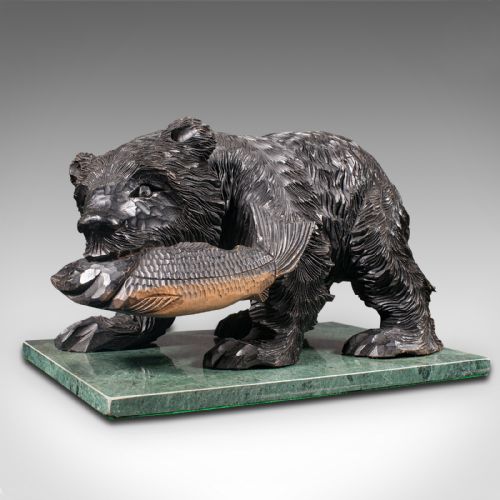
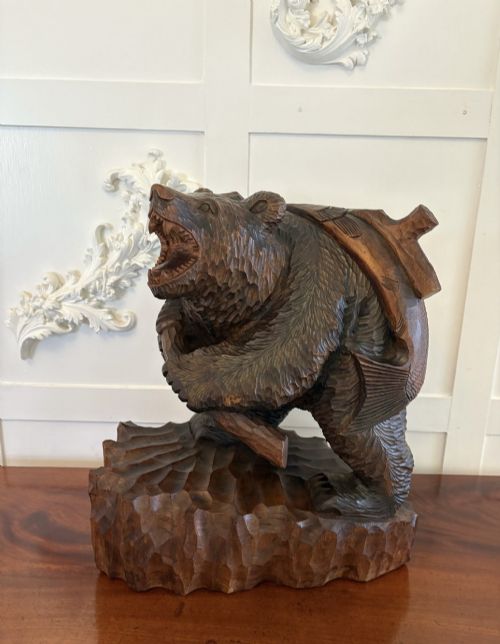
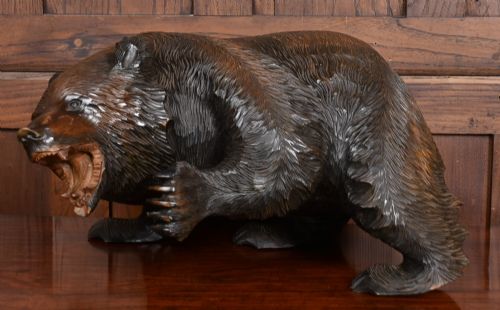
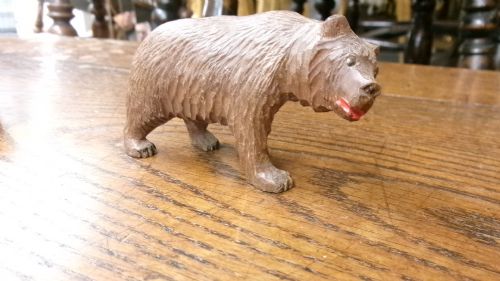
A carved wooden bear ornament represents a sculptural tradition spanning the nineteenth century, taking the form of figures, figure groups, and miniatures. These decorative objects range from single standing bears to elaborate scenes carrying fish.
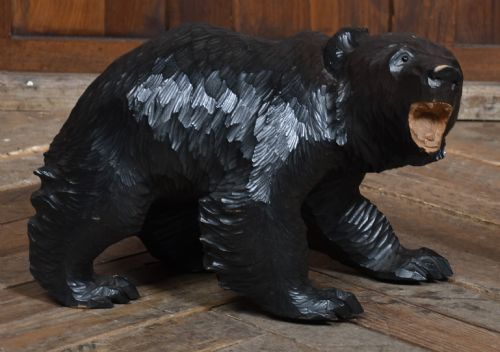
The selections on this page draw from two distinct traditions, namely Black Forest and Japanese folk art. Collectors encounter larger statement sculptures alongside miniature table ornaments and stud-eyed novelties.
How they were made
Carvers shaped these figures from solid timber, utilising walnut, linden wood, and general hardwoods. The natural grain of the wood provides the texture for fur and anatomical details.
Finishes include plain wax, dark stain, and occasional paint, whilst details like stud eyes add expression to smaller pieces.
The listings cover pieces spanning the nineteenth century, utilising walnut, linden wood, and general hardwoods.
What varies in quality
The distinction between ordinary and exceptional work lies in the realism of the carving and the depth of the fur texture. Master carvers captured musculature and posture with precision rather than simple block forms.
Scale also influences the character of the piece, from large, imposing Victorian figures down to finely detailed miniature sets.
The Carved Wooden Bear Ornament Glossary
- Black Forest
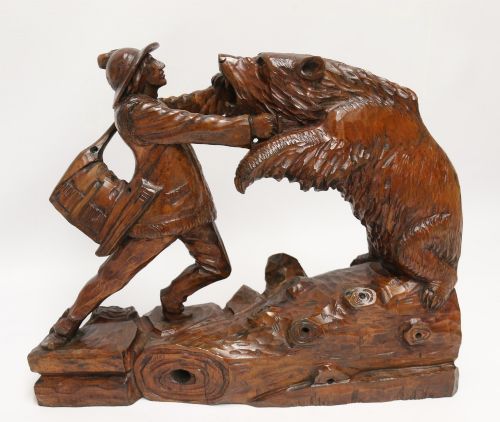
- A style of wood carving originating from the European mountain region, noted for realistic animal figures. These items often depict bears engaged in human activities or standing as naturalistic sculptures.
- Kibori Kuma
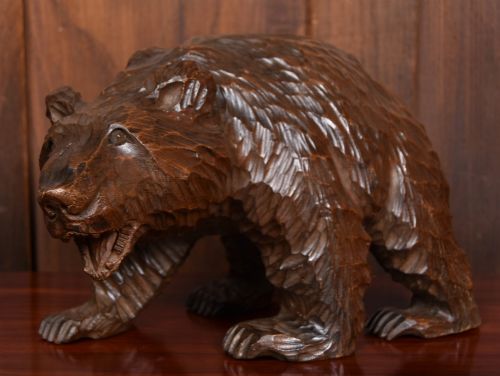
- A traditional style of Japanese wood-carved bear originating from Hokkaido. These pieces often feature bold, textured chisel marks representing fur.
- Figure group
- An arrangement of multiple carved subjects interacting within a single composition. Such pieces demand higher skill from the carver to maintain balance and proportion.
- Linden wood
- A pale, fine-grained timber favoured by carvers for its smooth consistency and lack of prominent splintering. It allows for intricate detail without fracturing.
Carved Wooden Bear Ornament: Frequently Asked Questions
What periods do these bears come from?
The listings span the nineteenth century, including specific decades from eighteen-sixty onwards.
Maker styles from this era reflect distinct regional carving traditions in Europe and Japan.
How were these ornaments used?
These pieces served as decorative objects and tabletop sculptures in period interiors.
Many functioned purely as ornamental displays, whilst others formed part of larger miniature collections.
What woods are typically used?
Carvers utilised walnut, linden wood, and general hardwoods for their figures.
Surfaces were then treated with wax, stain, or paint to enhance the grain.
How do Black Forest and Japanese bears differ?
Black Forest carvings tend toward naturalistic European styles or whimsical poses.
Japanese Kibori Kuma pieces showcase distinct folk art traditions with expressive chisel work.