
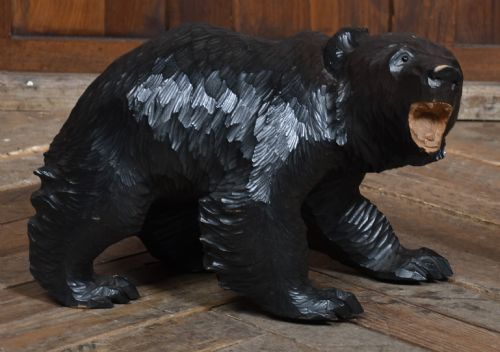


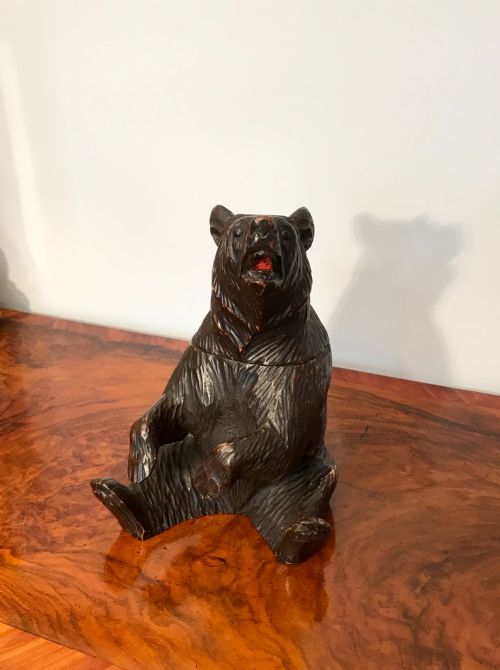
Carved Timber Bear Statue
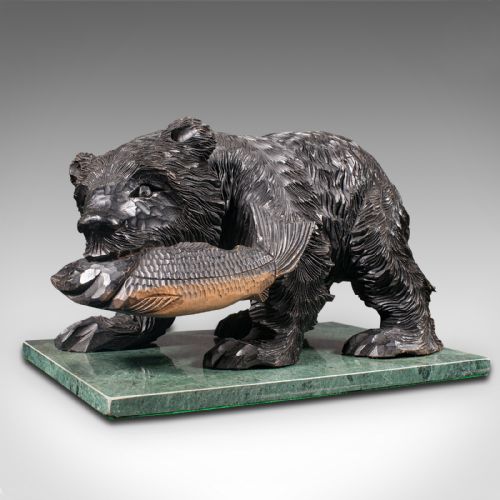
These carved timber bear statue pieces bring woodland character and rustic charm into a room, fashioned from walnut, hardwood and mixed woods across the nineteenth and twentieth centuries.
Carved Timber Bear Statue
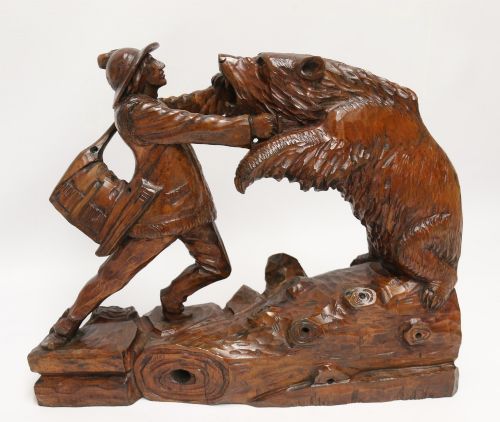
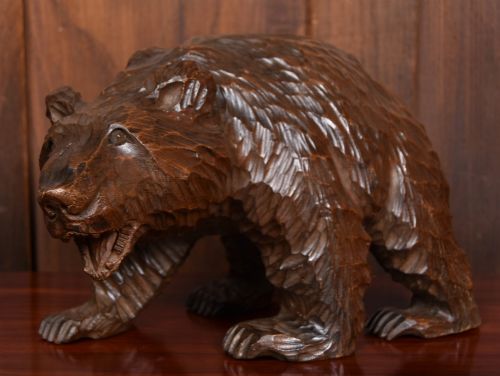
A carved timber bear statue takes many forms, ranging from towering floor lamps and substantial Black Forest figures to miniature groupings and folk art creations. When you search for a carved timber bear statue, you will most frequently encounter nineteenth-century Black Forest work alongside Japanese folk art examples.
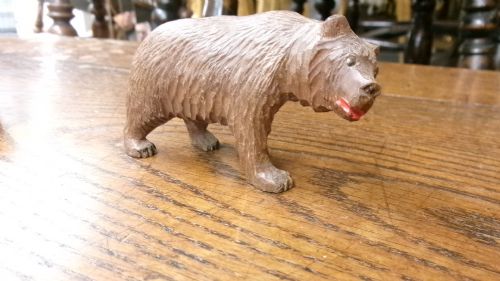
The selection encompasses small desk ornaments with stud eyes as well as complex figure groups and functional lighting pieces. European alpine workshops and Japanese artisans both developed distinct traditions in portraying these animals with varied postures and expressions.
Originating across the Victorian era, the Georgian period, and into the nineteen-twenties, these sculptures reflect regional carving traditions that prioritize texture and naturalistic detail. Each piece captures the bear either standing, walking, or seated, utilising the grain of the wood to suggest fur and muscle.
How they were made
Surface treatments vary between natural wood finishes, wax polishes, applied stains, and occasional painted details. Some figures incorporate inset metal elements, such as stud eyes, to provide a sharp contrast against the matte carved timber.
Carved Timber Bear Statue Retail Price Guide 2026
Typical asking prices for carved timber bear statue among the pieces listed under this phrase on Sellingantiques today, from the lower quarter to the upper quarter. They describe what is for sale here now, not the wider market.
One miniature set gathers fifteen tiny bears together, proving that ursine charm scales down remarkably well.
What varies in quality
The distinction between standard items and superior examples lies in the depth of the carving and the anatomical accuracy of the animal. Master carvers achieved realistic tension in the limbs and convincing textures in the fur, whereas lesser pieces appear stiff and formulaic.
Proportion and scale also dictate distinction, with intricate miniature groupings or large, ambitious lamp bases demanding higher levels of sculptural skill than simple, blocky silhouettes.
The Carved Timber Bear Statue Glossary
- Black Forest
- A nineteenth-century decorative carving style originating from the wooded mountainous region of Central Europe, renowned for realistic animal sculptures.
- Kibori Kuma
- A traditional Japanese style of wood-carved bear originating from Hokkaido, often created as folk art.
- Figure group
- A composition featuring multiple carved subjects interacting or presented together on a shared base.
- Stud eyes
- Small metal or glass insets used to represent the eyes of a carved figure, adding a lifelike glint.
Carved Timber Bear Statue: Frequently Asked Questions
Where were Black Forest bears made?
These pieces were produced primarily in the alpine regions of Switzerland and Germany during the nineteenth and early twentieth centuries.
Local woodcarvers utilised the abundant regional timber, particularly walnut, to supply tourists and export markets with rustic animal figures.
How do I care for wooden bear sculptures?
Keep the carved timber away from direct sunlight and dramatic temperature fluctuations to prevent the wood from drying out or splitting.
Apply a light application of neutral wax polish occasionally to maintain the sheen of the walnut or hardwood surface.
What is Japanese Kibori Kuma?
This term refers to wooden carved bears produced in Japan, particularly associated with the folk art traditions of Hokkaido.
Carvers utilised local timber to capture the animal in various poses, often retaining a rustic and direct aesthetic.
Are these bears functional objects?
While most serve purely as decorative sculptures or figurines, some nineteenth and twentieth-century examples were adapted into floor lamps.
These functional pieces integrate lighting fittings alongside the carved wood without losing their sculptural silhouette.