


Antique Wood Bear Figure
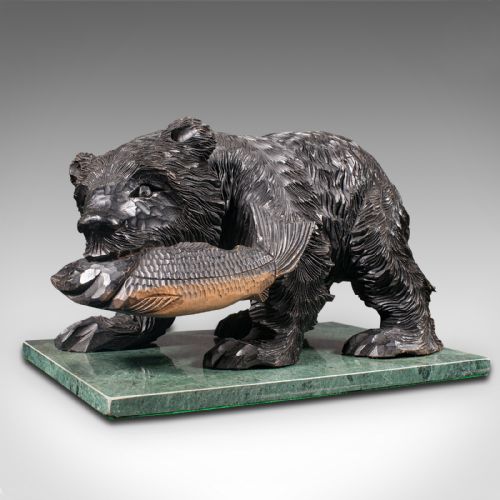
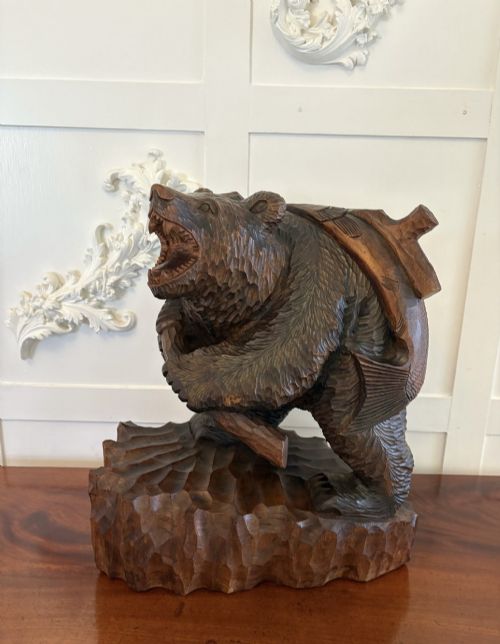
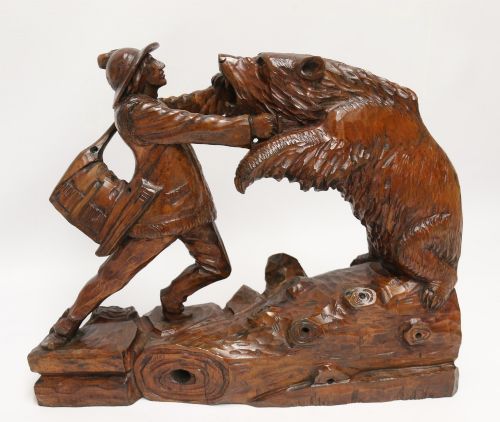
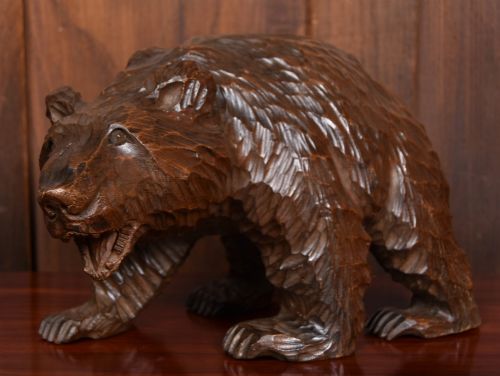
An antique wood bear figure brings rustic charm to a room, capturing nature through skilled carving.
Antique Wood Bear Figure
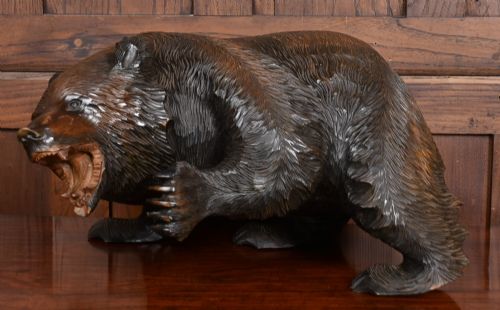
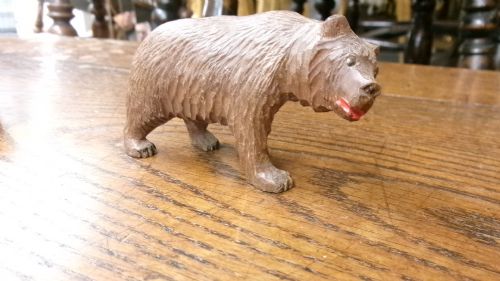
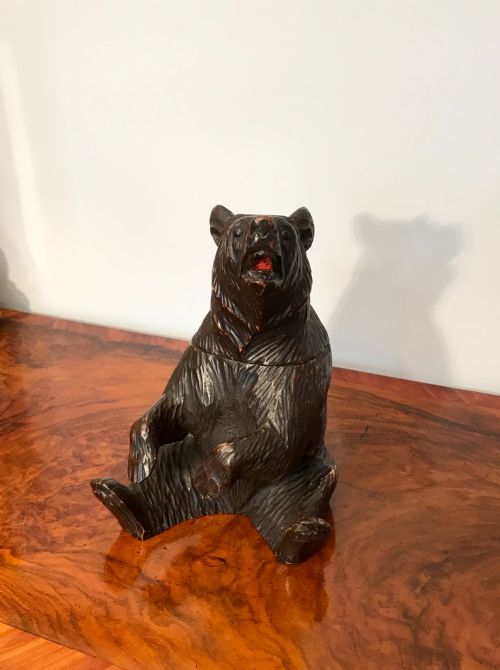
When searching for an antique wood bear figure, you encounter carved sculptures, inkstands, condiment sets, and miniature animal groupings originating from the 19th Century, Georgian, Victorian, and Edwardian eras. The most common examples belong to the Black Forest tradition, alongside Japanese folk art and Swiss folk art carvings.
These pieces range from single large sculptures carrying a fish or a heart to sets of multiple miniature bears and functional items like inkstands. Makers utilise materials including linden wood, walnut, hard wood, wax, and stain to achieve varied surface finishes.
The objects span from detailed 1860s and 1880s pieces to later 1900s works. Figures vary from naturalistic wildlife depictions to stylised Japanese wooden bears.
Materials and carving techniques
Many items received surface treatments involving stain and wax to enrich the natural grain and tone of the carved wood. Artisans worked within distinct regional traditions, notably Black Forest and Japanese folk art styles, applying specific cutting and smoothing techniques particular to those workshops.
Object forms include standalone sculptures, miniature sets, inkstands, and condiment figures in Black Forest and Japanese folk art styles.
Distinguishing quality in wood bear carvings
Quality separates objects by the depth and precision of the hand carving, particularly in the rendering of the bear's fur, expression, and form. Finer sculptures show careful attention to anatomical detail and proportion rather than simple blocking.
The integrity of the timber and the subtlety of the wax or stain finish also differentiate pieces. Complex forms, such as figures carrying fish or integrated functional items like inkstands and condiment sets, demonstrate greater ambition in design and execution.
The Antique Wood Bear Figure Glossary
- Black Forest
- A regional style of wood carving originating in Central Europe, known for realistic representations of wildlife such as bears. These carvings often include functional items like inkstands or decorative figures.
- Linden wood
- A pale, fine-grained timber frequently utilised by carvers for detailed figurative work because it resists splitting. It accepts stains and wax finishes smoothly.
- Inkstand
- A desk accessory designed to hold writing equipment, sometimes incorporated into the base of a carved bear figure. It combines utility with decorative sculpture.
- Condiment set
- A matched grouping of table vessels for seasonings, occasionally formed as novelty animal carvings in nineteenth-century workshops. These pieces served practical dining functions.
- Japanese folk art
- A stylistic influence seen in certain nineteenth-century wooden bear sculptures, reflecting distinct regional carving traditions. These objects present alternative aesthetic approaches to European animalier works.
Antique Wood Bear Figure: Frequently Asked Questions
What is an antique wood bear figure?
An antique wood bear figure is a hand-carved sculpture or functional desk accessory produced during the 19th Century, Victorian, or Edwardian periods. These objects take the form of standalone animals, inkstands, or condiment sets.
Craftsmen primarily used linden wood and walnut, applying traditional carving methods associated with Black Forest and Japanese folk art styles.
How were antique bear carvings used?
Many figures served purely decorative purposes as sculptures and statuettes displayed on tabletops and shelves. Others fulfilled practical household roles as inkstands or condiment sets.
Miniature sets and single figures alike reflected a Victorian and Edwardian appreciation for rustic animal decor in domestic interiors.
How do I date an antique bear figure?
Dating relies on stylistic markers, material choices, and the specific craft traditions visible in the carving. Pieces from the Georgian era differ distinctly in subject matter from Victorian or Edwardian Black Forest works.
Examining the type of wood, such as linden wood or walnut, alongside the surface stain and wax finish helps establish the period of manufacture.
Where did Black Forest carvings originate?
Black Forest carvings emerged from woodworking communities in Central Europe during the 19th Century. Artisans in these regions specialised in realistic animal figures, particularly bears.
These workshops produced everything from large sculptures to miniature groups and functional items like inkstands for international markets.