


Hand Carved Wood Bear
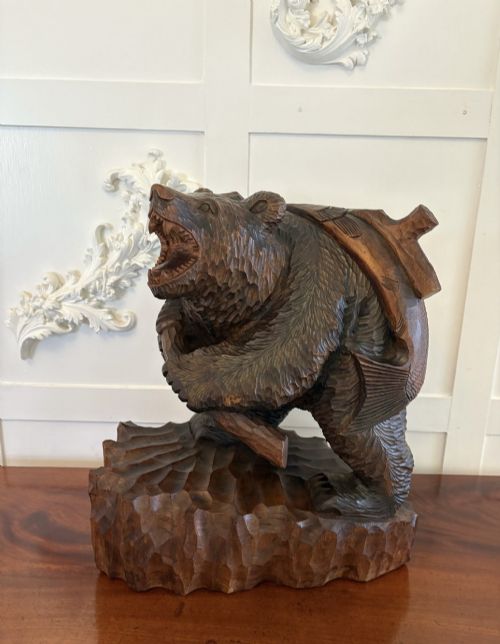
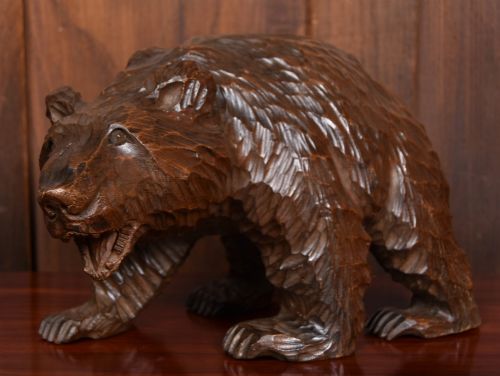
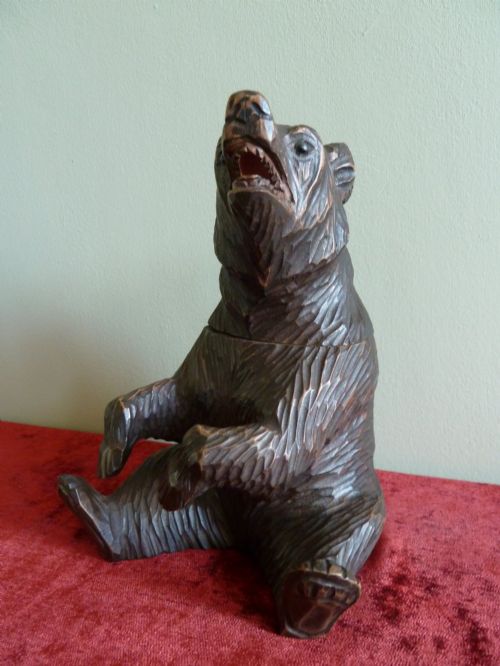
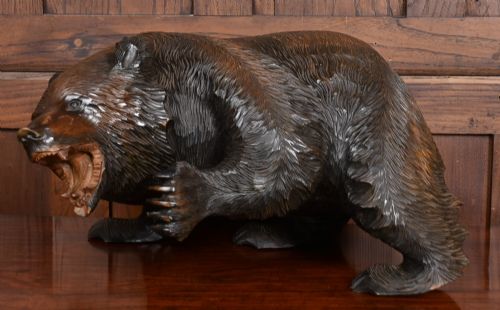
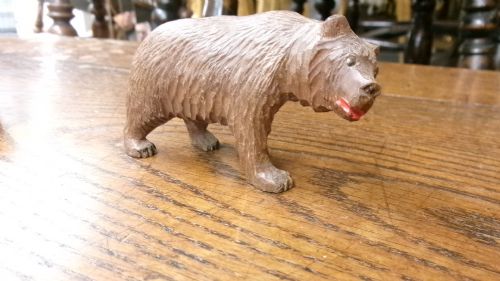
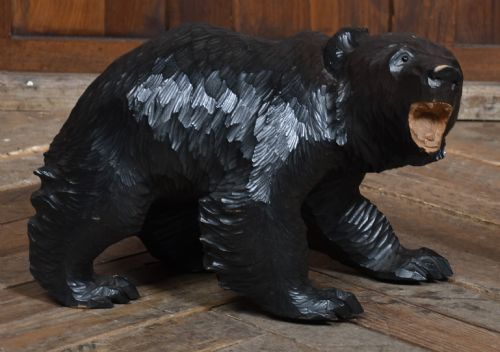
These hand carved wood bear sculptures bring character to a room, ranging from Black Forest tobacco holders to Japanese folk art carvings.
Hand Carved Wood Bear
When you search for hand carved wood bear pieces, you encounter sculptures, decorative objects, and functional items spanning the nineteenth century through the Edwardian period. The most common examples take the form of Black Forest and Japanese folk art carvings made from linden wood and hardwood.
The selection includes table lamps, bookends, inkstands, tobacco jars, and hall chairs alongside free-standing sculptures and figurines. Many of these date from the Victorian and Edwardian eras, showcasing regional European and Japanese carving traditions.
Makers utilised various woods to shape bears carrying fish, standing in pairs, or rendered as miniature figures with stud eyes. The forms range from small desk accessories to large decorative sculptures.
What varies in quality
Proportion and scale also define the better pieces, particularly in complex functional forms such as table lamps, hall chairs, and inkstands where the bear integrates with a utilitarian object. The choice and preparation of the linden wood or hardwood, along with careful staining, influence the visual depth of the finished surface.
One set comprises fifteen miniature carved bears sharing a single shelf.
The Hand Carved Wood Bear Glossary
- Black Forest
- A regional style of wood carving originating from the mountainous region of central Europe, famous for realistic animal sculptures.
- Kibori Kuma
- A traditional style of Japanese wood-carved bear produced mainly in Hokkaido as folk art.
- Linden Wood
- A pale, fine-grained timber favoured by carvers for its softness and even texture.
- Stud Eyes
- Inset elements of glass or metal used to give the carved animal a lifelike gaze.
- Inkstand
- A desk accessory fitted to hold writing equipment, frequently incorporated into nineteenth-century animal carvings.
Hand Carved Wood Bear: Frequently Asked Questions
How do I date a carved bear?
Dating relies on stylistic markers, wood types, and associated hardware like glass eyes or metal inkwells. Nineteenth-century and Edwardian pieces show specific tool marks and finishing techniques characteristic of their era.
Examining the base and the weathering of the linden wood or hardwood helps distinguish older examples from later reproductions.
Where were these carvings made?
The listings show two distinct geographical origins for these sculptures. European pieces originate primarily from the Black Forest region, while Asian examples comprise Japanese folk art.
Both traditions utilised local hardwoods and linden wood to create detailed animal figures.
How do I clean wooden carvings?
Dust the surface gently with a soft, dry brush to prevent dirt accumulation in the carved fur details. Avoid water and chemical polishes that might damage the historic stain and timber.
Maintaining a stable environment away from direct sunlight protects the wood from drying or splitting.
What functional forms exist?
Carvers integrated bear motifs into various household items during the Victorian and Edwardian periods. Common functional pieces include table lamps, bookends, tobacco jars, inkstands, and hall chairs.
These items combine decorative sculpture with practical utility.