
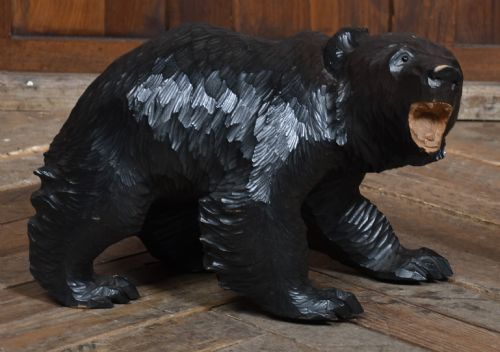


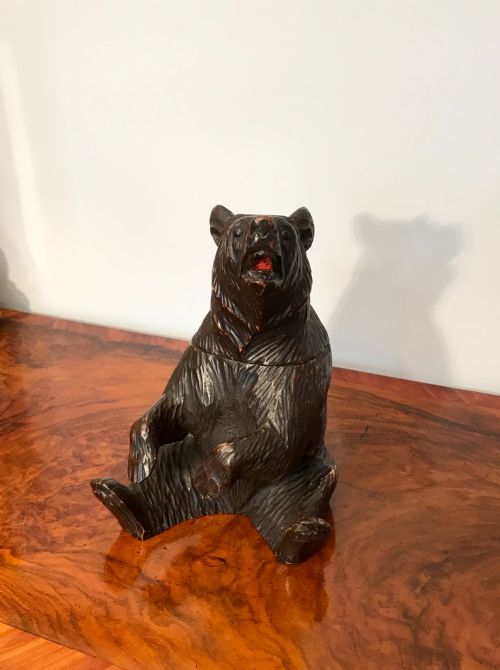
Hand Carved Bear Statue
These hand carved bear statue examples bring character and tactile presence to a room, ranging from folk art miniatures to imposing timber sculptures.

Hand Carved Bear Statue
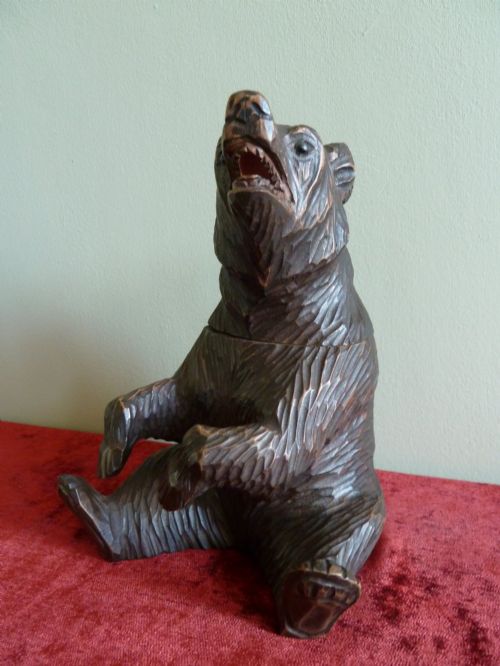
A hand carved bear statue brings rustic charm and tactile woodcraft into a room, taking forms from tobacco jars and floor lamps to tabletop sculptures and miniature figurines. These pieces arrive from various periods including the Victorian era, the nineteenth century, and the early twentieth century.
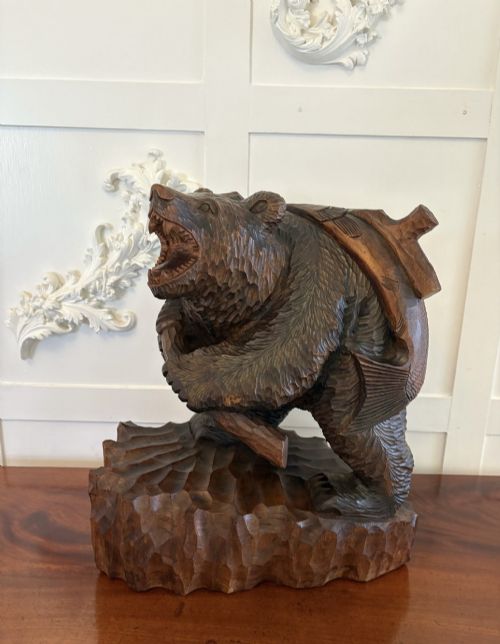
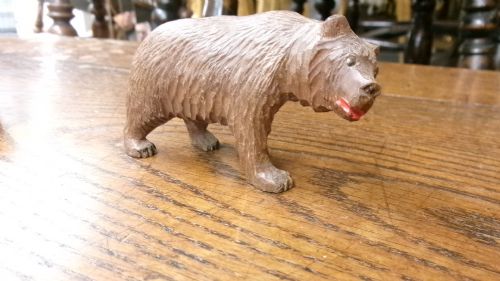
Buyers most frequently encounter regional European and Asian traditions on this page, particularly Swiss folk art, Japanese folk art, and Black Forest carvings. Sculptural interpretations range from small figures with stud eyes to large statues carrying fish or holding items.
Makers utilised timber almost exclusively for these works, shaping hardwoods and linden wood into realistic or stylised animals. Certain items function as decorative objects or tobacco holders alongside traditional standalone sculptures.
Materials and carving techniques
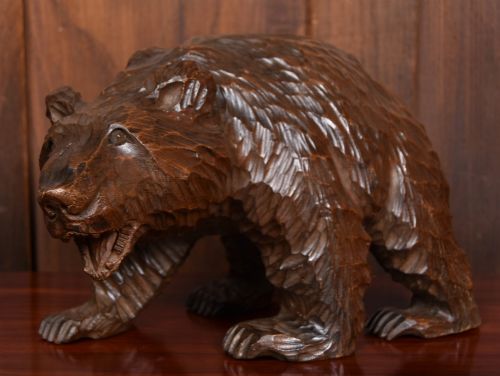
Craftsmen shaped these statues primarily from linden wood and other hardwoods, using hand chisels and gouges to build thick fur texture and muscular forms. Tool marks often remain visible beneath the surface, revealing the direct hand of the carver.
Makers occasionally incorporated inset glass eyes or metal elements such as stud eyes and functional fittings for lamps and tobacco jars. Paint and wax finishes were applied to seal the timber and bring depth to the carved grain.
Materials documented across the pieces include glass, wax, paint, and metal alongside standard timber construction.
Judging the quality of a carving
The choice and preparation of the wood influence the longevity and appearance of the piece, as dense linden wood permits finer detail without splintering. Preserved original surfaces without aggressive cleaning retain the crispness intended by the carver.
The Hand Carved Bear Statue Glossary
- Black Forest
- A style of wood carving originating in the forested mountain region of central Europe, famous for realistic animal sculptures. These pieces often depict bears engaged in human activities or acting as functional household objects.
- Linden wood
- A pale, fine-grained timber favoured by carvers for its uniform texture and lack of prominent splintering. It allows for intricate detail work without resistance from irregular grain patterns.
- Kibori Kuma
- A Japanese term for traditional wood-carved bears originating from Hokkaido. These pieces often feature bold, expressive tool marks and distinct regional carving styles.
- Stud eyes
- Small glass or metal pins inserted into the head of a carved figure to represent eyes. They add a lifelike glint and depth to otherwise plain wooden faces.
Hand Carved Bear Statue: Frequently Asked Questions
How do I date an old bear carving?
Dating relies on tool marks, timber choice, and the style of the carving relative to known regional traditions. Nineteenth-century pieces often display deeper hand-chiseled texturing compared to later work.
Secondary materials such as glass stud eyes or metal hardware also help narrow the period of manufacture. Comparing the object to documented regional types clarifies its age.
Where were Black Forest bears made?
These carvings originated primarily in the woodcarving communities of Switzerland and Germany during the nineteenth and early twentieth centuries. Local artisans produced them to satisfy the tourist trade and demand for rustic home decor.
Workshop production ranged from small family businesses to larger regional enterprises. Many pieces were exported across Europe and Britain.
What is a Kibori Kuma bear?
Kibori Kuma refers to traditional carved wooden bears from the Hokkaido region of Japan, often created in folk art styles. These sculptures frequently depict bears carrying fish or walking on all fours.
The carving style prioritises bold, rhythmic chisel strokes that give the fur a textured, expressive appearance. They represent a distinct intersection of Japanese folk craft and animal sculpture.
How should I care for carved wood?
Keep wooden sculptures away from direct heat sources and sudden humidity changes to prevent the timber from splitting or warping. Dust gently with a dry, soft brush rather than using wet cloths.
Occasional applications of microcrystalline wax help protect the finish and maintain the natural sheen of the wood. Avoid modern furniture polishes containing silicone.