



Carved Wooden Armorial Crest
A carved wooden armorial crest carries centuries of heraldic lineage, carved in solid mahogany or oak to display family identity and noble heritage on walls or seating.
Carved Wooden Armorial Crest
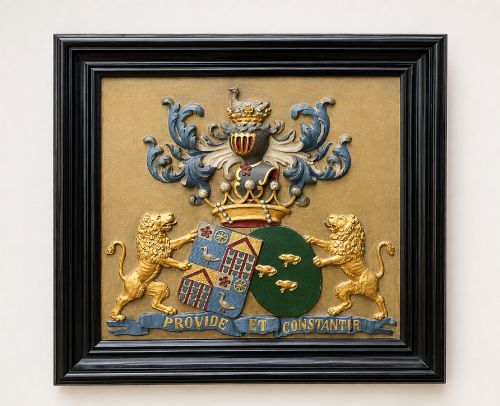
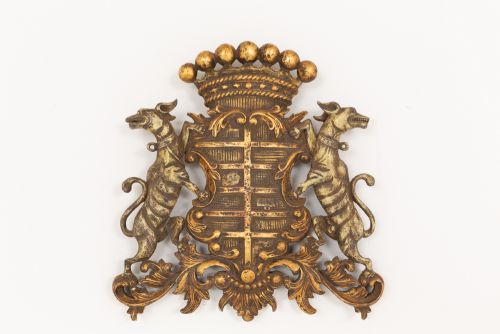
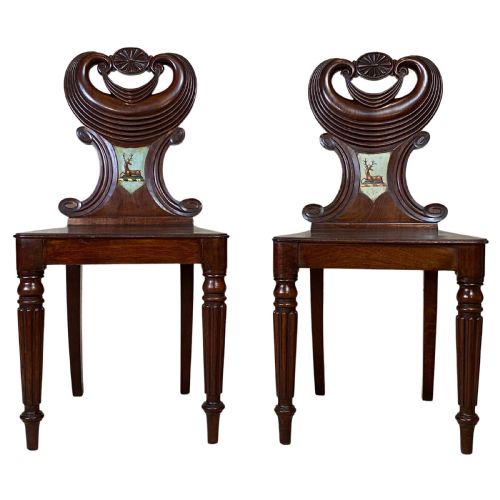
A carved wooden armorial crest serves as a striking focal point, encompassing wall plaques, shield panels and heraldic seating such as hall chairs and armchairs. These pieces emerge primarily from the eighteenth and nineteenth centuries, spanning Georgian, Regency, Victorian and Gothic Revival styles.
The most frequent examples found in this collection are hall chairs and wall plaques featuring carved armorial bearings, familial crests or heraldic beasts. Each piece acts as a tangible record of lineage, translating coats of arms into three-dimensional wood carving.
Factors determining quality
The distinction between standard examples and superior work lies in the depth and animation of the carving, particularly in heraldic beasts and foliage. Master carvers achieved crisp undercut details and anatomical precision that lesser workshops failed to match.
Integration with the furniture or panel itself dictates overall execution, where bespoke armorial hall chairs show seamless alignment between the carved crest and the frame. The survival of original polychrome paint or gold leaf without later overpainting preserves the integrity of the piece.
A nineteenth-century lion shield comes complete with fierce wooden whiskers carved straight into the tiger oak.
Gillows·Van Rijckevorsel Verheijen
The Carved Wooden Armorial Crest Glossary
- Armorial
- Relating to heraldry or a coat of arms. These designs display specific family insignia and genealogical heritage.
- Polychrome
- Painted in several colours. This technique highlights specific elements of a coat of arms.
- Gilt
- Covered thinly with gold leaf or gold paint. It adds luminosity and status to the carved wooden surface.
- Hippocampus
- A mythological creature with the upper body of a horse and the lower body of a fish. It frequently appears as a heraldic charge in maritime crests.
- Relief
- A sculptural technique where the sculpted elements remain attached to a solid background of the same material. High relief projects significantly from the flat plane.
Carved Wooden Armorial Crest: Frequently Asked Questions
What is a carved wooden armorial crest?
A carved wooden armorial crest is a decorative or functional object featuring a sculpted family coat of arms, shield, or heraldic motif. These pieces were historically commissioned by noble families to display their lineage and status.
They appear as wall plaques, architectural panels, or integrated into the backs of grand hall chairs and armchairs. Each design represents specific genealogical symbols and achievements.
How were armorial crests used historically?
These crests served as prominent symbols of identity and authority within country houses, civic buildings, and estate offices. Wall plaques and panels were typically mounted in entrance halls or libraries to greet visitors.
When incorporated into seating like hall chairs, they reinforced the lineage of the household for guests waiting in reception rooms. Their presence signaled established heritage and familial pride.
How do I date a wooden armorial piece?
Dating relies on stylistic clues from the surrounding framework, such as Regency curves, Georgian proportions, or Gothic Revival tracery. The choice of timber also offers guidance, with solid mahogany and oak pointing to specific manufacturing eras.
Documentation, maker attribution, or carved dates within the woodwork can provide precise historical context. Examining the tool marks and construction methods helps verify the period of origin.
How should I care for antique carved wood?
Antique carved wood requires stable indoor humidity levels to prevent the timber from splitting or warping over time. Keep pieces away from direct sunlight and strong heat sources that can dry out the historic finish.
Dust gently with a soft, dry cloth rather than using modern liquid polishes or chemical cleaners. Preserving the original surface patina maintains both the historical value and visual depth of the carving.