
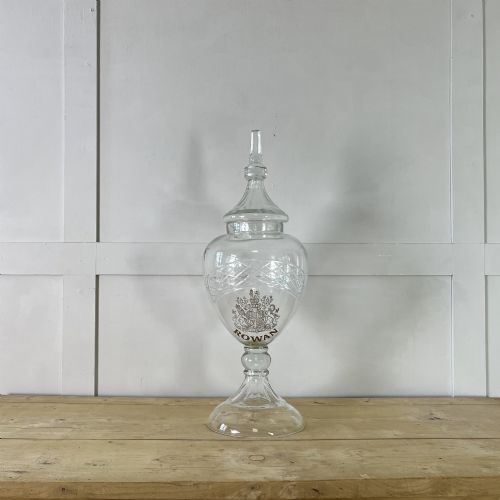


Royal Coat of Arms
Royal coat of arms pieces are heraldic symbols of monarchy rendered in cast iron, leather and wood to display sovereign authority.
Royal Coat of Arms
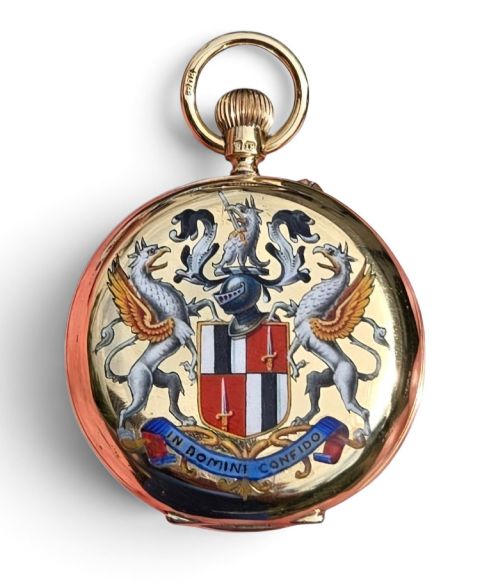
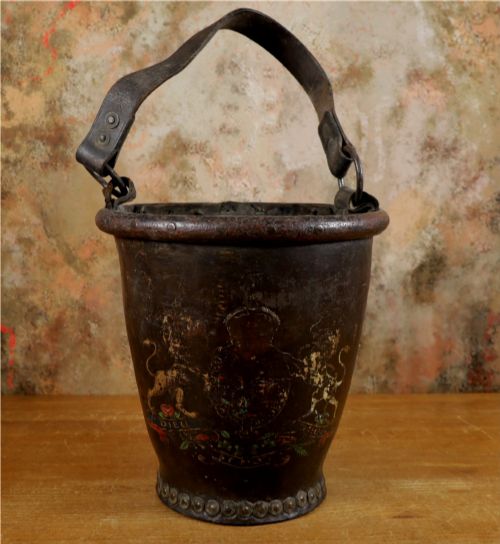
Royal coat of arms items encompass wall plaques, architectural shields, fire buckets and commemorative textiles spanning the Georgian and Victorian eras. These objects range from heavy cast iron exterior crests to hand-painted leather buckets studded with brass. A buyer seeking this phrase encounters substantial heraldic displays intended for public buildings, regiments or domestic fire protection.
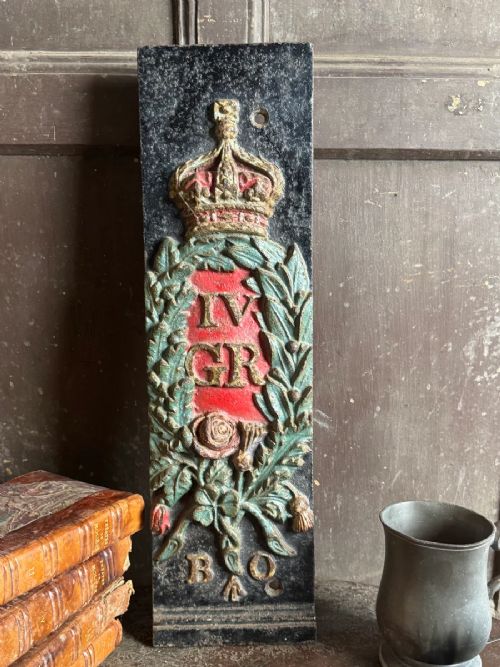
The version most frequently met on this page is the large cast iron wall plaque or shield from the nineteenth century, often retaining traces of polychrome paint. These solid metal castings carry the lion and unicorn supporters alongside the royal motto. Alongside metal plaques, leather fire buckets bearing painted or studded armorials appear with regularity.
How they were made
Makers utilised heavy casting techniques for iron and brass shields, pouring molten metal into sand moulds to achieve crisp relief lettering and detailed heraldic figures. Artisans then applied polychrome paint by hand over a primed surface to delineate the quarterings, crowns and supporters. Iron pieces often weighed several kilograms, demanding robust wall fixings.
Leather fire buckets were constructed from thick cowhide that was soaked, moulded around a wooden or copper former and stitched or riveted at the seam. Painters applied lead-based pigments directly onto the leather surface, sometimes incorporating brass studwork to reinforce the rim and define the silhouette of the coat of arms.
Listings include heavy cast iron architectural wall plaques, hand-painted leather fire buckets, and embroidered silk textiles spanning the Georgian and Victorian periods.
What varies in quality
In leather and textile examples, the clarity of the armorial design and the integrity of the material determine distinction. Finer buckets and needlework pieces retain rich, unblemished pigments and strong structural support without extensive shrinkage or repair. The depth of historical character, such as authentic wear from active service on a military drum or fire bucket, distinguishes the exceptional piece from the generic.
R. Stewart Glasgow·Board of Ordnance·Doulton Type
The Royal Coat of Arms Glossary
- Armorial
- Relating to heraldic arms or a coat of arms. These designs display hereditary symbols belonging to a sovereign, family or institution.
- Polychrome
- Decorated in multiple colours. This term describes iron, wood and leather items retaining their original painted hues.
- Cast Iron
- An iron-carbon alloy poured into a mould to form rigid objects. Foundries utilised this heavy material for large architectural wall plaques and firebacks.
- Fusee
- A conical pulley used in pocket watches to maintain equal power as the mainspring unwinds. This mechanism appears in high-grade nineteenth-century horology.
- Cordite
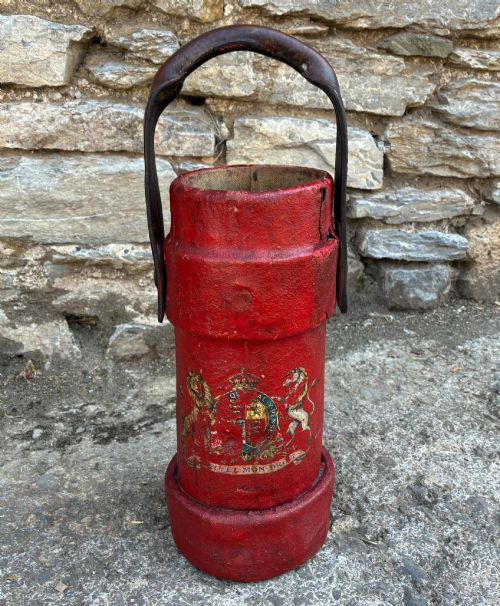
- A type of smokeless propellant used in military munitions. Cylindrical containers designed to hold this explosive material occasionally feature royal cyphers.
Royal Coat of Arms: Frequently Asked Questions
Where were royal coat of arms plaques displayed?
These heavy iron and wood shields originally hung above the entrances of government buildings, courtrooms, military barracks and municipal offices to denote official authority.
Smaller examples found a place inside officers' messes, regimental headquarters and wealthy domestic interiors as expressions of patriotism.
How do I date a cast iron royal coat of arms?
Dating relies on the specific monarchical cypher, the style of the crown and the moulding techniques visible on the reverse of the iron casting.
Changes in the quarterings of the royal shield reflecting the Hanoverian or Victorian periods provide precise chronological markers.
Were leather fire buckets used for actual fires?
Georgian and Victorian fire buckets were standard equipment kept in public buildings and large estates to form a manual bucket chain before the advent of piped water.
Guilds and fire insurance companies commissioned these leather vessels stamped or painted with royal insignia for practical utility.
How heavy are cast iron armorial shields?
Substantial nineteenth-century wall plaques often weigh several kilograms, sometimes exceeding four kilograms depending on the dimensions and thickness of the iron.
Due to this weight, mounting requires secure wall anchors fixed directly into masonry rather than standard plasterboard.