
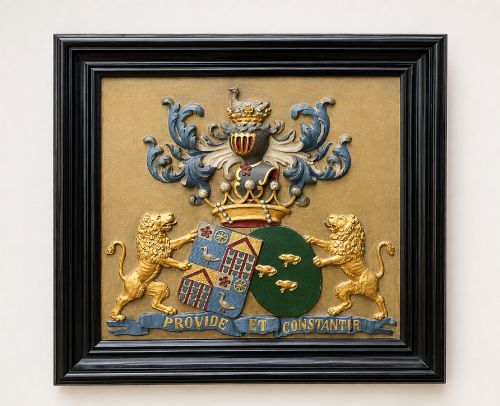
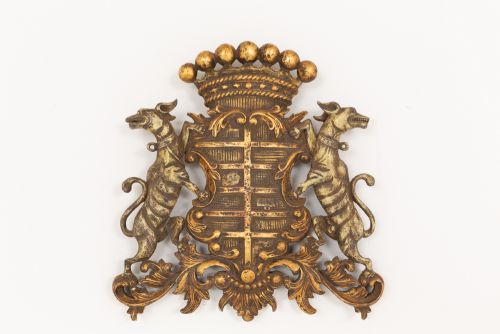


Carved Wood Coat Arms
These carved wood coat arms pieces bring heraldic history and striking timber craftsmanship straight to your wall or interior.
Carved Wood Coat Arms
When you search for carved wood coat arms, you encounter heraldic panels, shields, wall plaques, and firescreens bearing family crests or institutional insignia. The most common examples on this page date from the nineteenth century, alongside eighteenth-century items and occasional seventeenth-century pieces.
These items originate from distinct European traditions, including British, French, and Dutch workshops. Forms range from standalone wall sculptures and marriage plaques to elements set into brass frames or integrated into console tables.
Makers shaped these objects to display lineage, authority, or allegiance in domestic and civic settings. Their varied scale spans from small miniature panels to large-scale country house furnishings.
How they were made
Artisans carved these armorial pieces from hardwoods such as oak, mahogany, walnut, limewood, and unspecified carved wood. Many examples incorporate polychrome pigment and gold leaf, applying paint and gilding directly to the timber surface.
Selected works combine timber with metalwork, mounting carved oak or hardwood crests into embossed and chased brass frames. Gesso surface preparation often supports the final layers of gilding and pigment on detailed panels.
One marriage plaque records a union with such precision that it names two distinct family lines in the carving.
What varies in quality
The standard of carving defines the hierarchy of these armorial pieces, with crisp undercut foliage and sharp heraldic charges separating masterwork panels from simpler provincial items. Finer panels display precise anatomical rendering in supporters and meticulous lettering in family mottos.
The preservation of original surface finishes, including period polychrome pigment and gold leaf, dictates the historical integrity of each piece. Later overpainting or stripped timber surfaces alter the visual depth achieved by the original maker.
Van Rijckevorsel And Verheijen
The Carved Wood Coat Arms Glossary
- Coat of arms
- A distinct heraldic design originally displayed on a knightly surcoat. It identifies a specific family, individual, or corporate body.
- Armorial
- Relating to heraldry or a coat of arms. Armorial plaques and panels display these hereditary symbols.
- Polychrome pigment
- Paint applied in multiple colours to decorate a carved surface. It highlights specific heraldic tinctures on wooden crests.
- Gesso
- A plaster mixture applied to wood as a base for gilding or painting. It provides a smooth ground for gold leaf application.
- Firescreen
- A standing piece of furniture designed to shield a room's occupants from fireplace heat. Many incorporate heraldic panels or embroidered crests.
Carved Wood Coat Arms: Frequently Asked Questions
What periods do these carved wood coat arms come from?
The pieces span several centuries, with the majority originating in the nineteenth and eighteenth centuries. Earlier examples stretch back into the seventeenth century.
Stylistic shifts reflect these dates, moving from baroque and gothic revival designs towards later nineteenth-century interpretations.
How were these armorial pieces used originally?
Families displayed them in great halls, libraries, and country houses to signify lineage, marital alliances, or royal patronage.
Some items served practical functions as firescreens or furniture components, while others functioned purely as commemorative wall plaques.
What timbers were used to carve these crests?
Carvers utilised a range of hardwoods depending on availability and regional tradition. Oak, mahogany, walnut, and limewood appear frequently across the inventory.
Softer woods or specific hardwoods often received gesso and paint layers to display polychrome heraldic colours.
How do I identify different styles?
Styles range from Victorian Gothic Revival and Dutch Renaissance Revival to Baroque and Neoclassical designs. Examining the surrounding scrollwork, framing, and motifs helps determine the period.
Nineteenth-century pieces often emulate earlier centuries through revivalist architectural details and heavy timber mouldings.
Can I hang these wall plaques easily?
Most wall plaques and shields feature integrated hanging points or flat backs suitable for wall mounting. Larger items require secure fixings due to the weight of the dense hardwood.
Combined pieces, such as brass-framed panels or console tables, require placement that accounts for their specific structural format.