

Carved Wood Server
These carved wood server pieces combine robust utility with period craftsmanship, offering generous storage and distinct historic character for modern dining and living spaces.
Carved Wood Server
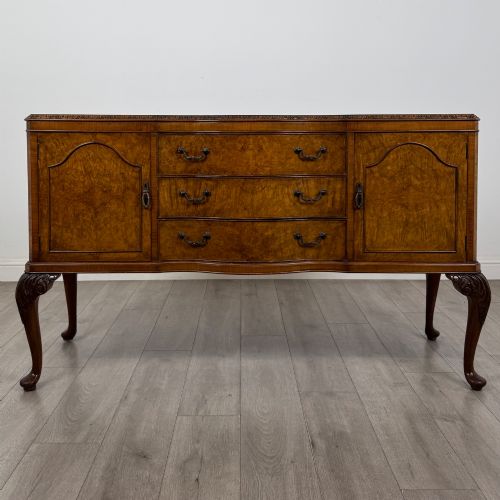
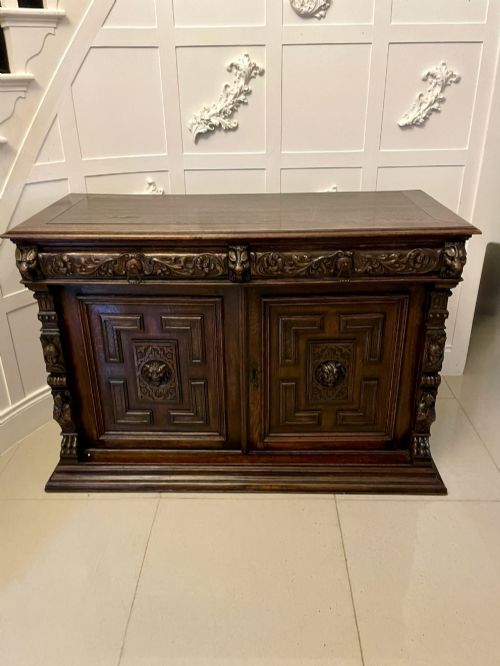
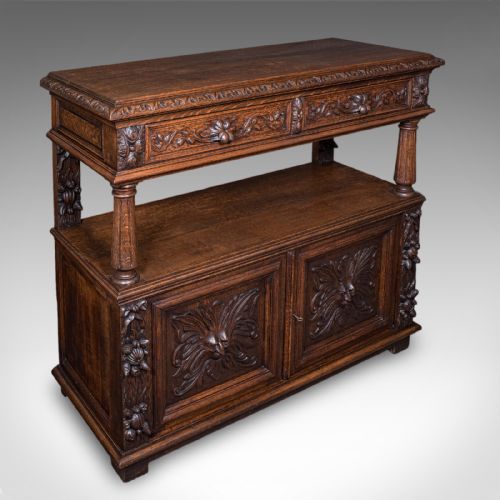
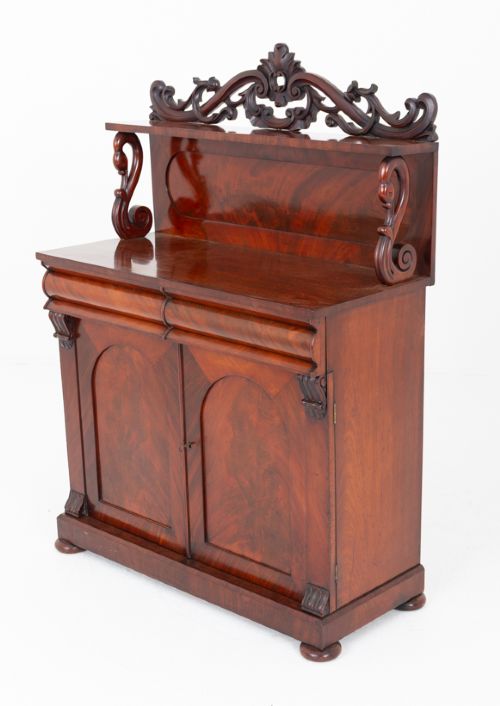
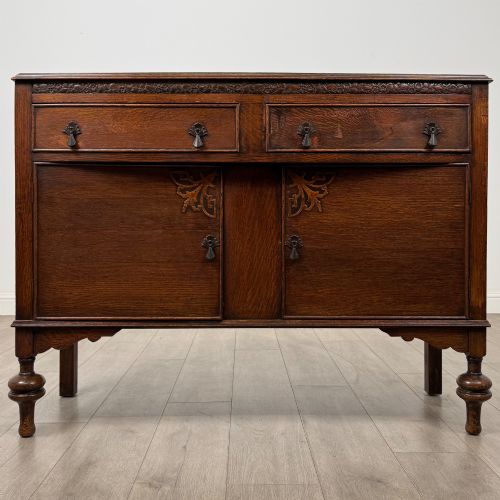
A carved wood server encompasses large sideboards, chiffoniers, buffets, console tables and serving tables spanning the Victorian, Edwardian and earlier nineteenth-century periods. These items primarily function as serving stations or storage units in dining rooms and halls, manifesting in heavy timber forms.
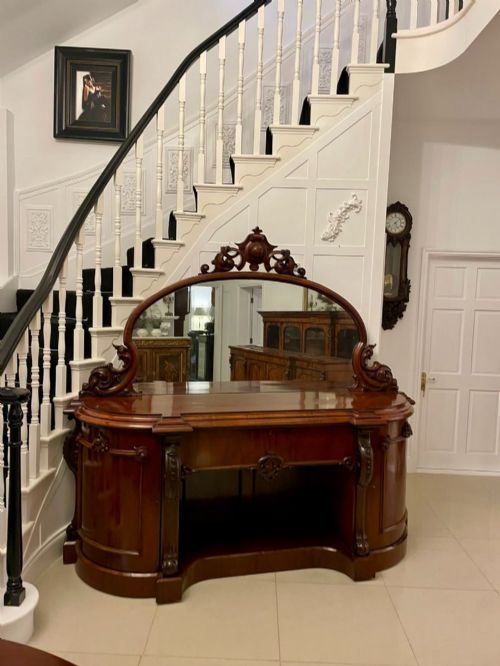
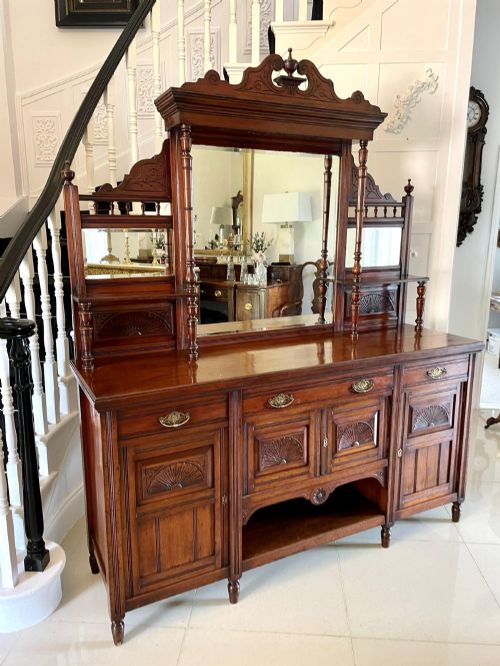
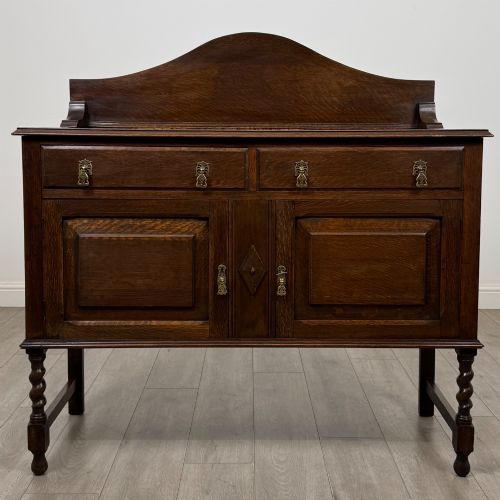
The versions most frequently encountered on this page belong to the Victorian era and the subsequent Edwardian period, constructed mainly in oak and mahogany. Forms range from mirror-back sideboards to simpler side tables and oak dressers.
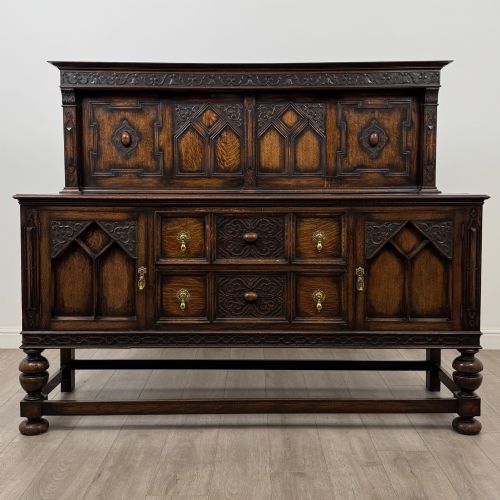
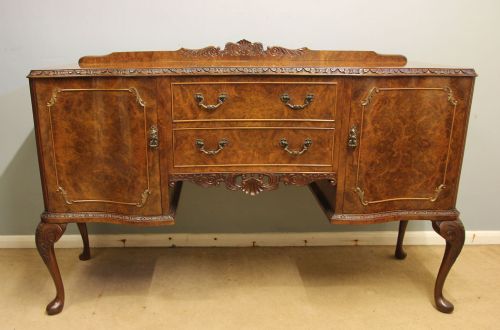
Originating largely from British workshops alongside occasional French and Anglo-Indian examples, these pieces display regional stylistic revivals including Jacobean, Gothic and Queen Anne influences.
Materials and construction
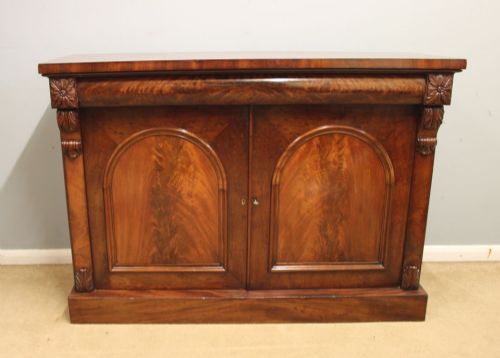
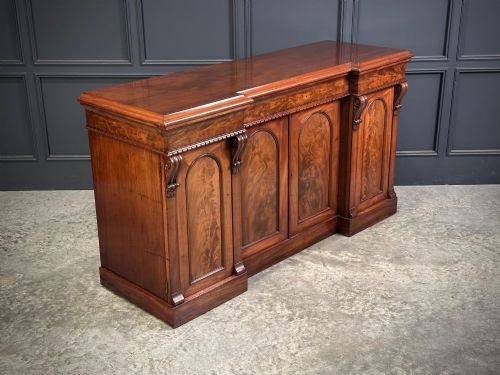
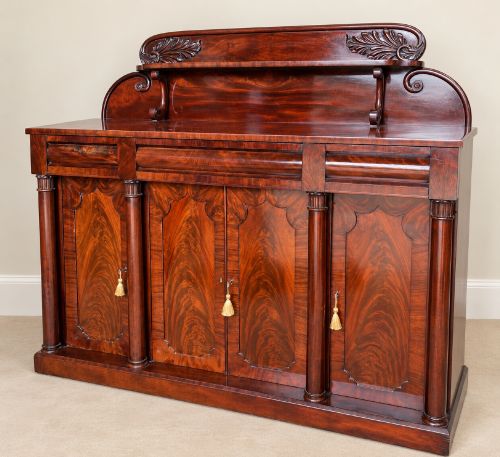
Cabinetmakers utilised dense hardwoods such as oak, mahogany, walnut and burr walnut, often pairing the primary timber with brass hardware and glass inserts. Flame mahogany and burr walnut veneers provide prominent figuring on drawer fronts and doors.
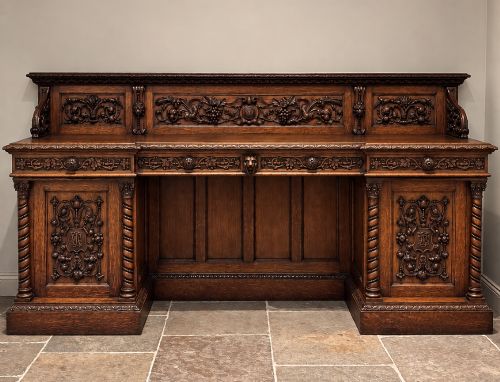
Construction techniques combine solid timber framing with hand-carved ornamentation, barley twist turnings and panelled doors. Iron brackets and brass fittings reinforce the heavy structural forms seen in Gothic and Jacobean revival pieces.
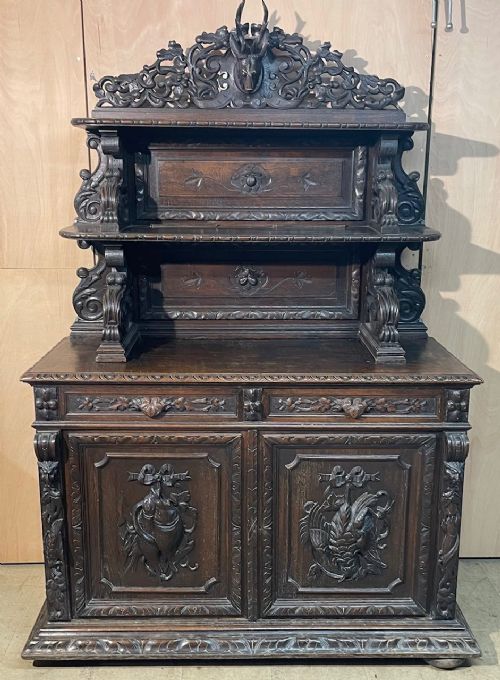
French hunting sideboards bring elaborate carved wildlife motifs straight into the dining room.
Assessing quality in carved timber
Quality rests upon the depth and crispness of the hand carving, the selection of timber veneers such as flame mahogany or burr walnut, and the integrity of the structural joinery. Finer pieces demonstrate careful timber matching and substantial proportions without clumsy alterations.
The distinction between standard examples and exceptional pieces involves the integration of architectural details, such as mirror backs, marble tops or barley twist uprights, executed with precision by skilled cabinetmakers.
The Carved Wood Server Glossary
- Chiffonier
- A low sideboard or cabinet featuring shelves or a small superstructure, commonly utilised for storing tableware during the Victorian period.
- Buffet
- A side table or sideboard intended for serving food and displaying silver or ceramic vessels in the dining room.
- Barley Twist
- A turning technique producing a spiral column resembling a twisted rope, frequently seen on Edwardian and Victorian oak supports.
- Breakfront
- A piece of furniture where the central section projects forward from the flanking outer sections, creating architectural depth.
- Lowboy
- A small seventeenth- or eighteenth-century side table equipped with drawers, standing on relatively tall legs.
Carved Wood Server: Frequently Asked Questions
What is a carved wood server used for?
These items serve as practical furniture for holding serving dishes, cutlery and dining accessories while providing a surface to display decorative objects in a dining room or hallway.
Historically, they functioned as the central staging area for meals before food was brought to the main dining table.
How do I date an antique oak sideboard?
Dating relies on examining the timber grain, construction methods, and stylistic cues such as Gothic or Jacobean revival motifs typical of Victorian or Edwardian workshops.
Makers often incorporated period-specific hardware like brass handles and distinct locking mechanisms that help narrow down the decade of manufacture.
Where should I place a serving table?
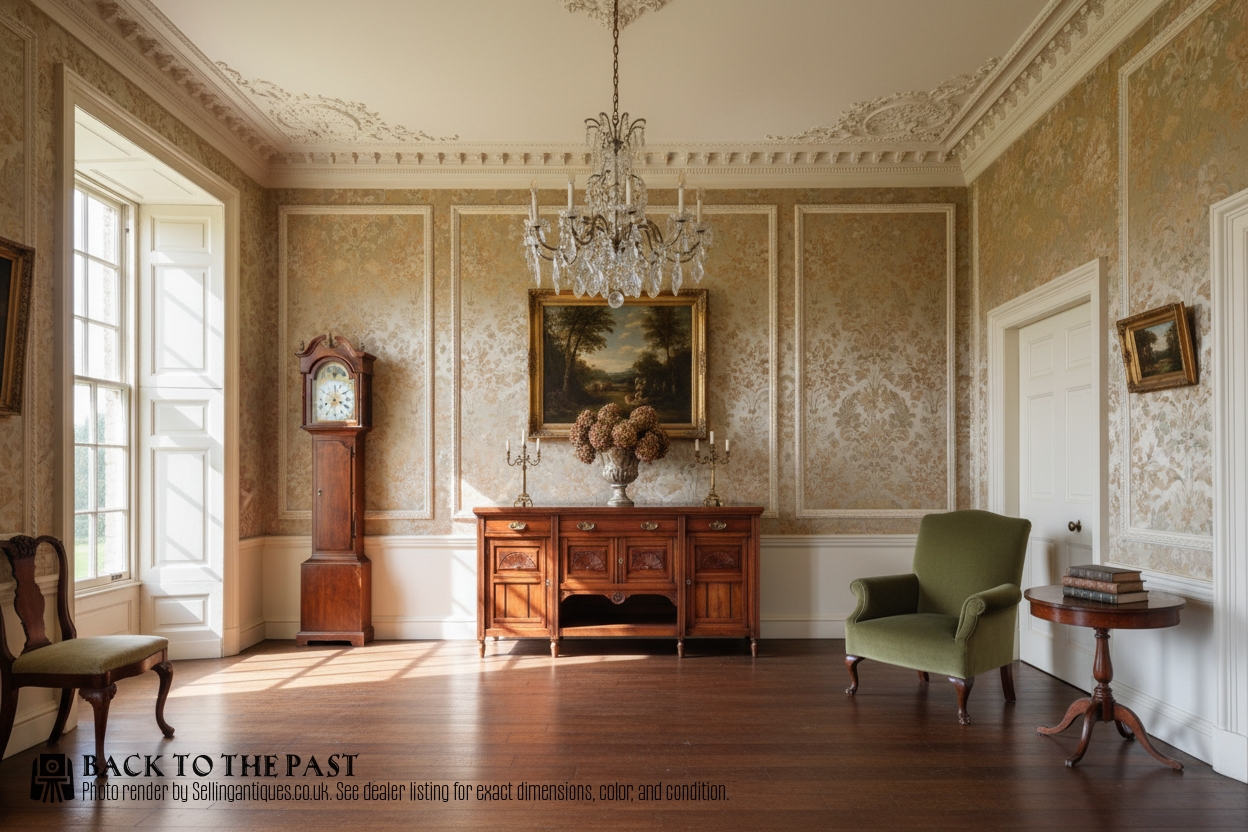
A serving table or console fits well against a dining room wall to assist with meal service, or inside an entrance hall as a practical drop zone for daily items.
Ensure adequate clearance around the piece so that drawers and cabinet doors open fully without obstruction from nearby furniture.
What is the difference between a sideboard and a chiffonier?
Sideboards generally offer larger storage capacities with multiple doors and drawers, intended primarily for substantial dining rooms.
Chiffoniers are typically more compact Victorian pieces featuring a low enclosed cupboard base topped by a small shelf tier or mirror back.