
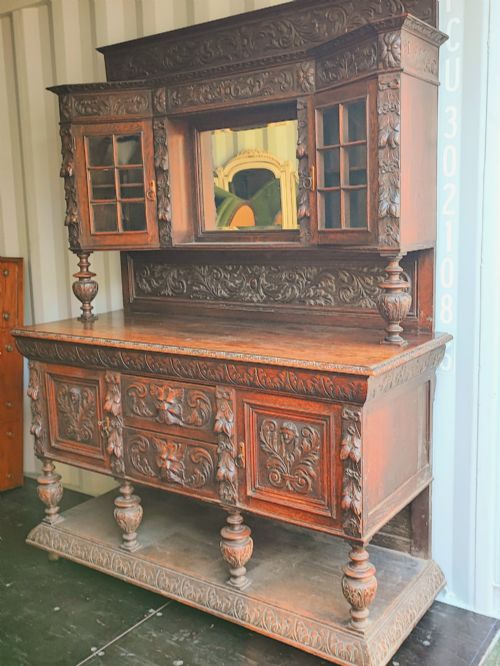
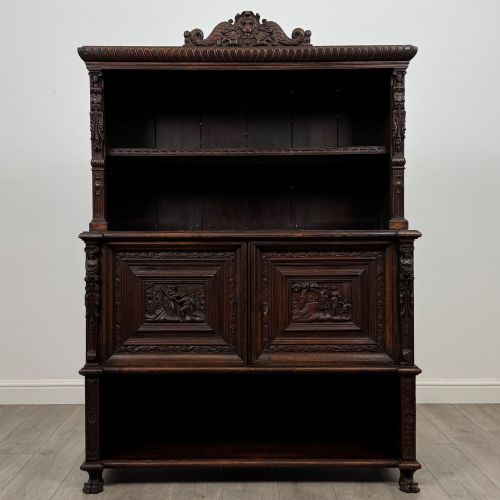


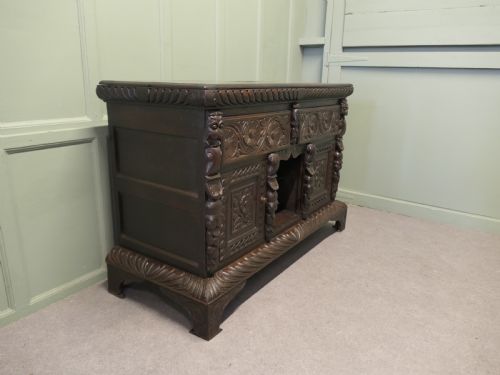


Heavy Oak Cabinet
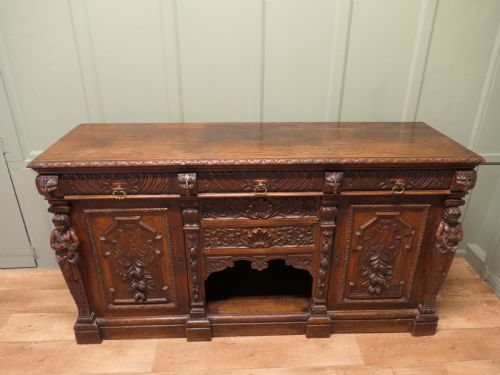
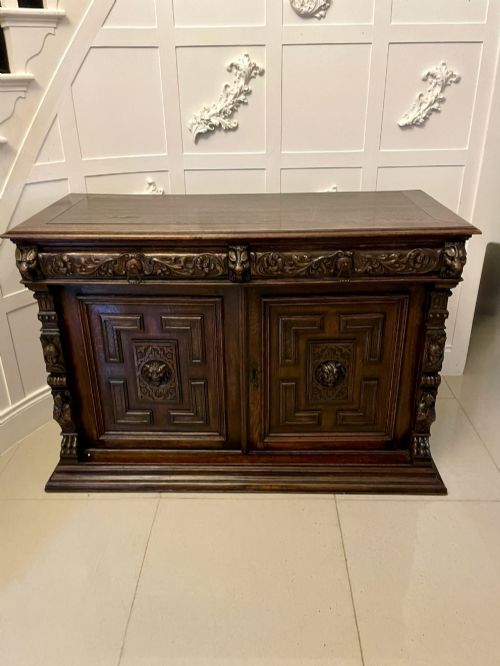
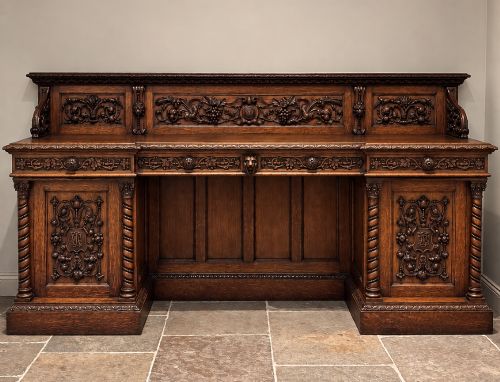
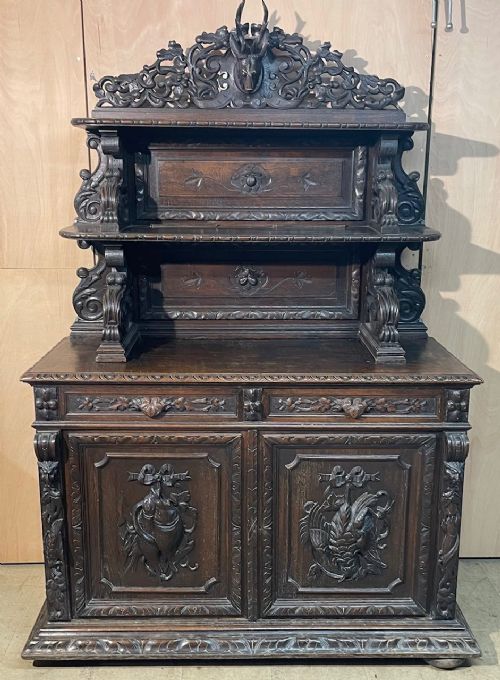
Heavy oak cabinet pieces offer solid storage and rich grain, bringing robust proportions and period character into modern rooms.
Heavy Oak Cabinet
A heavy oak cabinet encompasses substantial sideboards, library bookcases, and hall cupboards built to withstand daily use. When you search for a heavy oak cabinet, you encounter pieces predominantly from the nineteenth century, including Victorian interpretations of earlier styles.
The forms span tall bookcases, breakfront libraries, court cupboards, and monumental sideboards fitted with mirror backs or carved panels. Most examples originate from the Victorian period, though earlier nineteenth-century items and Edwardian variations appear regularly.
These items serve as focal points in dining rooms, libraries, and hallways where substantial storage and display space are required. The construction relies on dense timbers and sturdy frames designed to hold heavy loads of books or plate.
What varies in quality
The depth and crispness of the carved ornamentation separate standard production from exceptional pieces. Relief work featuring figures or foliage shows the hand of a skilled carver rather than mechanical replication.
Timber selection and grain matching across large surfaces define the upper tier of these items. Pollard oak sections and thoughtful arrangement of timber figure elevate the visual impact of a sideboard or bookcase.
Materials recorded across the available selection include solid oak, pollard oak, bevelled glass, brass, iron, and fruitwood.
The Heavy Oak Cabinet Glossary
- Breakfront
- A piece of furniture where the central section projects forward from the flanking outer sections. This arrangement adds architectural depth to large bookcases and sideboards.
- Court cupboard
- A traditional enclosed piece of furniture featuring an upper section supported by pillars above a lower cabinet. These items provide enclosed storage with distinctive historical proportions.
- Green Man
- A sculptural motif depicting a human face emerging from or entwined with foliage and vines. It appears frequently as a carved detail on nineteenth-century oak furniture.
- Renaissance Revival
- A nineteenth-century design movement drawing inspiration from sixteenth-century European architecture and ornament. Pieces in this style display heavy classical motifs, columns, and deep relief carving.
- Pollard oak
- Timber taken from trees that have been pollarded, producing wood with a dense, highly figured grain pattern. Cabinet makers used veneers or solid sections of this wood to create striking decorative surfaces.
Heavy Oak Cabinet: Frequently Asked Questions
Where should I place a heavy oak cabinet?
These substantial pieces demand adequate floor space and structural support, making them well-suited to ground floor reception rooms, dining halls, or home libraries. Ensure the chosen wall can accommodate the height and depth of items like breakfront bookcases or monumental sideboards.
Position the furniture away from direct heat sources and strong sunlight to protect the timber and any internal mirror glass or polished finishes from drying out or fading over time.
How do I care for antique oak furniture?
Maintain the timber by applying natural beeswax sparingly and buffing gently with a soft cloth to nourish the grain. Avoid silicone-based polishes, which build up a film and attract dust to carved recesses.
Keep indoor humidity stable to prevent the solid oak panels from expanding or contracting excessively with seasonal changes. Dust regularly using a dry cloth, reaching into the intricate carvings with a soft brush.
How do I distinguish Gothic Revival from Renaissance Revival?
Gothic Revival pieces incorporate pointed arches, trefoils, tracery, and architectural elements reminiscent of medieval cathedrals. The carvings often emphasise vertical lines and ecclesiastical motifs.
Renaissance Revival items display classical symmetry, heavy columns, swags, and figural carvings inspired by sixteenth-century European design. The overall proportions tend to be more architectural and horizontal compared to Gothic examples.
What is a sideboard buffet?
A sideboard buffet is a long serving and storage unit designed primarily for dining rooms to hold tableware, linens, and food during meals. Many surviving nineteenth-century examples feature upper display shelves or mirror backs.
These pieces combine cupboards with drawers and open surfaces, providing versatile storage for both display and hidden organisation within traditional living spaces.