


Walnut Dresser Base
A walnut dresser base grounds a room with deep timber grain and useful surface area.
Walnut Dresser Base
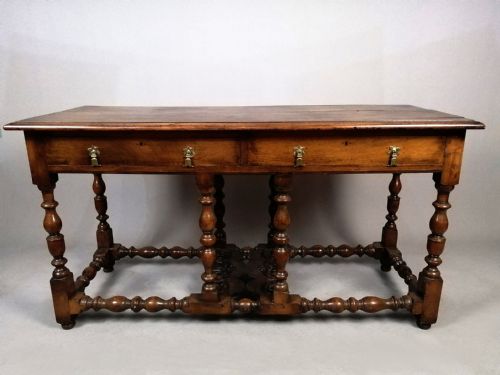
A walnut dresser base provides low storage with a sturdy top surface, serving function across centuries of domestic life. When you examine a walnut dresser base on this page, you meet forms spanning the seventeenth century through to the Edwardian period, with eighteenth-century examples appearing alongside Victorian interpretations.
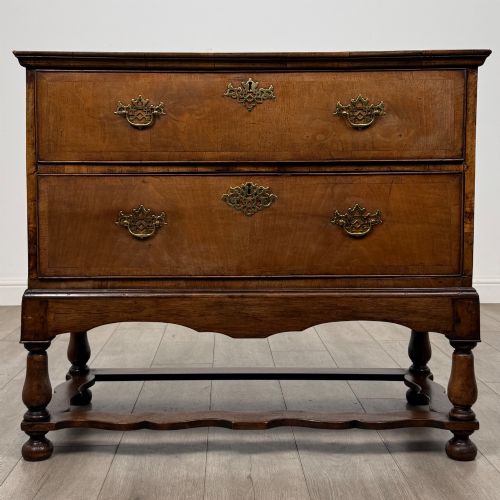
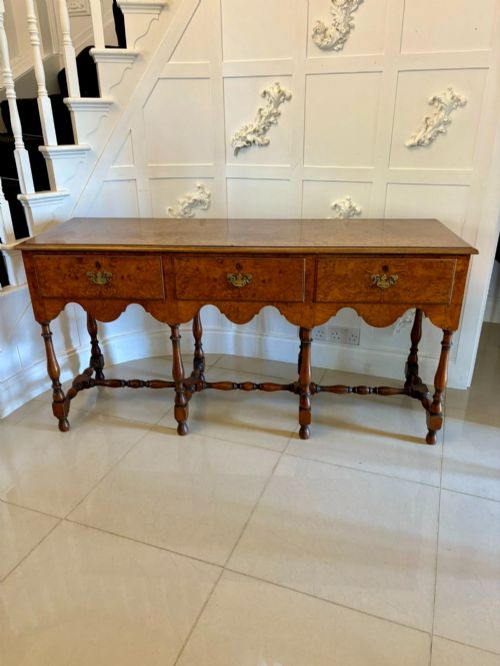
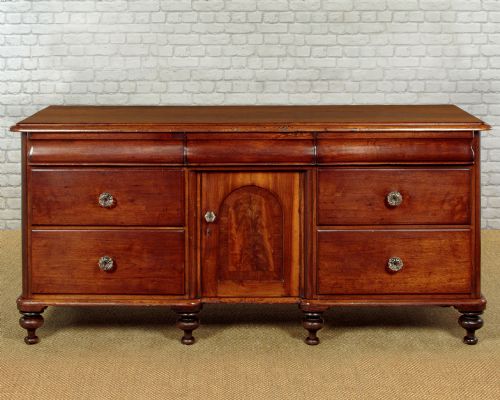
The objects take various guises, appearing as dedicated serving tables, sideboards, or low cupboards fitted with drawers. Many pieces combine walnut with oak, while others utilise burr walnut or feature crossbanding to frame the drawer fronts.
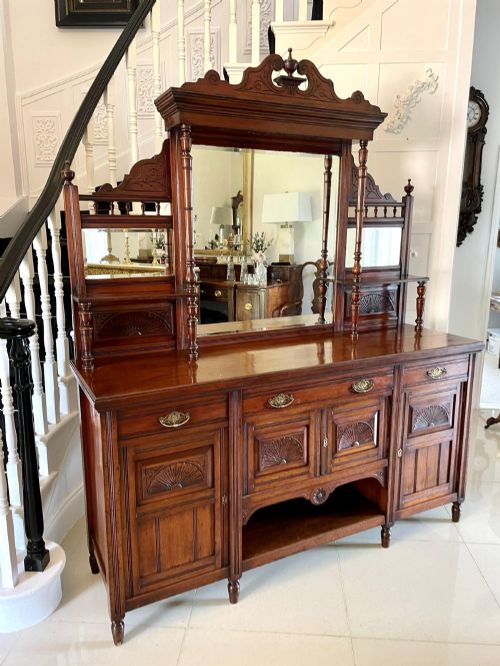
You encounter revival styles alongside period originals, including William and Mary, Queen Anne, and Georgian designs. Pieces range from French provincial servers to mirror-backed Victorian sideboards adapted for similar utility.
How they were made
Cabinet makers built these pieces using solid timber and decorative veneers applied to secondary woods such as oak. Workshops utilised brass for drawer pulls, key escutcheons, and hinges, adding metallic contrast to the dark wood.
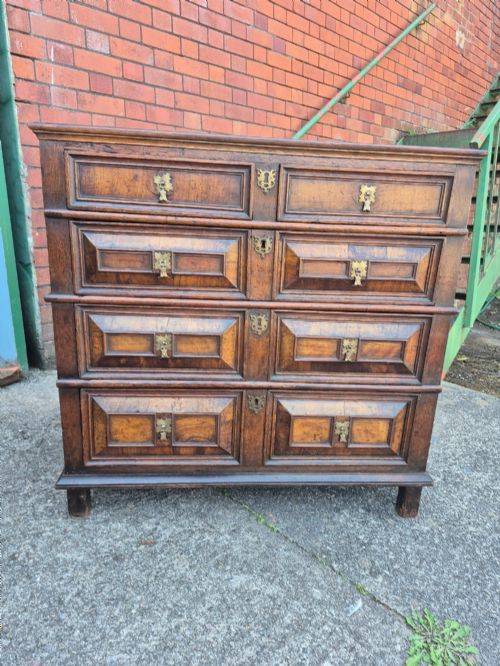
Surface decoration relies on the natural figure of the timber, particularly burr walnut and crossbanded borders. Geometric mouldings appear on earlier seventeenth-century carcases, while later Victorian and Edwardian examples often feature carved details or bleached finishes.
Listings feature walnut dresser bases spanning the seventeenth century to the Edwardian era, incorporating brass hardware and secondary oak framing.
What varies in quality
The selection of timber dictates much of the visual character, with figured burr walnut and matched veneers marking out more ambitious commissions. Finer pieces display careful attention to grain alignment across multiple drawers and panels.
Construction methods also separate standard production from superior work, seen in the choice of secondary timbers and the retention of original brass hardware. The integration of earlier panels into later carcases represents a distinct type of construction found in some Georgian examples.
The Walnut Dresser Base Glossary
- Dresser base
- A low freestanding cabinet featuring drawers or cupboards, designed for storage and serving without upper shelving. This form serves as the primary focus of this guide.
- Burr walnut
- A veneer sliced from the knotty growths of walnut trees, prized for its swirling, highly figured grain patterns. Cabinet makers utilised this timber for decorative drawer fronts and top surfaces.
- Crossbanding
- A border technique where narrow strips of veneer are laid perpendicular to the surrounding grain. This method frames drawer fronts and table tops on period pieces.
- Geometric moulding
- Raised wooden mouldings arranged in geometric patterns across drawer fronts and doors. This detail appears frequently on seventeenth-century pieces.
- Secondary wood
- The internal or structural timber used in cabinet making where it remains hidden from view. Oak frequently serves this purpose behind walnut veneers.
Walnut Dresser Base: Frequently Asked Questions
What is a walnut dresser base?
A walnut dresser base is a low storage unit with drawers or cupboards beneath a flat top surface. These pieces evolved from utility furniture into decorative items across the seventeenth, eighteenth, and nineteenth centuries.
They appear in various styles including William and Mary, Queen Anne, and Victorian revivals. Many function today as sideboards or serving tables in dining rooms and living spaces.
How were walnut dresser bases used?
Historically, these low cabinets provided surfaces for serving food and storing household provisions in kitchens and dining areas. The drawers and cupboards held linens, cutlery, and dining accessories.
In modern interiors, they adapt easily as sideboards, media consoles, or hallway storage units. Their flat tops offer display space while the internal compartments conceal clutter.
What is the difference between oak and walnut furniture?
Oak is an indigenous British timber used heavily for structural framing in early furniture, offering a coarse grain and pale honey colour. Walnut, introduced more widely by the seventeenth century, provides a darker tone and finer grain suited to decorative veneers.
many dresser bases combine both woods, using oak for internal carcases and drawers while applying walnut to the external visible surfaces.