


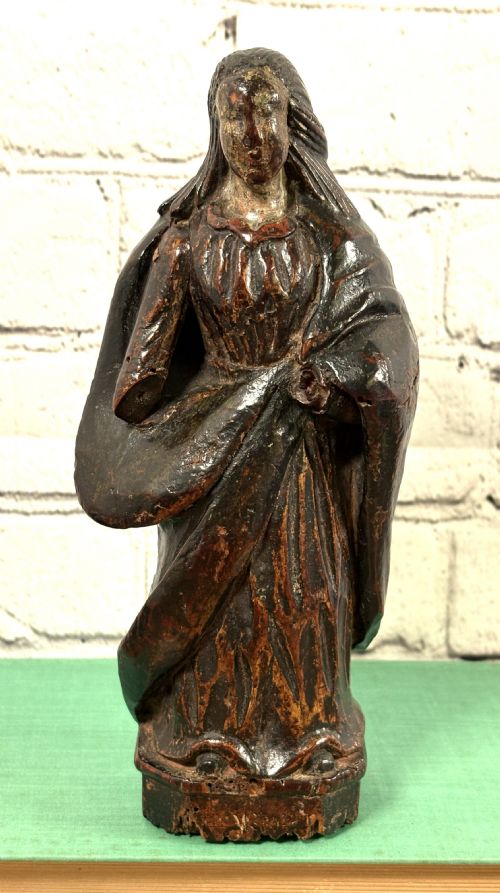


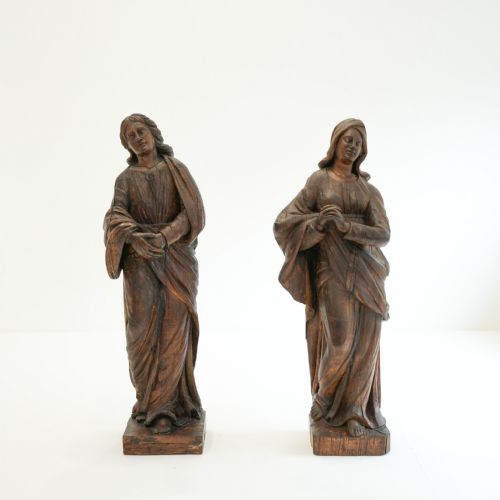


Carved Wood Saint Figure
A carved wood saint figure brings centuries of devotion, craftsmanship and hand-carved character directly into a room.
Carved Wood Saint Figure
A carved wood saint figure represents a traditional sculptural form originating from ecclesiastical settings, domestic shrines and processional contexts across Europe. When searching for a carved wood saint figure, buyers encounter examples spanning multiple centuries, from medieval depictions to Baroque and later interpretations.
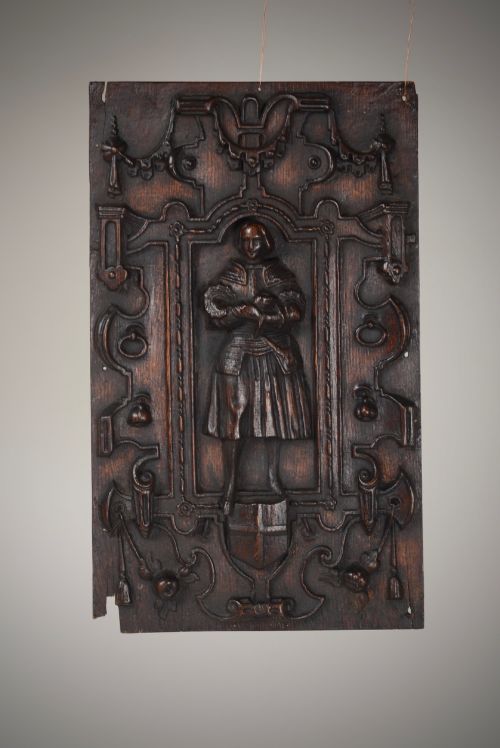
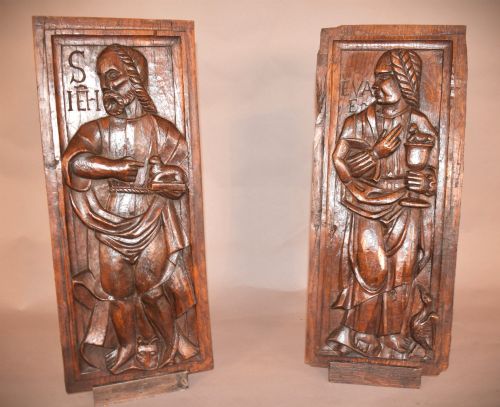
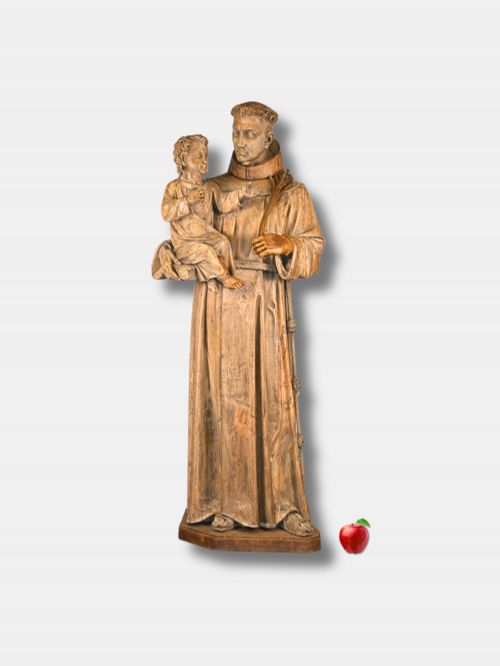
The selections here range from substantial life-size statues and processional figures to smaller devotional carvings, panels and sculptural fragments. Oak, limewood and applewood frequently form the core material of these historical representations.
Regional variations appear clearly, including Spanish capipote figures, Italian folk art statues, and German or Flemish Gothic works. Each piece preserves the distinct sculptural language of its period and workshop origin.
How They Were Made
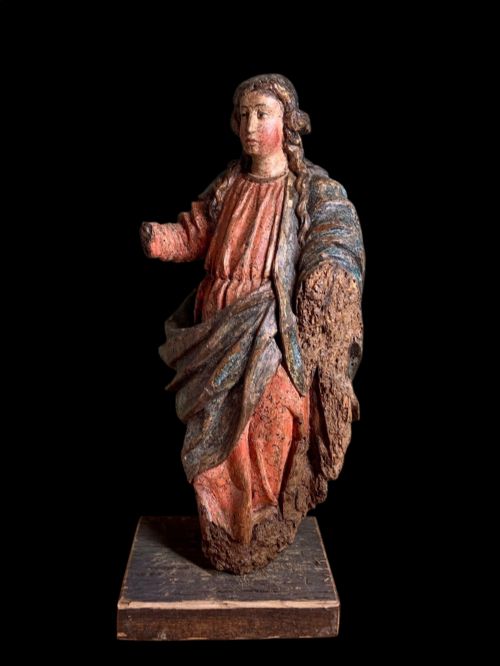
Surfaces often received an application of gesso as a smooth foundation layer before receiving polychrome paint or gold leaf decoration. This layered application of pigment and metallic leaf gave the vestments and flesh tones a lifelike richness suited to candlelit interiors.
Listings span centuries of wood sculpture, incorporating oak, limewood, applewood, gesso, polychrome paint and gold leaf across multiple European regions.
What Varies in Quality
Quality rests upon the sculptural ambition of the hand-carving, visible in the natural fall of drapery, the anatomical articulation of hands and feet, and the expressive depth of the face. Finer pieces demonstrate confident tool work that captures individual character rather than generic repetition.
The survival and integrity of original surface treatments, including early polychrome paint and gold leaf layers, heavily influence the visual power of a sculpture. Intact historic finishes retain the tactile depth intended by the original workshop.
Franz Keller
The Carved Wood Saint Figure Glossary
- Polychrome
- Decoration consisting of several colours applied to the wood surface. This technique brought statues to life with painted vestments and flesh tones.
- Gesso
- A plaster mix applied to wood as a preparatory layer. It created a smooth white ground for subsequent gilding and painting.
- Gold Leaf
- Very thin sheets of beaten gold applied to a prepared surface. It added devotional brilliance to halos, crowns and garments.
- Capipote
- A Spanish devotional figure with a carved head and hands attached to a wooden framework. The body structure supported elaborate fabric vestments.
- Limewood
- A fine-grained timber favoured by historic carvers. Its lack of pronounced grain permitted exceptionally crisp and intricate detail work.
Carved Wood Saint Figure: Frequently Asked Questions
How do I date a wooden saint figure?
Dating relies upon stylistic markers such as Gothic drapery folds, Renaissance proportions, or Baroque theatricality. Tool marks, timber choice and the composition of underlying gesso layers also offer strong chronological clues.
Examining the back of the carving often reveals construction methods specific to certain centuries, such as hollowed-out cores or pegged joints used in early workshop practice.
What is a capipote figure?
A capipote is a traditional Spanish devotional sculpture constructed with a detailed carved wooden head and hands mounted to a simple armature. This inner frame was designed to carry real fabric clothing and vestments used in processions.
These figures allowed religious brotherhoods to change garments according to the liturgical calendar while preserving the expressive portraiture of the saint.
How should I care for historic carved wood?
Protect wooden sculptures from direct sunlight, heat sources and dramatic fluctuations in relative humidity to prevent timber movement. Maintain a stable indoor environment without applying modern polishes or cleaning agents to historic surfaces.
Dusting gently with a dry, soft brush helps preserve delicate polychrome paint and gold leaf layers without disturbing the aged patina.
Why do many figures show traces of paint?
Most historic church statues were intended to be brightly coloured rather than left as bare timber. Pigments mixed with binders provided visual instruction and emotional resonance for worshippers in dimly lit sacred spaces.
Over the centuries, changing tastes or simple wear led to re-painting or stripping, leaving the surviving remnants seen on many antique examples today.