
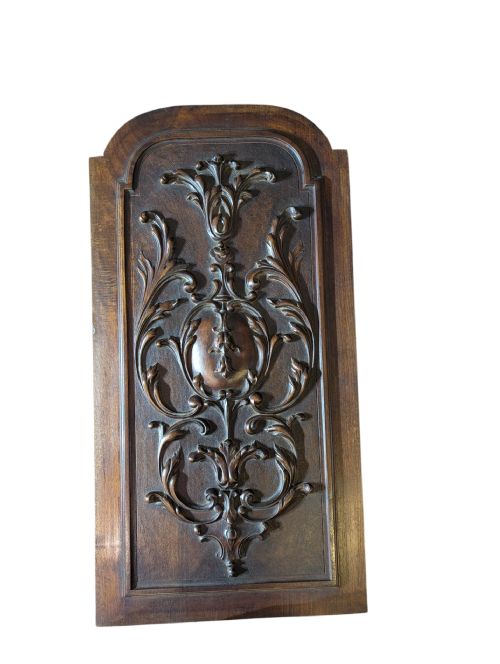


French Renaissance Wood Carving
These french renaissance wood carving pieces bring the rich, figurative depth of sixteenth-century craftsmanship straight into your rooms.
French Renaissance Wood Carving
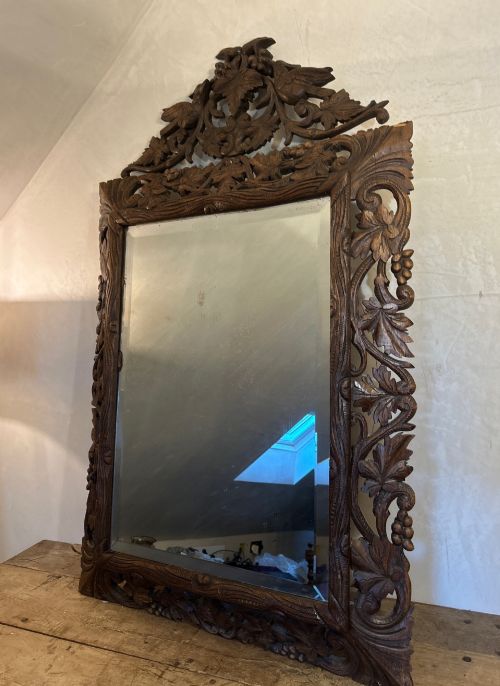
When you search for french renaissance wood carving, you encounter everything from sixteenth-century sculpture fragments and serving tables to later revival sideboards, cabinets, and wall mirrors. These items range from genuine sixteenth-century woodwork to nineteenth-century revival interpretations incorporating classical motifs.
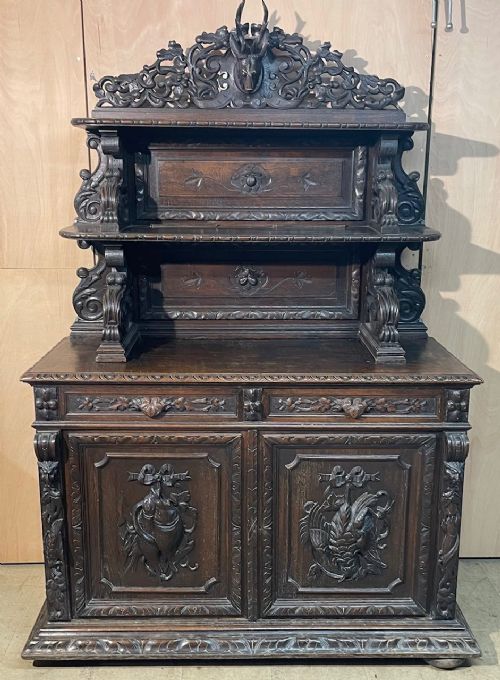
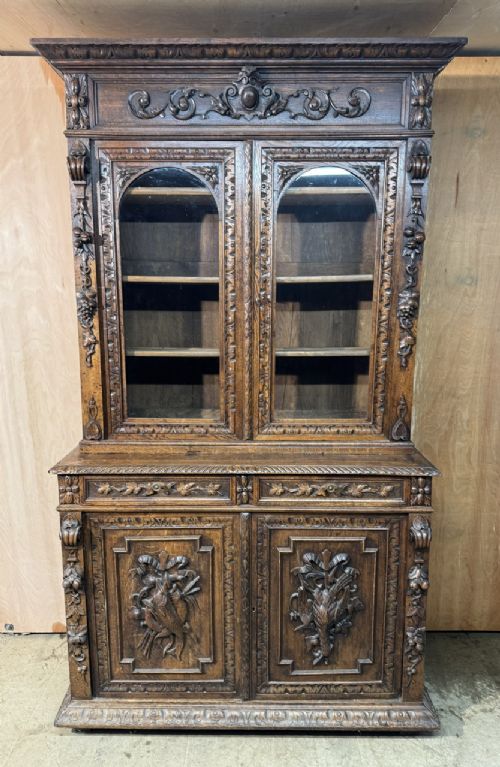
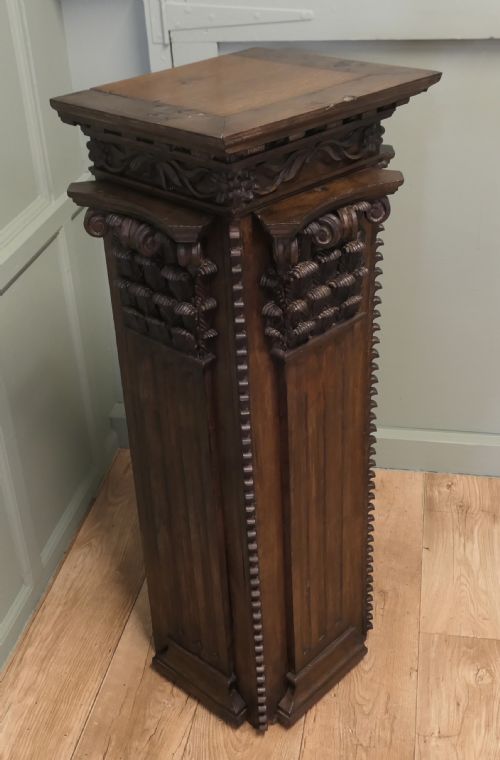
You are most likely to meet nineteenth-century oak and walnut furniture and architectural salvage on this page, such as hunting cabinets, display pedestals, and carved door pediments. Many pieces display the characteristic architectural framing and figural work typical of the French Renaissance style and its later revivals.
How they were made
The makers of french renaissance wood carving relied heavily on solid oak and walnut, chosen for their grain and durability under deep chisel work. Timber sections were joined to form heavy furniture structures, architectural pediments, and freestanding display pedestals.
Carvers employed high-relief techniques, panel sinking, and applied mouldings to build up architectural depth. Secondary materials such as glass, metal, and leather appear in mirrors, seating, and storage pieces.
Oak and walnut dominate the materials recorded here, frequently paired with glass, metal, and damask fabric.
What varies in quality
Quality in french renaissance wood carving rests upon the depth, sharpness, and anatomical accuracy of the hand-carved figures and ornamentation. The finest examples demonstrate confident undercutting and balanced composition across architectural elements like columns and pediments.
Later revival pieces show varying degrees of sculptural ambition, distinguishing mass-produced decorative moulding from masterful hand-chiselled relief work. The choice of dense, well-figured walnut or quarter-sawn oak also elevates the presence of the finished item.
The French Renaissance Wood Carving Glossary
- Term
- Definition. A pediment is an architectural crowning feature above a door, mirror, or cabinet, frequently decorated with carved relief panels.
- Term
- Definition. A terme is a pedestal figure or tapering pillar that terminates in a bust or head, often seen in sixteenth-century walnut carvings.
- Term
- Definition. Architectural salvage comprises rescued building elements, such as carved panels and door pediments, repurposed for interior decoration.
- Term
- Definition. A buffet is a sideboard or storage cabinet designed with heavy panel construction and prominent carved ornamentation.
French Renaissance Wood Carving: Frequently Asked Questions
How do I date a carved oak panel?
Dating relies on tool marks, joint construction, and the specific style of the carved motifs. Sixteenth-century pieces show distinct hand-chiselling methods compared to later nineteenth-century revival work.
Examining the backboards and timber shrinkage helps confirm the age of the wood relative to the carved surface.
What is the difference between revival and period pieces?
Period pieces originate from the sixteenth or seventeenth centuries when the French Renaissance style was contemporary. Revival items date from the nineteenth century when makers drew inspiration from those earlier forms.
Both categories utilise similar timber and carving techniques, but the context of their creation differs by centuries.
How should I care for antique walnut furniture?
Keep carved walnut pieces away from direct heat sources and dramatic humidity changes to prevent the timber from splitting. Regular dusting with a dry cloth protects the detailed relief work.
A light application of appropriate wax polish maintains the lustre of the wood without building up heavy residues in the carved recesses.
Where were term figures used in furniture?
Term figures often supported cornices or served as structural pilasters on cabinets, sideboards, and architectural woodwork. They draw directly on classical motifs popularised during the French Renaissance.
Such figures add a sculptural quality to functional storage pieces and architectural frames.