
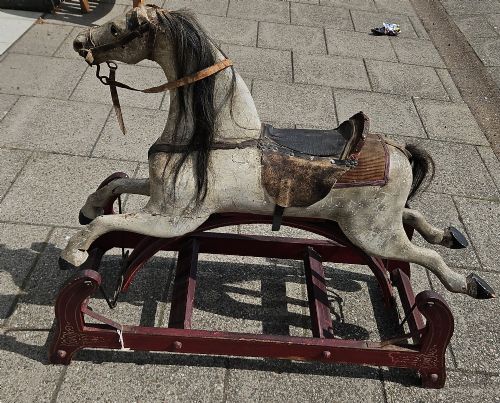


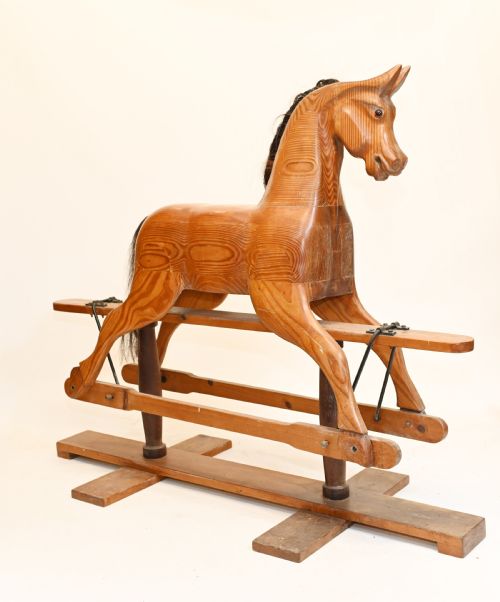

Carved Wood Rocking Horse
A carved wood rocking horse brings a room alive with motion and history, holding the charm of a cherished playroom centrepiece.
Carved Wood Rocking Horse
A carved wood rocking horse is a tangible piece of childhood history, taking the form of a ride-on toy, a decorative sculpture, or a chain-driven tricycle. Buyers search for these pieces to anchor a nursery, study, or living room with traditional craftsmanship and sculptural presence.
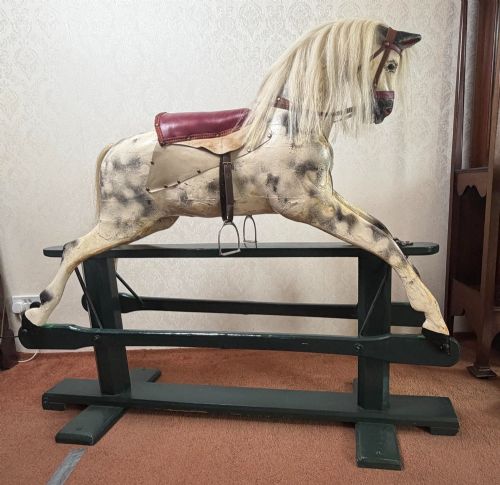
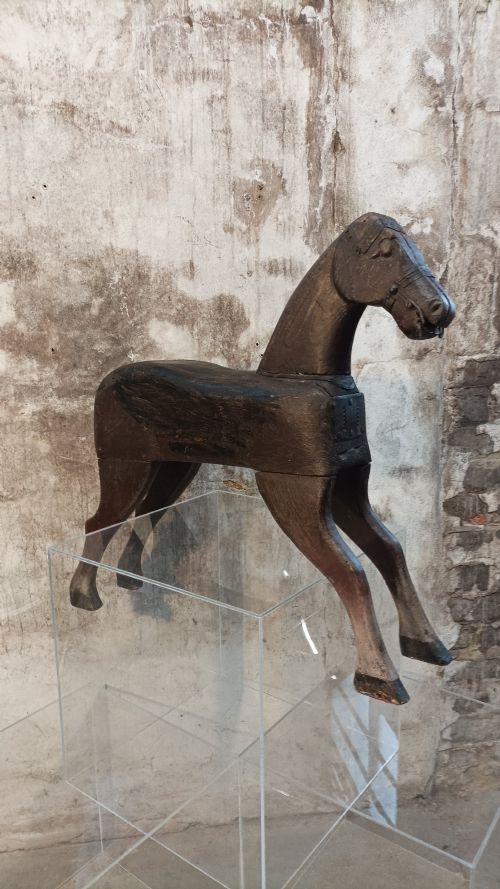
You are most likely to meet Victorian and Edwardian examples on this page, often mounted on original wooden rockers or pine trestle bases. The selection ranges from naive folk art sculptures to substantial toy horses produced by established makers.
How They Were Made
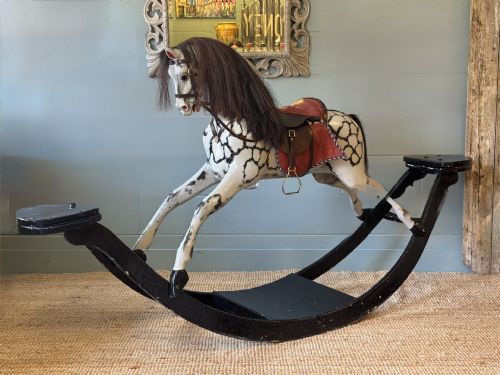
Makers shaped these horses primarily from pine and solid wood, carving the bodies and mounting them securely onto iron brackets and timber rockers. Many examples retain their original painted surfaces, often featuring dapple grey finishes applied by hand.
Finishing details complete the construction, incorporating genuine leather tack, horsehair manes and tails, and glass eyes to give each sculpture a lifelike expression. Structural stability relied on robust joinery and iron hardware to withstand generations of energetic play.
Some horses come equipped with chain-driven tricycle wheels, proving that Victorian children enjoyed horsepower long before motors arrived.
What Varies in Quality
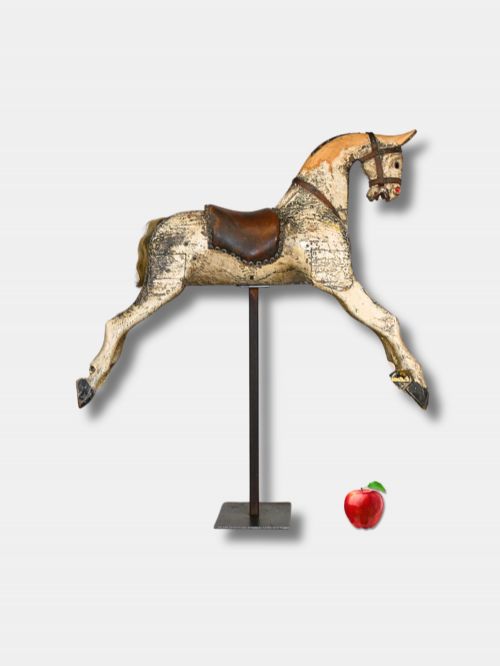
Quality rests in the anatomical articulation of the carved wood and the preservation of the original paint and surface finish. A piece with expressive facial carving and retained leather or horsehair stands apart from later or heavily restored equivalents.
The integrity of the structural base matters just as much as the carving itself, with original rockers and maker markings elevating the piece. Naive folk art examples derive their appeal from charmingly rustic proportions rather than academic precision.
G & J Lines of London·Collinson & Sons Liverpool
The Carved Wood Rocking Horse Glossary
- Rockers
- The curved wooden beams attached to the base of the horse that allow it to swing back and forth. They provide the fundamental motion for ride-on toys.
- Dapple grey
- A painted finish imitating a horse coat marked with lighter spots or rosettes over a grey background. This traditional style is frequently seen on Victorian models.
- Trestle base
- A rigid framework of upright and horizontal timber supports holding the rocking mechanism. Pine is frequently utilised for this structural support.
- Folk art
- Objects created by self-taught makers working outside formal academic traditions. These pieces display naive charm and direct material handling.
Carved Wood Rocking Horse: Frequently Asked Questions
How do I clean a carved wood rocking horse?
Dust the wooden surfaces gently with a soft, dry cloth to protect the original paint and finish. Avoid using chemical polishes or water, which can damage aged timber and historic surfaces.
Inspect the horsehair and leather periodically to ensure they remain free from moisture. Gentle care preserves the historical integrity of the materials without altering their appearance.
Are these horses safe for children to ride?
Most antique rocking horses serve primarily as decorative sculptures or display pieces rather than modern toys. Their historical joinery and iron components may not meet contemporary safety standards for active play.
Collectors generally place them in static settings to protect the fragile horsehair, glass eyes, and aged paintwork. Lighter use should be supervised carefully to prevent structural strain.
How can I tell a Victorian rocking horse apart?
Victorian examples frequently display traditional carving styles combined with original pine rockers and iron hardware. They often feature hand-painted finishes, genuine horsehair, and leather tack.
Examining the construction methods and wood patina helps confirm the nineteenth-century origin. Maker labels or stamps, where present, provide definitive dating evidence.
What is folk art style on these horses?
Folk art rocking horses exhibit a naive and primitive approach to carving and painting. The proportions may be less academic, reflecting the personal style of an independent maker rather than a factory output.
This aesthetic values character and direct craftsmanship over formal realism. Such pieces often show charmingly rustic details in the wood and paint.