

Carved Wood Oval Mirror
When searching for a carved wood oval mirror, collectors find pieces spanning the Georgian, Victorian, and later periods shaped by rococo and neoclassical styles.
Carved Wood Oval Mirror
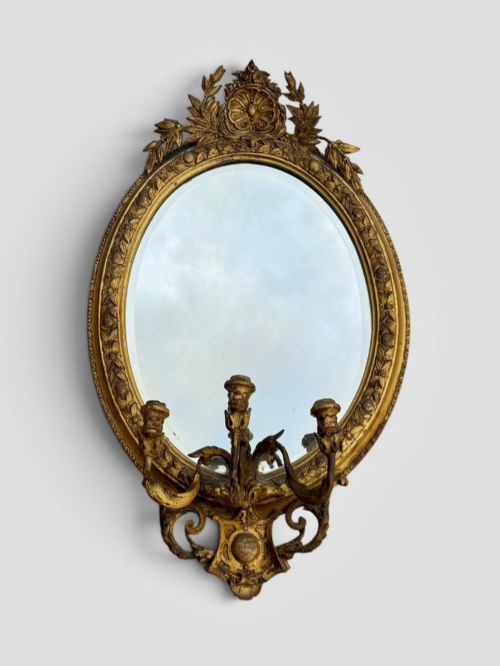
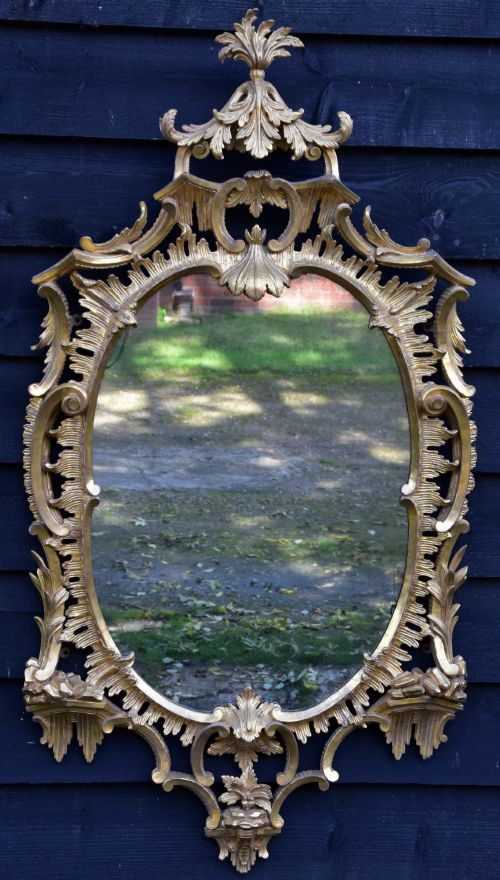
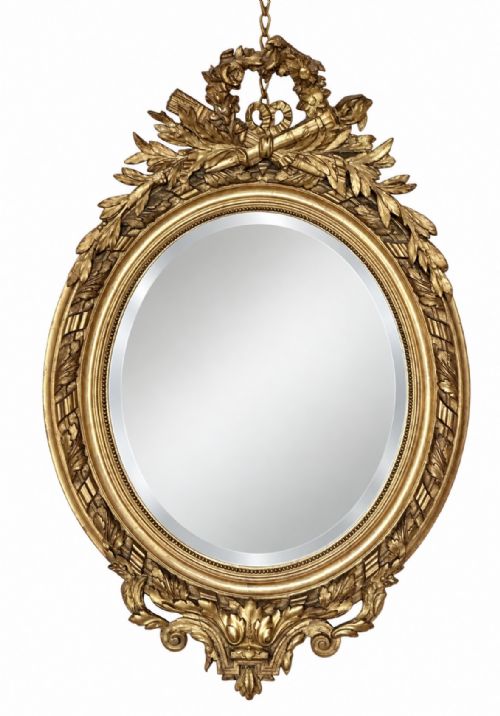
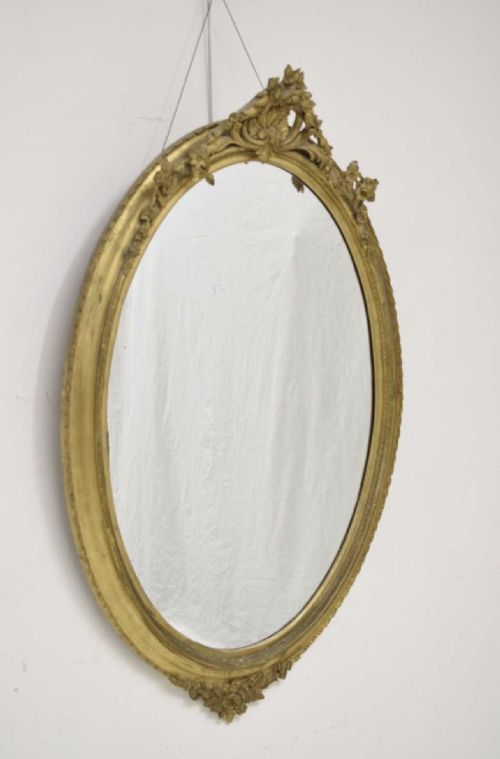
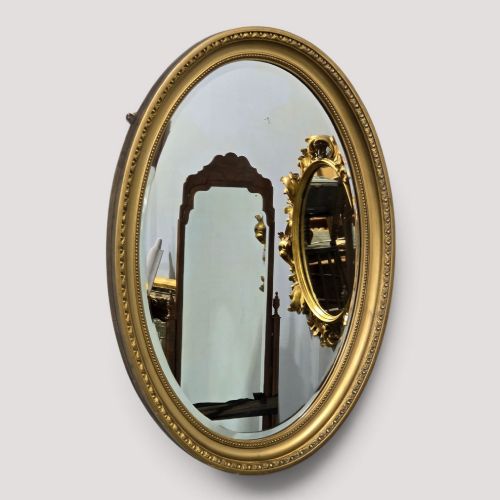
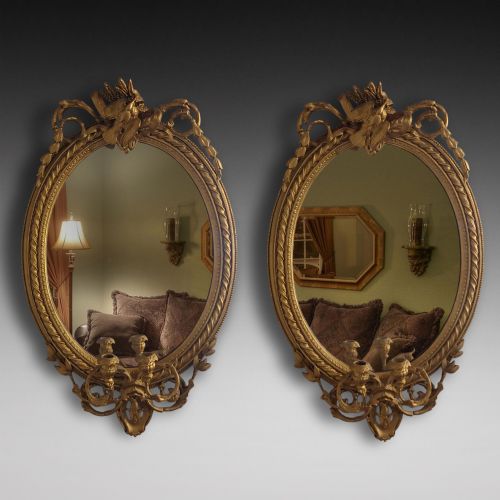
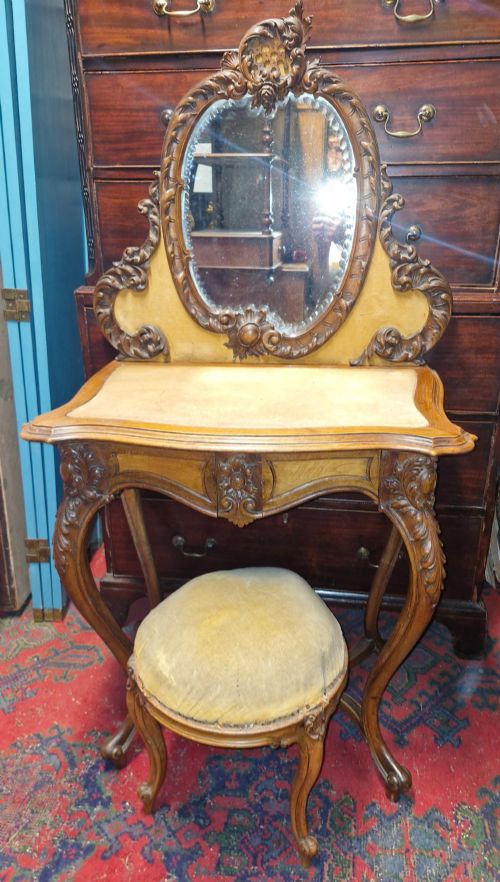
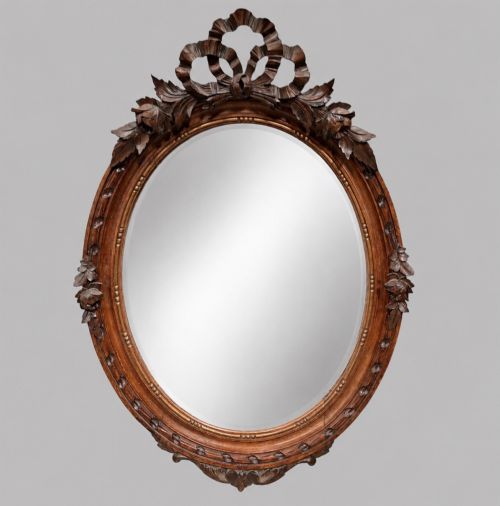
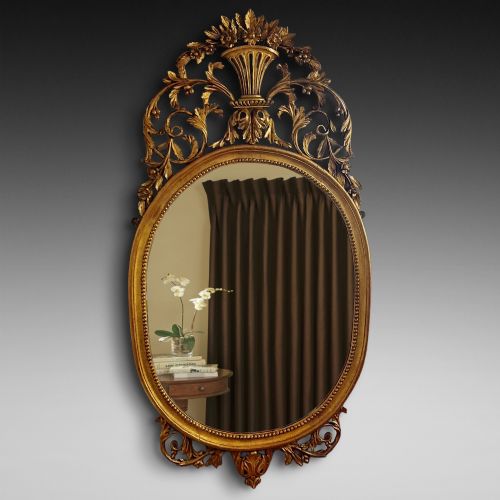
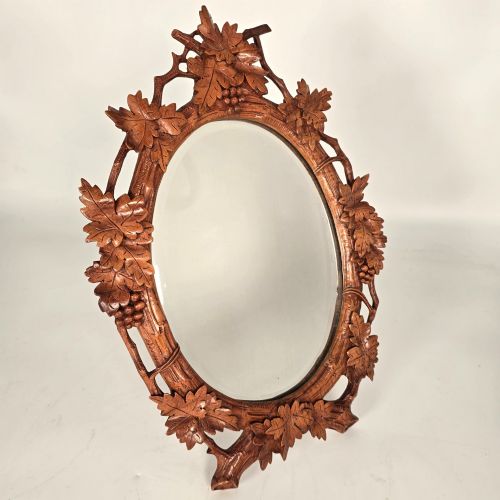
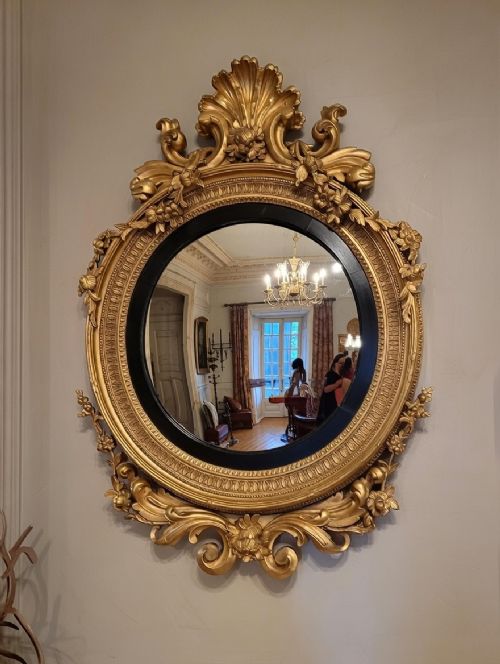
A carved wood oval mirror serves primarily as a decorative wall hanging or dressing table accessory across English, French, and Italian origins. The examples seen on this page range from small table-top designs to large country house pier mirrors and girandoles.
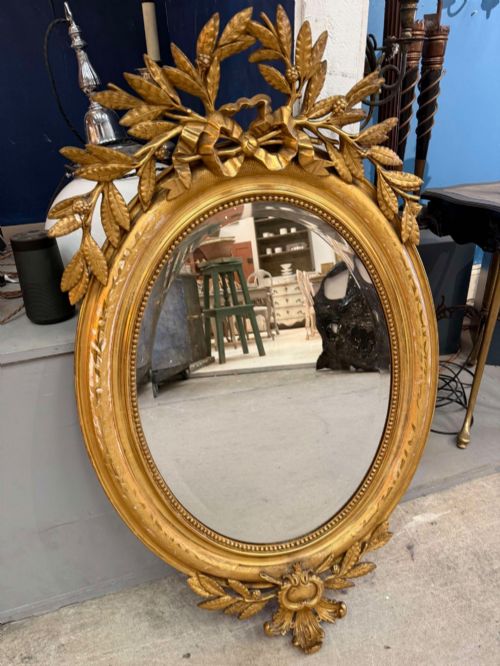
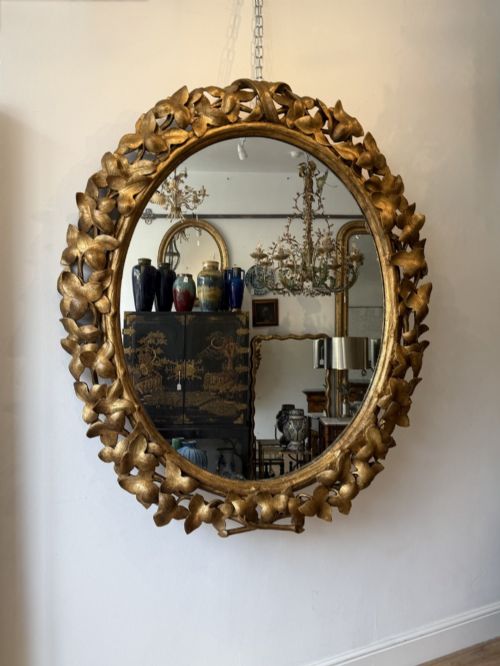
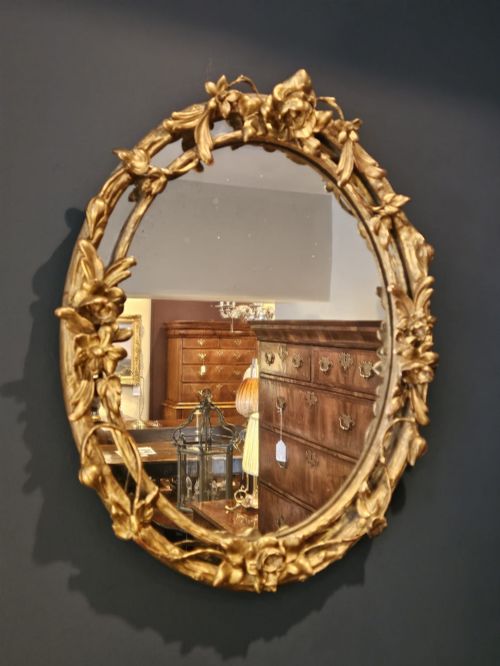
The most common formats on this page date from the nineteenth century, drawing heavily on earlier eighteenth-century Georgian and Rococo Revival designs. Pieces vary from simple oak and mahogany frames to elaborate giltwood creations adorned with leaves and floral motifs.
Makers utilised various timber foundations including beech, walnut, lime, and pine before applying decorative surface treatments. Domestic examples sit alongside continental imports, showing how mirror design evolved from strict symmetry towards flamboyant scrolling foliage.
How They Were Made
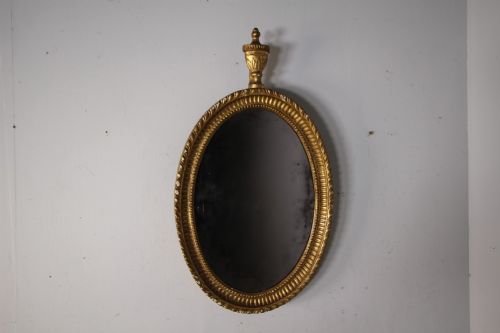
Craftsmen shaped solid timbers such as mahogany, oak, and walnut by hand before applying fine layers of gesso to create smooth relief details. Carving directly into the wood provided structural depth for intricate foliate scrolls and classical urn motifs.
Giltwood pieces received a delicate application of gold leaf over bolus, while other frames utilised paint or simulated wood finishes. Mirror glass was individually silvered and fitted into the rebated backs of the carved wooden frames.
Carved Wood Oval Mirror Retail Price Guide 2026
Typical asking prices for carved wood oval mirror among the pieces listed under this phrase on Sellingantiques today, from the lower quarter to the upper quarter. They describe what is for sale here now, not the wider market.
What Varies in Quality
Depth and crispness of the hand-carved detail dictate the upper tier of quality, distinguishing sharp acanthus leaves and vine tendrils from softer, mechanically cast or heavily worn gesso mouldings. The integrity of the original wood foundation and the retention of early gilding further separate standard decorative frames from exceptional works.
Proportion and scale play a crucial role, as larger grand-scale pier mirrors and matched pairs demand superior joinery to support the weight of heavy mirror glass. The survival of original mirror plates alongside undisturbed backboards indicates better preservation and higher overall desirability.
The Carved Wood Oval Mirror Glossary
- Giltwood
- Wood that has been coated with gold leaf or gold paint. This technique gives frames a luminous, reflective surface that catches natural light in a room.
- Gesso
- A plaster-like mixture applied to wood frames to create a smooth base for carving or gilding. Artisans model intricate relief details into this layer before applying finishes.
- Girandole
- A decorative wall mirror featuring attached candle sconces. The candleholders reflect additional light across the room from the glass surface.
- Pier Mirror
- A tall mirror designed to hang on the wall space between two windows. These pieces often feature grand proportions and elaborate crestings.
- Rococo
- An ornate architectural and decorative style characterised by asymmetrical scrolling, shell motifs, and natural forms. Eighteenth-century designs heavily influenced later nineteenth-century revival pieces.
Carved Wood Oval Mirror: Frequently Asked Questions
How do I date an antique oval mirror?
Dating relies on examining the construction of the wooden frame, the type of timber used, and the style of the carving. Georgian pieces often display restrained classical symmetry, whereas Victorian examples lean toward heavier ornamentation and distinct revival styles.
The backing boards, fixings, and the method of silvering on the glass plate provide additional clues. Older mirrors frequently retain original hand-beveled glass with slight imperfections rather than modern machine-cut plates.
Where should I hang a carved wood oval mirror?
These mirrors work effectively above mantelpieces, dressing tables, or console tables in hallways. Their curved frames soften the straight lines of wall paneling and furniture.
Larger wall mirrors benefit from placement opposite windows to maximise natural light reflection within smaller rooms. Secure wall fixings matched to the weight of the timber and glass are essential for safe hanging.
What is the difference between giltwood and painted frames?
Giltwood frames feature genuine gold leaf applied over a prepared gesso and bole base, creating a warm metallic sheen. Painted frames utilise colour pigments or simulated finishes to achieve a different decorative effect.
While giltwood was traditionally favoured for formal reception rooms, painted or simulated wood finishes often appeared in provincial settings or later revival schemes.
How do I care for antique mirror glass and frames?
Maintenance requires dusting the carved wooden frame gently with a soft, dry brush to protect delicate gesso and gilding. Moisture should be kept away from antique surfaces to prevent lifting or deterioration.
Cleaning the mirror glass involves using a cloth slightly dampened with water or mild cleaner applied directly to the cloth rather than the glass. This prevents liquid from seeping behind the plate and damaging the silvered backing.