
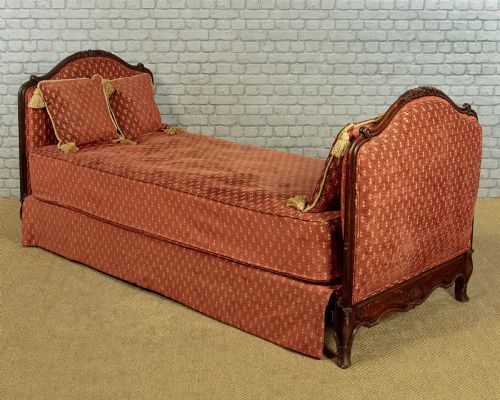
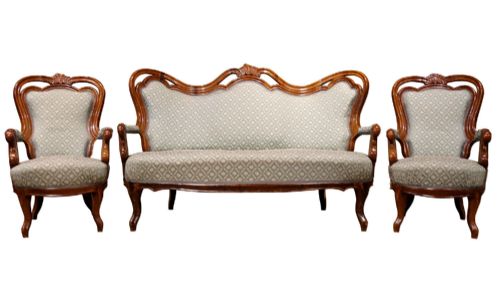
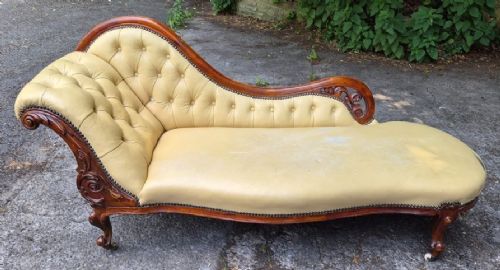


Carved Wood Frame Sofa
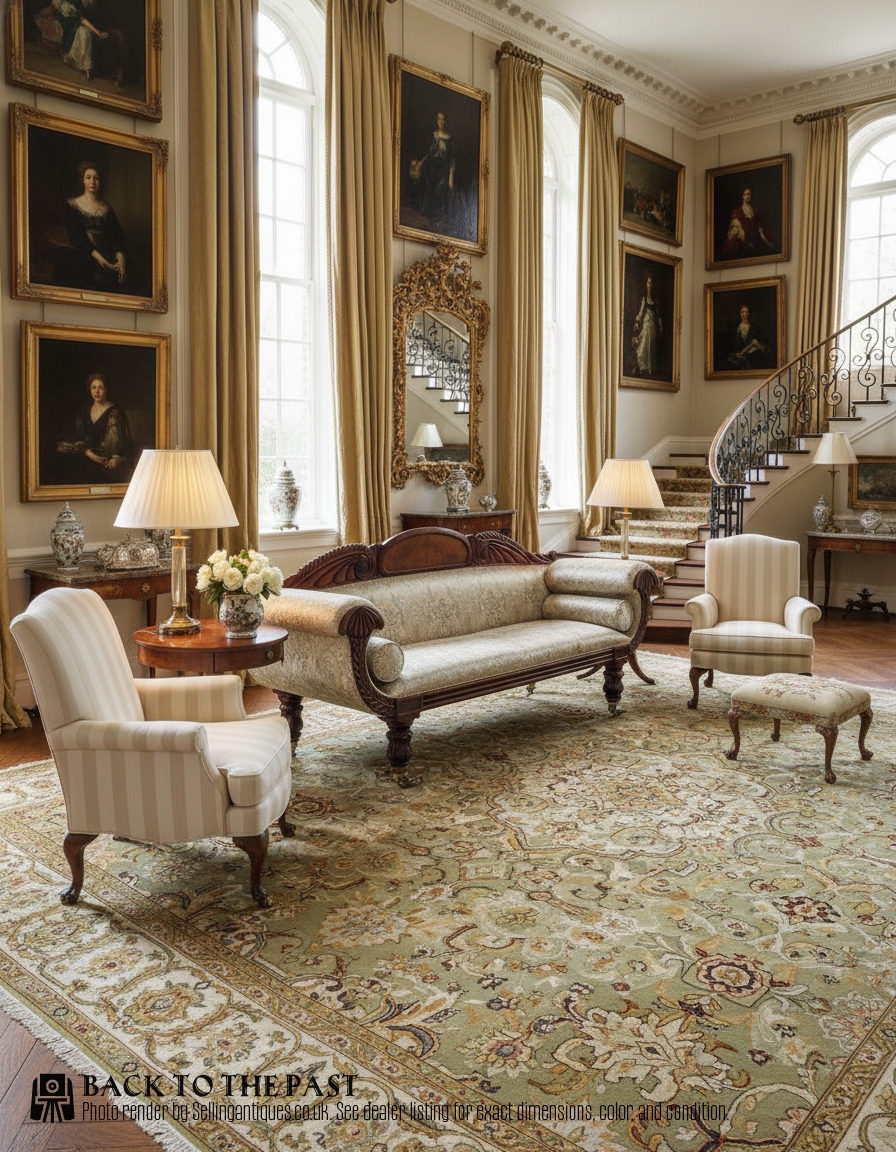
A carved wood frame sofa brings enduring sculptural presence and upholstered comfort to a room, drawn from nineteenth-century and early twentieth-century traditions.
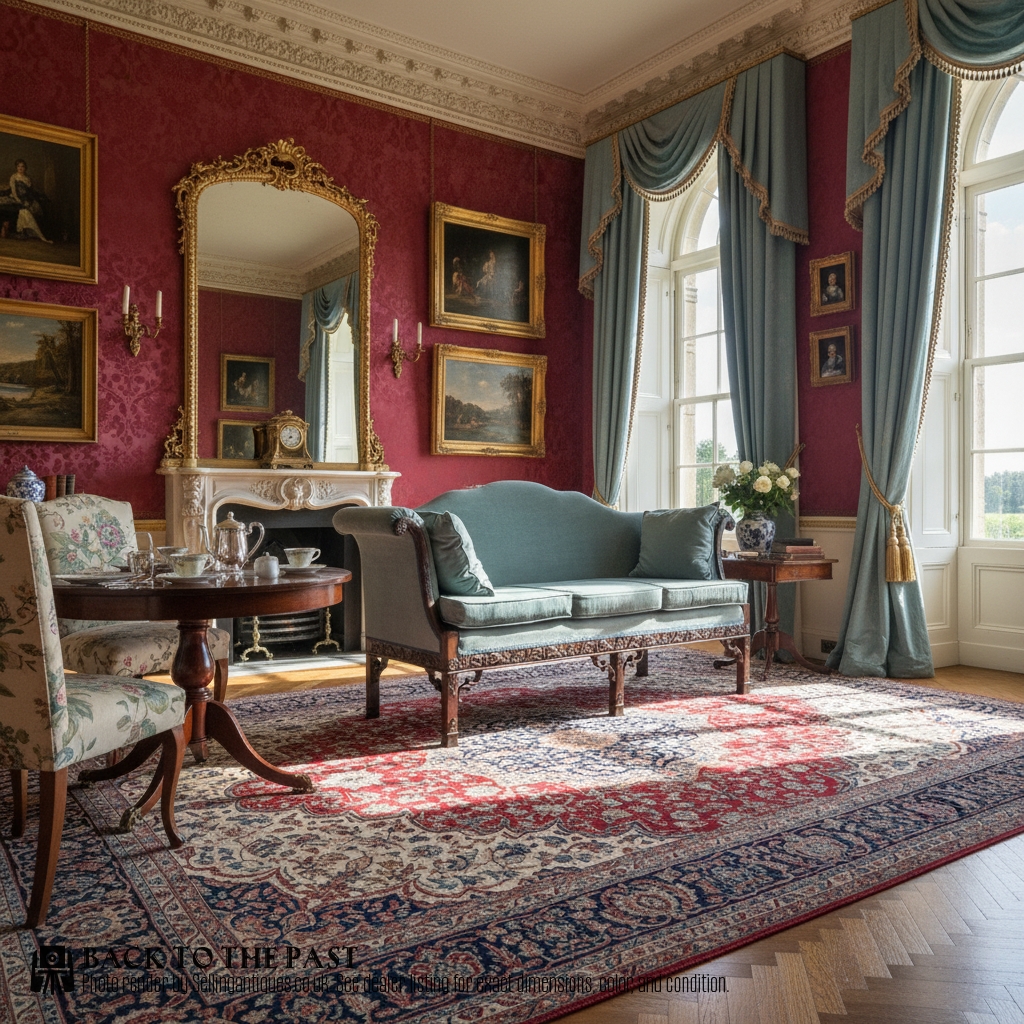
Carved Wood Frame Sofa
A carved wood frame sofa combines exposed timber structure with textile upholstery, serving as a principal seating piece in a drawing room or salon. The selection on this page ranges from Regency and Victorian models to Edwardian and French-influenced designs.
Buyers encounter diverse forms including daybeds, chaise longues, salon suites, and standard two or three-seat settees. The nineteenth century yields numerous mahogany, walnut, and giltwood examples displaying French Rococo and Louis styles.
Origin and period dictate the character of each piece, spanning English country house sofas to continental giltwood canapés. These frames carry hand-carved details ranging from restrained classical lines to ornate scrollwork.
What varies in quality
The crispness and depth of the timber carving separate standard production from finer cabinet work, where artisans cut intricate relief patterns by hand. Timber selection dictates visual weight, with dense mahogany and figured walnut offering superior grain definition.
Proportion and structural integrity define the higher end of the range, visible in balanced arm heights and stable joinery that withstands centuries of use. The treatment of surface finishes, from genuine gilding to polished wood, marks the distinction between workshop tiers.
One listed settee carries a literary connection to Daphne Du Maurier and her novel Rebecca, proving that furniture sometimes shares shelf space with ghosts.
The Carved Wood Frame Sofa Glossary
- Canapé
- An upholstered sofa or settee, most frequently associated with French eighteenth and nineteenth-century design. The style emphasises exposed carved wooden frames and open armrests.
- Chaise Longue
- An elongated seating piece designed for reclining, combining a chair with an extended footrest. These frames often feature a single raised headrest and scroll-end architecture.
- Giltwood
- Timber treated with a thin layer of gold leaf or metallic gilt over a prepared gesso base. This finish provides a luminous, reflective surface common on formal French salon seating.
- Scroll-End
- A structural curve resembling a rolled scroll at the arm or head of a sofa. This profile appears frequently on Regency and nineteenth-century daybeds and scroll-end sofas.
- Salon Suite
- A matched set of seating furniture comprising a larger sofa or settee accompanied by matching armchairs. These suites furnished formal reception rooms during the Victorian and Edwardian periods.
Carved Wood Frame Sofa: Frequently Asked Questions
How do I clean a carved wood frame?
Dust the carved wooden elements regularly with a soft, dry cloth to prevent dirt accumulation in the recessed details. Avoid harsh chemical polishes that can degrade historical surface finishes and patination.
Apply a microcrystalline wax sparingly to the timber if the surface appears dry, buffing gently with a clean cloth. Keep upholstered sections away from direct sunlight to protect textile colours from fading.
Can I reupholster an antique sofa?
Professional reupholstery preserves the underlying webbing, springs, and frame integrity while updating worn surface textiles. Traditional materials like horsehair and hessian maintain the historical seating profile.
Consult a restorer who understands period upholstery techniques to ensure the show wood frame remains undamaged during the process. Selecting fabrics appropriate to the era maintains the visual harmony of the piece.
How do I identify a Regency sofa?
Regency sofas typically date from the early nineteenth century and draw inspiration from classical Greek, Roman, and French Empire aesthetics. Look for bold scroll-ends, rosewood or mahogany timbers, and restrained brass inlay or mounts.
Proportions are often architectural, with clean lines and sophisticated structural geometry rather than heavy Victorian ornamentation. Country house variants balance this classical formality with practical scale.
Where should I place a settee?
Position a carved wood frame settee where the exposed timber back and arms remain visible, such as floating away from a wall in a drawing room. This showcases the craftsmanship of the frame from every angle.
Ensure the room maintains stable humidity levels to protect both the dry timber frame and the historical upholstery materials from environmental stress.