

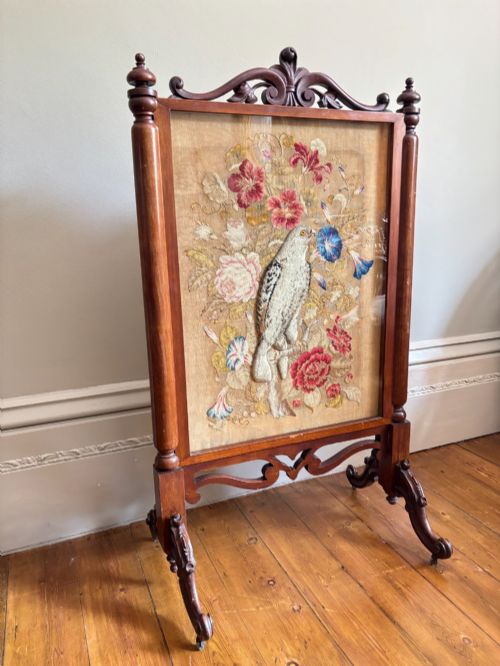
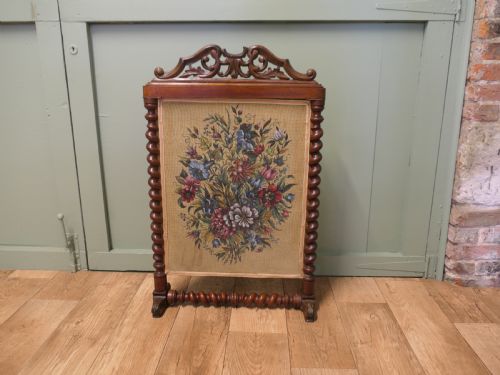
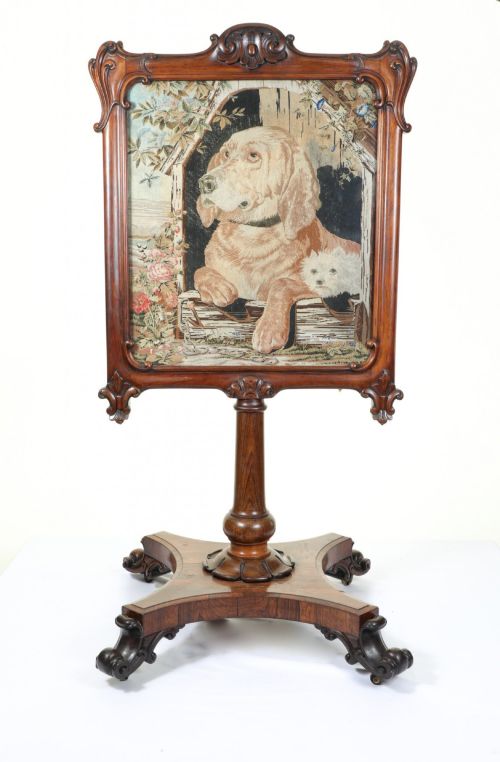
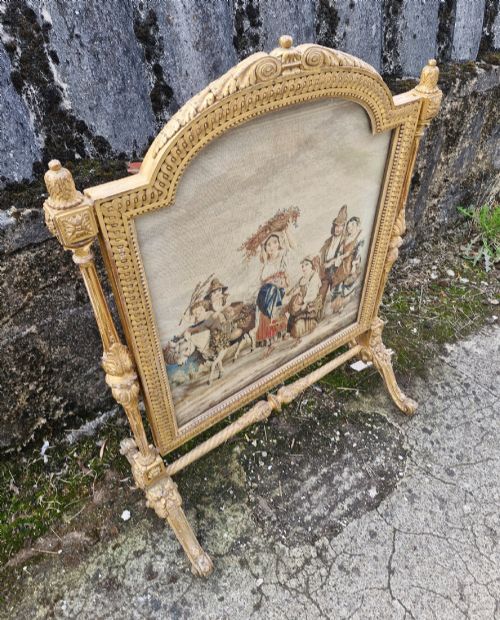




Carved Wood Fireplace Screen
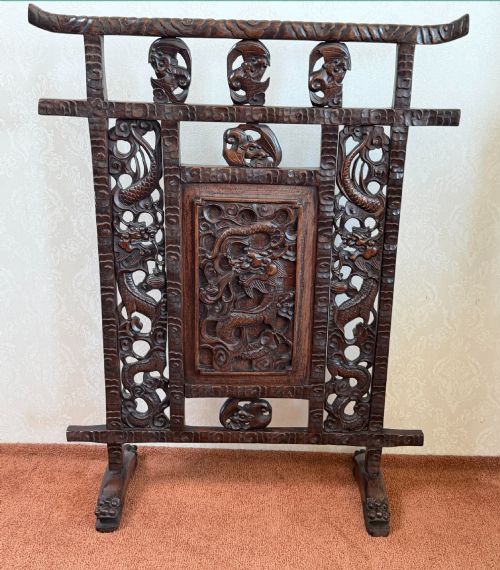
A carved wood fireplace screen blocks the radiant heat of an open grate while doubling as a decorative panel.
Carved Wood Fireplace Screen
A carved wood fireplace screen stands before a hearth to shield the room from excessive warmth and draft. The items encountered here range from substantial nineteenth century standing frames to intricate pole screens and folding panels.
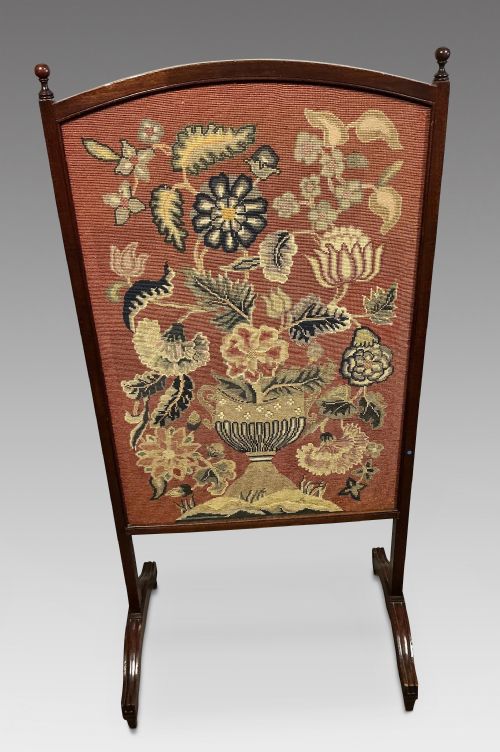
Makers utilised various timbers such as mahogany, rosewood, oak, walnut, and giltwood. Many examples incorporate textile inserts including needlework, tapestry, wool, canvas, and silk embroidery, alongside brass, glass, and carved hardwood.
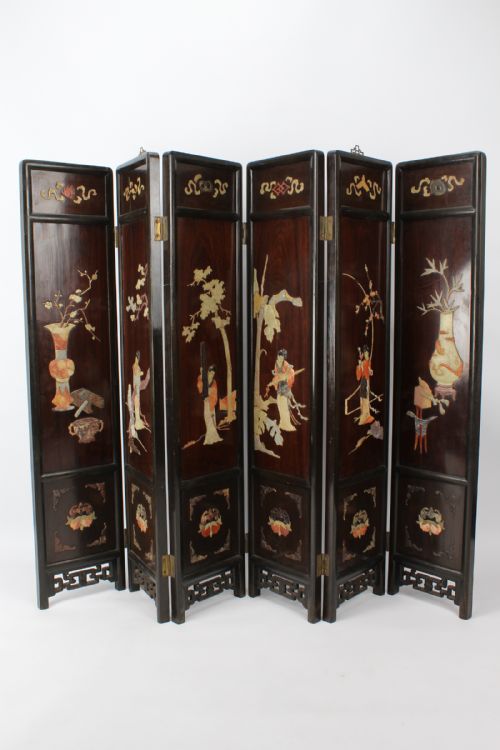
The styles span Victorian, Georgian, Regency, Black Forest, Dutch Renaissance Revival, and Chinese Qing Dynasty. These objects function equally as floor standing pieces, cheval frames, tripod pole screens, and wall panels.
How they were made
Carpenters shaped hardwoods like mahogany, rosewood, walnut, and oak using traditional hand joinery. Frames feature detailed carving, bobbin turning, and giltwood finishes to support the central panels.
Needlework, wool, tapestry, canvas, and silk embroidery provide the decorative insert mounted within the wooden frame. Some pieces integrate embossed and chased brass or glass elements alongside hand carved wood panels.
Carved Wood Fireplace Screen Retail Price Guide 2026
Typical asking prices for carved wood fireplace screen among the pieces listed under this phrase on Sellingantiques today, from the lower quarter to the upper quarter. They describe what is for sale here now, not the wider market.
Listings feature woods like mahogany, rosewood, oak, and walnut paired with wool, silk, tapestry, and brass across nineteenth century and Georgian periods.
What varies in quality
The crispness of the hand carving on the wooden frames and the complexity of the turned supports determine much of the distinction. Dense timbers like mahogany and rosewood hold intricate detail better than softer alternatives.
The fineness of the needlepoint, tapestry, or silk embroidery insert dictates the overall execution. Hand woven pastoral scenes and detailed heraldic coats of arms elevate the visual engagement of the piece.
The Carved Wood Fireplace Screen Glossary
- Pole screen
- A vertical screen mounted on a tall wooden rod with a tripod or weighted base, allowing the panel to slide up and down. This design enabled occupants to adjust the shield against the heat of the fire.
- Cheval screen
- A standing frame supported by two vertical pillars and feet, allowing the panel to tilt or swing on a horizontal axis. It provides a stable and broad barrier compared to lighter tripod designs.
- Needlepoint
- A form of canvas work embroidery executed with yarn using a tent stitch. It frequently depicts pastoral scenes, floral motifs, or heraldic coats of arms on fireplace screens.
- Giltwood
- Timber treated with a thin layer of gold leaf applied over a prepared surface. This finish catches the flickering light of the hearth in grander formal rooms.
- Bobbin turned
- Wood turned on a lathe to create a series of rounded, spool shaped segments along the length of the leg or stretcher. It appears frequently on nineteenth century domestic furniture.
Carved Wood Fireplace Screen: Frequently Asked Questions
What is a pole screen?
A pole screen consists of a sliding panel mounted on a tall vertical wooden shaft with a stable base. The user adjusts the height of the screen to block the heat from the hearth.
This format gained popularity in Georgian and Victorian parlours before central heating altered room layouts.
How were fireplace screens used?
These screens protected people sitting near an open fire from the intense radiant heat of the flames. They also shielded delicate complexions and wax makeup from melting in the warmth.
When the fire was unlit, the decorative tapestry or carved panel dressed an empty hearth during warmer months.
What woods were used for frames?
Cabinetmakers employed durable hardwoods such as mahogany, rosewood, walnut, oak, and giltwood. The choice of timber often reflected the prevailing style and the status of the household.
Dark dense woods supported deep hand carving and bobbin turned decoration.
How do I care for a textile panel?
Keep textile panels out of direct sunlight to prevent the silk, wool, and needlework threads from fading. Dust the carved wooden frame gently with a dry cloth.
Avoid moisture near the vintage canvas and tapestry inserts to preserve the historic fibres.