
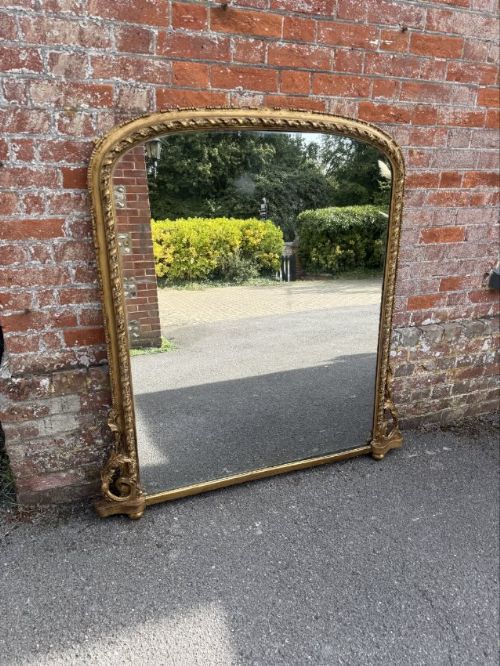
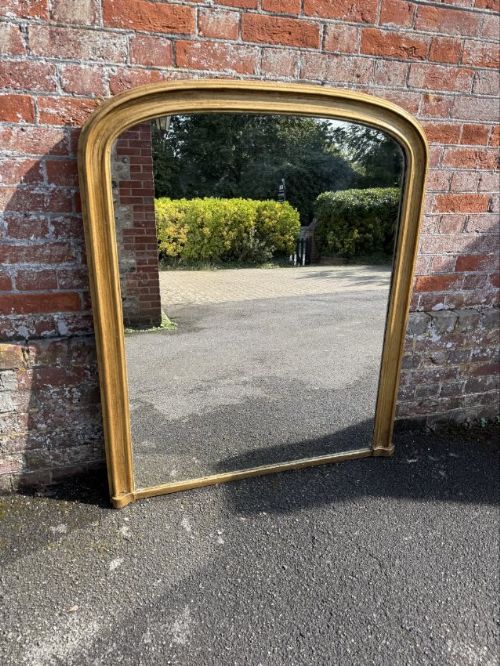
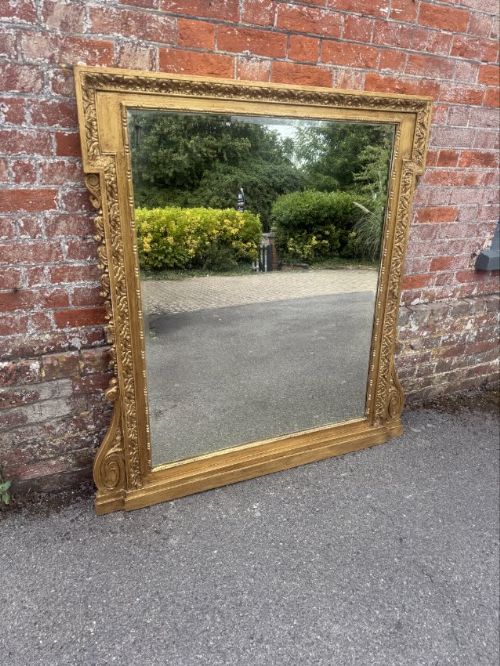
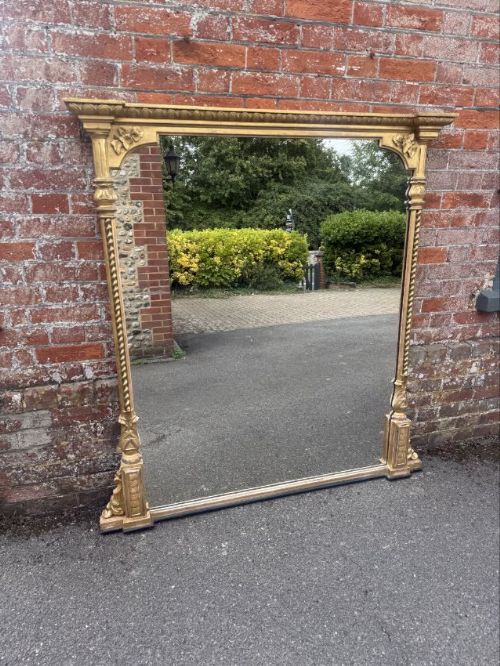
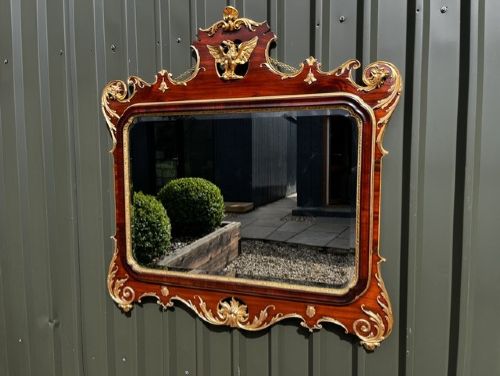
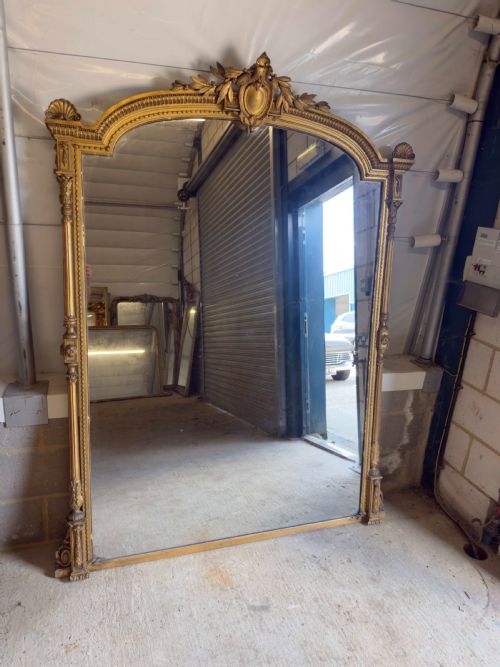
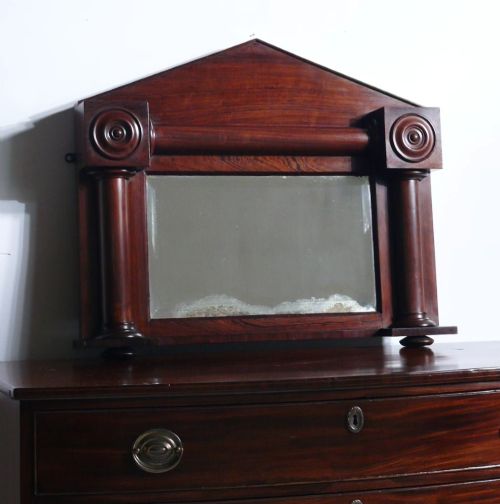
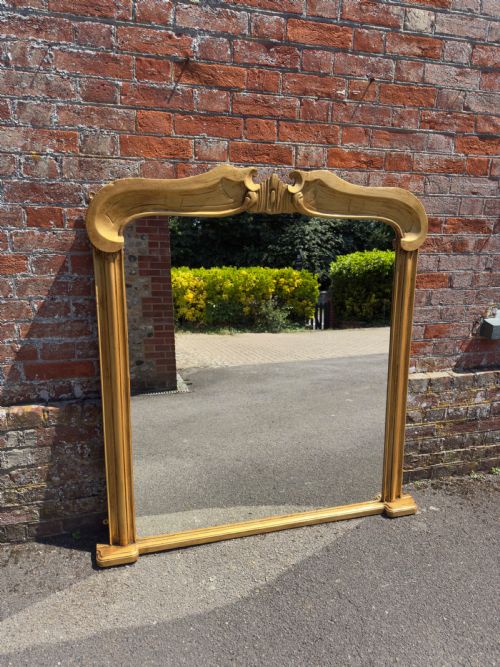
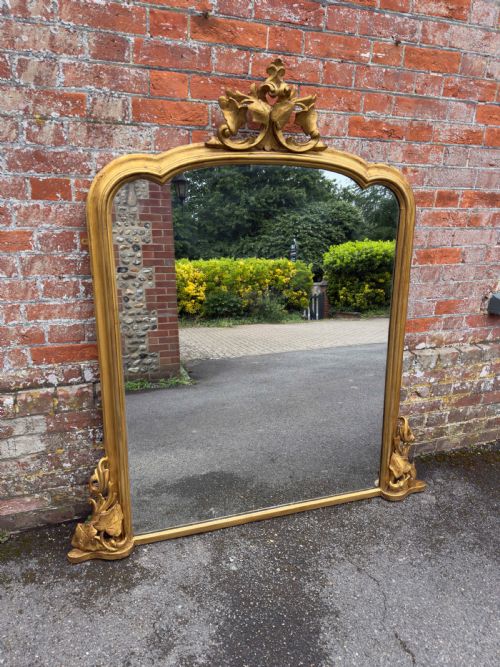
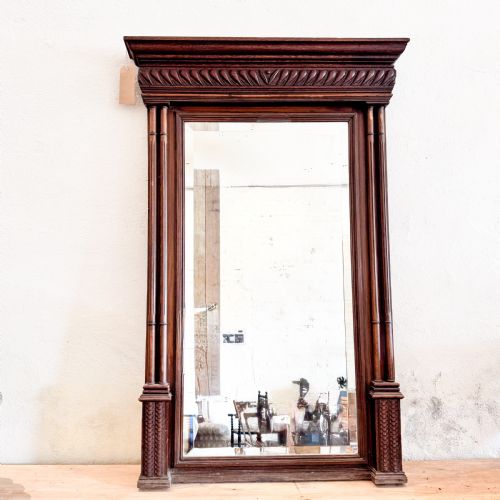

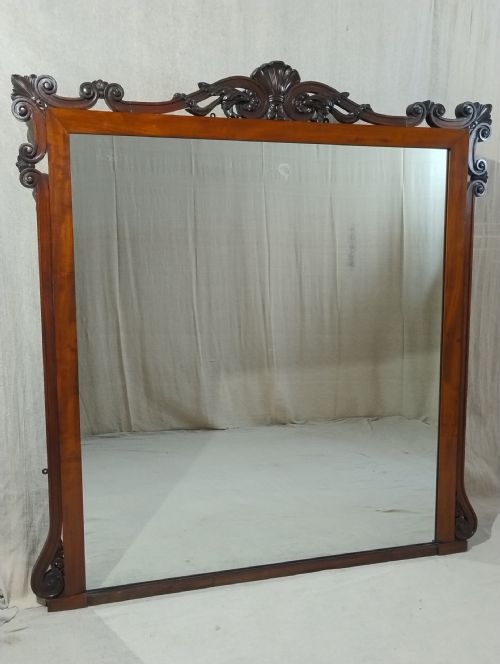

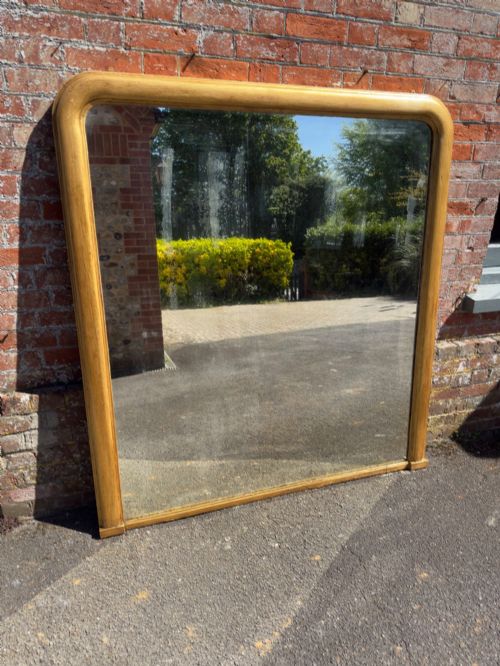


Carved Wood Chimney Glass
A carved wood chimney glass brings heavy nineteenth-century presence and reflective light directly onto the fireplace breast.
Carved Wood Chimney Glass
A carved wood chimney glass serves primarily as a large overmantel mirror designed to sit centrally above a fireplace opening. These pieces draw the eye upwards through substantial proportions and decorative framing.
Nineteenth-century English examples dominate the selection, heavily featuring arched tops, gesso enrichment, and giltwood finishes. Makers shaped these frames to command long wall spaces within period drawing rooms and parlours.
Variations range from restrained mahogany frames of the eighteenth century to ornate Victorian rococo revival pieces carrying intricate rope twists or column details. Each object reflects the interior scale of its original domestic setting.
Materials and construction
Carved wood provides the structural skeleton of these frames, utilising timbers such as mahogany, oak, walnut, and rosewood. Artisans shaped these solid bases by hand before applying secondary surface treatments.
Gesso layers build up relief ornamentation over the timber substrate, allowing craftsmen to impress crisp patterns like rope twists and ribbed columns into the pliable paste. Gold leaf or paint finishes then seal the moulded decoration.
Mirror glass plates are secured within the timber rabbets behind protective backing boards, reflecting the natural light of the room. Parcel-gilt highlights often accent the underlying dark wood grains to create tonal depth.
Listings feature nineteenth-century English overmantel mirrors in mahogany, oak, and rosewood, alongside decorative giltwood and painted finishes.
Assessing quality
Depth and crispness of the wood carving distinguish superior frames from simpler production pieces. Skilled hand-chiselling yields sharp relief work along pediments and mouldings, whereas lesser examples rely purely on moulded gesso over plain wood.
The integrity of the original gilt surface and gesso application dictates the visual weight of the mirror. Intact gilding with minimal restoration maintains the historical character established by nineteenth-century workshops.
Proportion and architectural balance set the finer architectural mirrors apart. Pieces retaining original mirror glass plates alongside well-balanced arched or shaped top frames demonstrate superior original design.
The Carved Wood Chimney Glass Glossary
- Overmantel mirror
- A large wall mirror specifically scaled to hang on the wall space directly above a mantelpiece. These items were traditionally fixed permanently or hung securely to anchor the room scheme.
- Gesso
- A plaster-like mixture applied to wood frames to build up raised ornamental details before gilding. This compound allows intricate three-dimensional patterns to be moulded smoothly onto timber.
- Giltwood
- Timber that has been coated with thin sheets of gold leaf or gold paint. This finish creates a bright reflective surface that catches hearth firelight.
- Parcel-gilt
- A decorative technique where only specific raised portions of an object are gilded while the remaining areas display natural wood. This method highlights carved details against a contrasting dark background.
- Rope twist
- A carved wooden or gesso moulding shaped to resemble the helical strands of a rope. It adds texture and movement to the frame border.
Carved Wood Chimney Glass: Frequently Asked Questions
How do I hang a heavy overmantel mirror?
These large mirrors require secure wall fixings directly into masonry or substantial timber wall studs to support their considerable weight safely. Professional mirror hangers usually employ heavy-duty brackets attached to the internal wooden frame.
Position the base of the glass so it rests slightly above the mantel shelf or leaves a deliberate visual gap depending on the room proportions. Ensure the wall structure can bear the combined weight of the wood, gesso, and glass.
What is the difference between a chimney glass and an overmantel mirror?
The terms are largely interchangeable within antique furniture trade terminology, both describing large mirrors built to hang above a fireplace. Historically, chimney glasses referred specifically to mirrors placed to reflect the light from an open hearth.
Overmantel is a broader term encompassing any decorative looking glass designed for the fireplace breast. Both variants function to brighten period rooms by bouncing natural daylight across the interior.
How can I tell if the mirror glass is original?
Original nineteenth-century mirror plates often exhibit light foxing, minor silver loss, and subtle surface imperfections caused by age. Modern replacement glass typically appears completely uniform, flat, and free of historical blemishes.
Look at the back of the frame to see if the retaining wooden slips or old backing boards appear undisturbed. The silvering behind antique glass naturally deteriorates in distinctive patterns over decades.