
Carved Wood Buffet
These carved wood buffet pieces bring substantial timber storage and display into a room, offering heavy period character alongside practical surface space.
Carved Wood Buffet
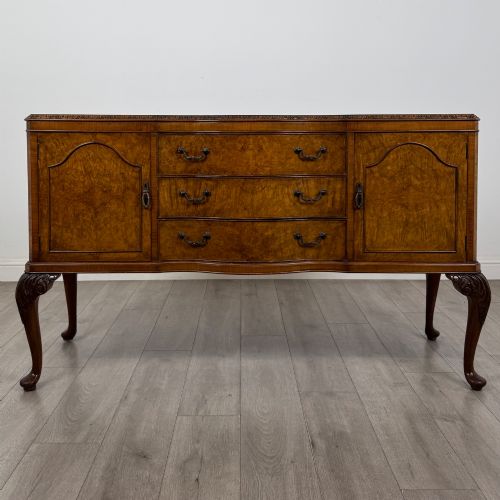
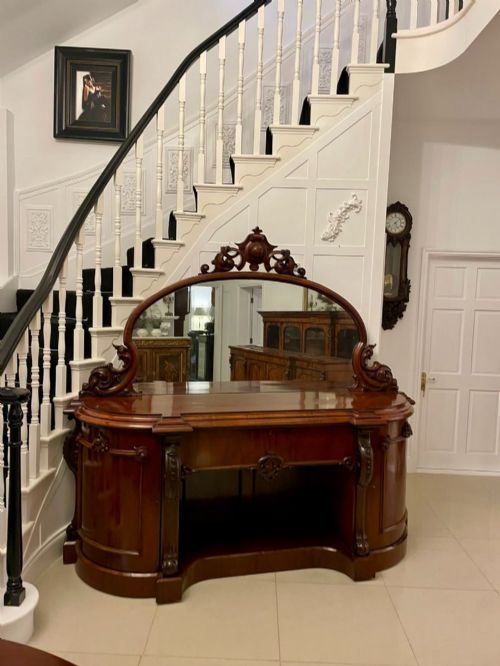
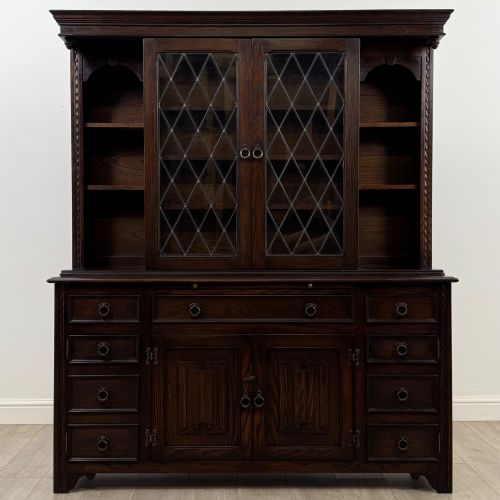
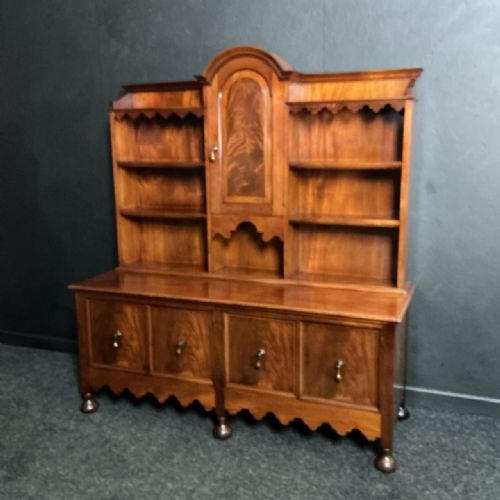
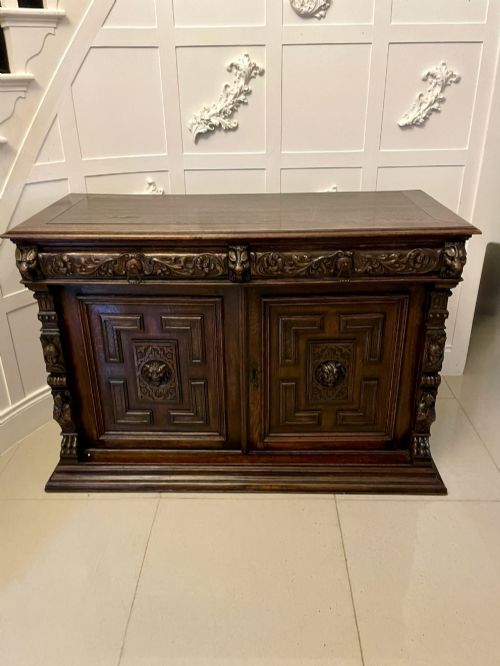
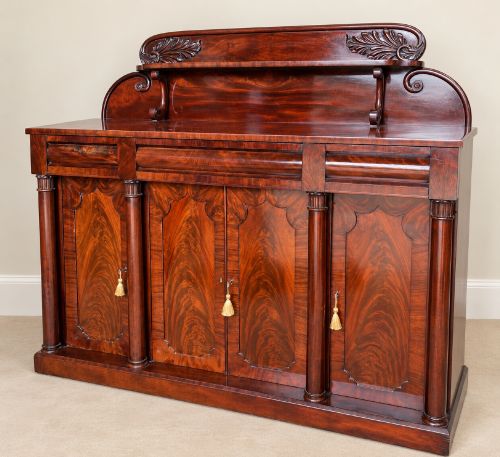
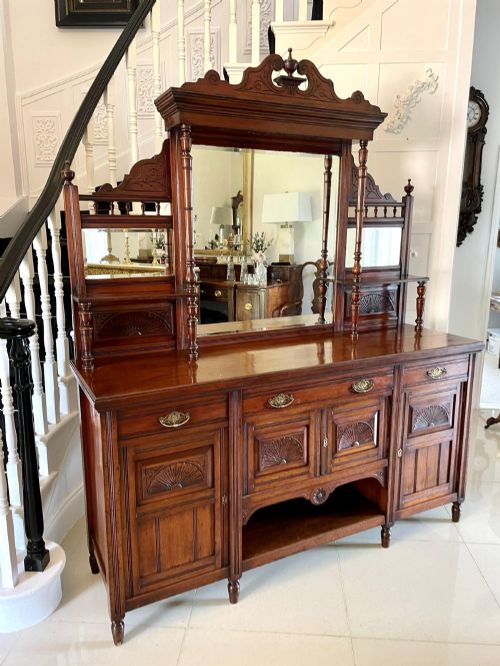
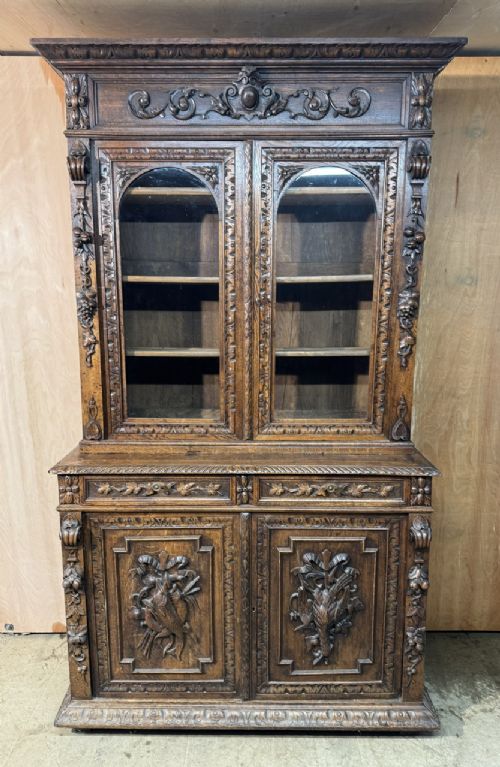
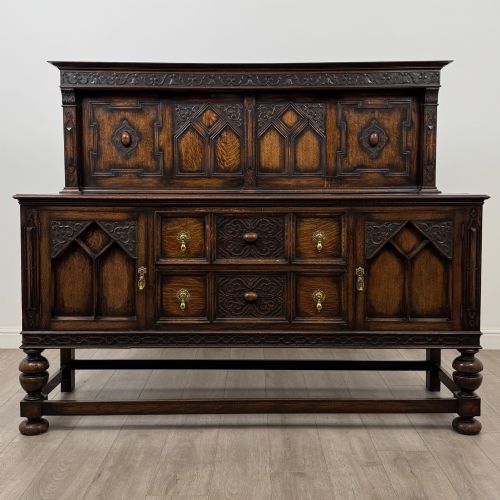
A carved wood buffet brings together heavy timber construction and formal storage, appearing across this page in diverse nineteenth-century and Edwardian forms. You will frequently encounter heavy oak and mahogany sideboards, serving tables, and chiffoniers derived from Victorian and Edwardian workshops.
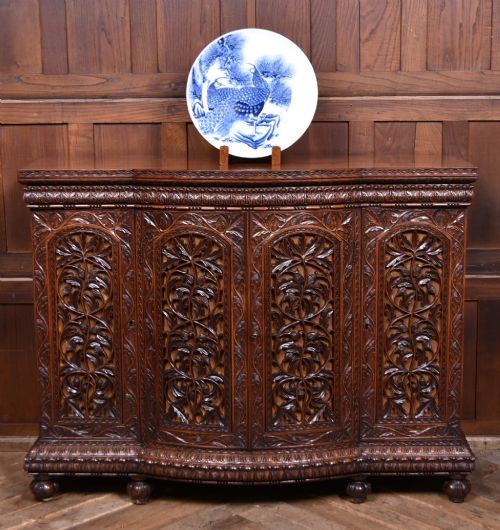
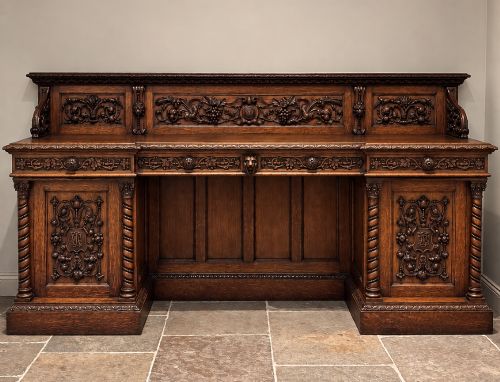
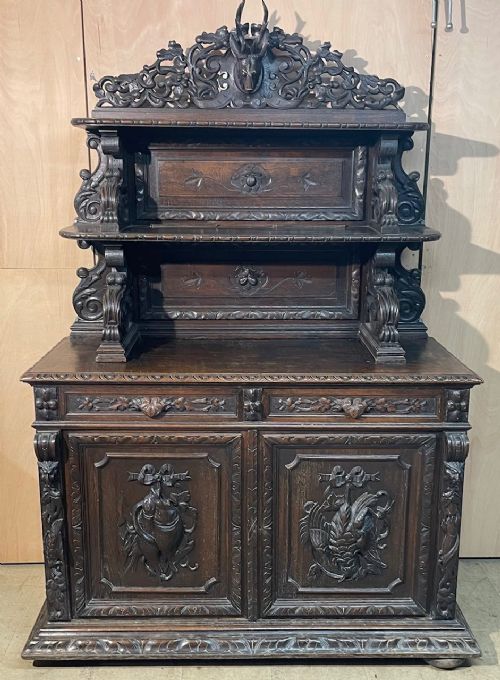
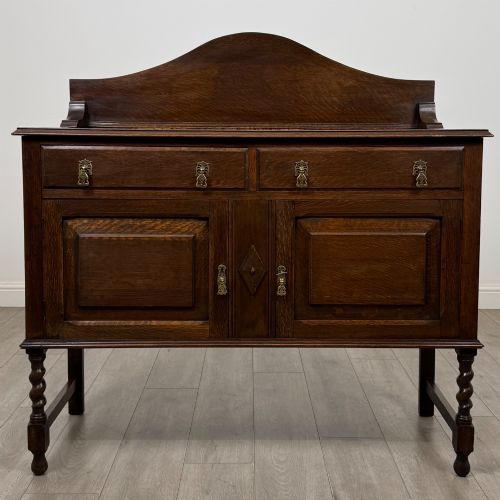
The objects span formal revival styles, incorporating Jacobean, Gothic, and French Renaissance influences into massive timber framework. Many examples incorporate mirror backs, carved panel doors, and barley twist supports designed to anchor a formal dining room.
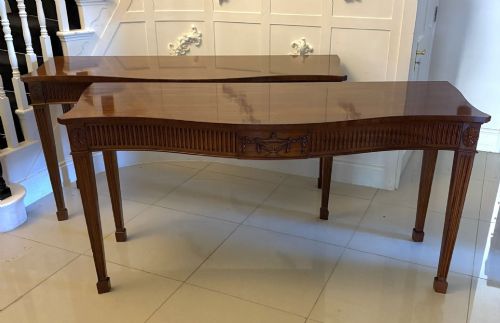
Simpler serving tables and console variants also appear alongside massive multi-tiered cabinets. These iterations provide surface utility while retaining the deep surface carving characteristic of the category.
How they were made
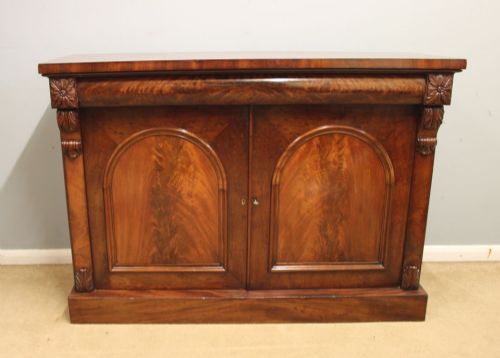
Cabinet makers relied primarily on solid oak, mahogany, and walnut, selecting dense timbers capable of supporting deep chisel work and structural weight. Flame mahogany and burr walnut veneers were frequently applied to primary surfaces to introduce complex grain patterns.
Joinery combined traditional frame-and-panel construction with heavy architectural mouldings, applied carvings, and turned supports. Hardware typically involved brass fittings and iron fixings, while occasional French pieces integrated pink marble tops.
French country furniture occasionally surprises with unexpected pink marble tops nestled inside heavy oak hunting frames.
What varies in quality
Quality rests in the depth and crispness of the timber carving, distinguishing flat, mechanical work from deep, hand-chiselled relief. The selection of timber also dictates standard, separating plain boards from richly figured flame mahogany and burr walnut.
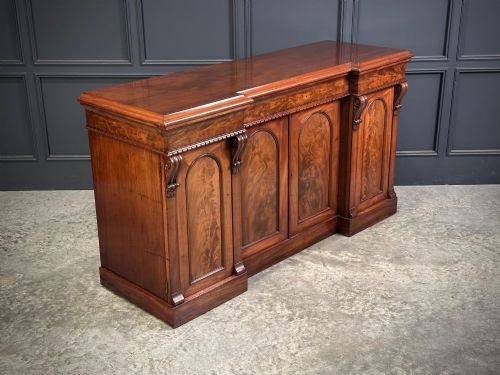
Structural ambition separates standard utility pieces from exhibition-grade examples featuring mirror backs, breakfront profiles, and complex neoclassical or Gothic motifs. The integrity of the original joinery and the retention of period hardware complete the hierarchy.
The Carved Wood Buffet Glossary
- Buffet
- A sideboard or cabinet used for storing and serving food, typically featuring a flat top surface and lower cupboards or drawers.
- Chiffonier
- A small, relatively light sideboard or set of drawers, often equipped with a raised shelf or mirror back, popular during the Victorian period.
- Barley twist
- A type of turning shaped like a spiral rope, frequently utilised on the legs and vertical supports of Edwardian and Jacobean revival furniture.
- Breakfront
- A piece of furniture whose central section projects forward from the flanking outer sections, creating a dynamic architectural profile.
- Tramp art
- A style of folk art where items are constructed from scrap wood using simple pocket knives, often characterised by chip-carved geometric layering.
- Pediment
- The triangular or decorative architectural crown situated at the very top of a large cabinet or mirror back.
Carved Wood Buffet: Frequently Asked Questions
What is a carved wood buffet?
A carved wood buffet is a heavy storage and serving piece designed for dining rooms, featuring timber construction and decorative surface carving. These items provide enclosed cupboard space alongside broad top surfaces for food preparation or display.
Examples on this page span the Victorian and Edwardian eras, incorporating revival styles such as Gothic and Jacobean.
How do I date a sideboard?
Dating relies on examining the primary timber, the revival style, and construction methods such as dovetailing and saw marks. Victorian pieces often display heavy mahogany with mirror backs, while Edwardian versions frequently utilise oak and barley twist legs.
Archival records also show 18th-century English serving tables and French buffets carrying distinct regional proportions.
Where were these pieces used?
These pieces were principally designed for formal dining rooms and halls to store tableware, linen, and serving dishes. The broad upper surfaces functioned as staging areas during large meals.
Today, they transition easily into living spaces or large hallways as architectural storage units.
How do I care for antique timber?
Protect antique timber by keeping it away from direct heat sources and sudden humidity changes that cause wood to split. Regular dusting with a soft cloth and occasional waxing preserves the finish.
Avoid commercial silicon sprays, which can penetrate and degrade historic French polish.